
Herbal Medicine in the UK: Why Millions Are Turning to Nature for Their Health and What It Means for the Future of Healthcare
Introduction: A Nation Rediscovering Its Roots
Something remarkable is happening across the United Kingdom. In cities from London to Edinburgh, Manchester to Cardiff, a growing proportion of the population is quietly turning away from the long pharmaceutical queues and towards something older, more personal, and increasingly well-evidenced: herbal medicine. This is not a fringe movement. According to data from the British Herbal Medicine Association, the UK market for herbal products has grown substantially over the past decade, with millions of British adults now using some form of plant-based health support annually.
This shift did not happen overnight, and it is not driven by naivety or distrust of science. It is driven by experience, the lived experience of people who found that conventional medicine, extraordinary as it is in acute care, often falls short in addressing chronic conditions, root causes, and the complex web of factors that determine long-term wellbeing. People are increasingly asking not just “how do I treat this symptom?” but “why is this happening in my body?” That question, in many ways, is where herbal medicine begins.
This article explores why this shift is happening, what the state of healthcare looks like across the UK’s major cities and regions, where the NHS succeeds and where it struggles, why herbs and natural health solutions have enduring relevance, and how Herba Naturalle, led by Medical Herbalist Anjela Jeganathan, is at the forefront of a genuinely different approach to human health.
The State of Healthcare in the UK: Achievements and Ongoing Challenges
The NHS: A System of Extraordinary Achievement
To understand why people are supplementing their healthcare with herbal medicine, it is important first to acknowledge what the National Health Service has achieved. Established in 1948, the NHS represents one of the most ambitious public health commitments in modern history, a healthcare system free at the point of use, available to every resident regardless of income or background. Its achievements are genuinely extraordinary.
Cancer survival rates in the UK have doubled over the past forty years. The NHS performs over one million operations every week. Vaccination programmes have eliminated or dramatically reduced diseases that once killed or disabled millions. British medical research has contributed to some of the most significant pharmaceutical and surgical advances of the 20th and 21st centuries. The Covid-19 vaccination rollout was executed with remarkable speed and organisation.
Understanding cardiovascular disease risk through tools like the QRISK scoring system, which helps GPs predict 10-year heart attack and stroke risk, reflects the sophisticated preventive medicine increasingly built into NHS primary care. NHS guidance on blood pressure management and how to lower blood pressure naturally represents a genuine effort to educate the public about lifestyle-driven health. Resources like the NHS blood pressure chart and the blood pressure range guidance translate complex clinical data into accessible public health tools.
Where the System Struggles
Yet for all its achievements, the NHS faces a confluence of pressures that have significantly affected the experience of care for millions of people. Waiting lists reached record highs following the Covid-19 pandemic, with over 7 million people on waiting lists for elective treatment at various points in 2023 and 2024. GP appointment availability has become a crisis in many areas, with patients routinely waiting two to three weeks for a routine appointment. Mental health services are under particular strain, with waiting times for therapy and assessment running into months or years.
This is not a criticism of NHS staff, who work with extraordinary dedication under conditions of significant strain. It is a structural reality. A system designed around acute illness and intervention is being asked to manage a population increasingly burdened by chronic disease: obesity, type 2 diabetes, cardiovascular disease, mental health conditions, autoimmune disorders, and the long-term consequences of chronic stress. These are conditions where the pharmaceutical toolkit has real limitations, and where prevention, lifestyle, and root-cause approaches have the greatest potential.
The Mental Health Act framework, including provisions like Section 3, Section 4, and Section 5, provides legal structures for compulsory mental health treatment, but these are reactive frameworks for crisis, not prevention. The real challenge lies upstream: addressing why mental health awareness has become such a pressing national conversation, why men’s mental health outcomes remain particularly poor, and why social anxiety and chronic stress have become almost epidemic in modern British life.
Healthcare Across the UK’s Major Cities and Regions
London: Innovation and Inequality Side by Side
London is home to some of the world’s most advanced healthcare institutions, Guy’s and St Thomas’ NHS Foundation Trust, University College London Hospitals, and the Royal Marsden among them. The capital leads in medical research, genomics, and specialist care. Yet London also has some of the UK’s most entrenched health inequalities. Residents of deprived inner-city boroughs in areas like Tower Hamlets, Hackney, and Southwark have markedly worse outcomes for cardiovascular disease, diabetes, and mental health compared to wealthier areas just a few miles away.
London’s multicultural population has also helped to introduce herbal and traditional medicine traditions, from Ayurveda to traditional Chinese medicine and African herbal practices, into the mainstream. The capital now has a thriving community of registered medical herbalists, holistic health practitioners, and complementary therapy clinics operating alongside NHS services.
Manchester: Industrial Legacy and Modern Health Challenges
Greater Manchester carries some of the health consequences of its industrial history, higher rates of respiratory conditions, cardiovascular disease, and deprivation-related illness than the national average. The Greater Manchester Health and Social Care Partnership has attempted to tackle these challenges through integrated care, but demand continues to outstrip provision.
Respiratory health is a particular concern in the region. Conditions affecting the nose, sinuses, and lungs and the inflammation of the airways and sinuses, are among the most common presentations in Greater Manchester GP surgeries. There is growing interest among patients in complementary approaches including herbal medicine for chronic respiratory conditions, hay fever, and sinusitis. Understanding the root cause of hay fever and sinusitis as immune overreaction rather than simple seasonal inconvenience is increasingly informing how people seek support.
Edinburgh and Scotland: A Different Approach to Public Health
Scotland has historically taken a more proactive approach to public health legislation than England, leading on minimum unit pricing for alcohol, smoking restrictions, and public health campaigns. Edinburgh is home to distinguished medical institutions including Edinburgh Royal Infirmary and the University of Edinburgh’s medical school, which has produced some of Britain’s most significant medical researchers.
Yet Scotland also has some of the UK’s highest rates of drug-related deaths, alcohol-related illness, and cardiovascular disease, often concentrated in post-industrial areas of Glasgow, Dundee, and North Lanarkshire. The traditional Scottish herbal medicine tradition, kept alive by apothecaries and practitioners such as those associated with Napiers, Edinburgh’s oldest herbal medicine establishment, represents a living thread of botanical knowledge that predates the NHS.
Cardiff and Wales: Community Health in a Devolved System
Wales operates a devolved health service, NHS Wales, which has made different policy choices from England, including abolishing prescription charges. This has improved medication access, but Wales continues to face significant challenges with GP availability in rural areas, long-term condition management, and mental health service capacity.
The Welsh traditional herbal medicine tradition is strong, and many Welsh communities have historical connections to plant medicine through folk traditions. There is growing interest in natural approaches to gut health and digestive health solutions, including understanding conditions like upper GI dysfunction, IBS, and leaky gut.
Birmingham and the Midlands: Diversity Driving Demand for Integrative Care
Birmingham, the UK’s second-largest city, has a richly diverse population that brings together health traditions from South Asia, the Caribbean, West Africa, and the Middle East alongside British conventional medicine. This diversity has created a sophisticated health consumer base, one that is simultaneously engaged with NHS care and knowledgeable about traditional herbal and Ayurvedic medicine.
The Midlands has above-average rates of type 2 diabetes, cardiovascular disease, and chronic kidney disease, all conditions with significant lifestyle and nutritional components. Understanding tools like the QRISK2 cardiovascular score, QRISK2 score by age, and what QRISK scores mean is particularly relevant in this population.
Why People Are Switching to Herbal Medicine
The Failure of the “Symptom-Only” Model
The most fundamental driver of interest in herbal medicine is the growing sense among patients that conventional medicine’s primary mode, identify a symptom, prescribe a drug to suppress it, does not address why the symptom arose in the first place. This is the difference between palliative and curative approaches.
Pharmaceutical drugs are extraordinarily effective at managing symptoms, lowering blood pressure, reducing inflammation, suppressing gastric acid, modulating mood. But the underlying condition often persists or worsens because its root cause has not been addressed. Many patients find themselves on an ever-increasing list of medications, each managing a side effect of another, without any improvement in their underlying health. It is this experience, of being managed rather than healed, that drives many people to seek a different kind of support.
The inflammation pandemic, as Anjela Jeganathan has described it across her clinical writing, is precisely this phenomenon: a population-level pattern of chronic, low-grade systemic inflammation affecting the digestive system, the cardiovascular system, the lymphatic system, the surface nervous system, the female reproductive system, and the male reproductive system, driving an enormous range of conditions that conventional medicine is treating symptom by symptom, without addressing the underlying inflammatory process.
Growing Evidence for Herbal Medicine
Herbal medicine is not alternative medicine in the dismissive sense often implied. Plants are the origin of the majority of pharmaceutical compounds, aspirin from willow bark, morphine from the opium poppy, penicillin from mould, and hundreds of others. The scientific literature on specific plant compounds continues to grow rapidly.
A significant body of peer-reviewed research, including studies indexed by the National Institutes of Health, demonstrates the therapeutic potential of herbal compounds in conditions ranging from anxiety and insomnia to cardiovascular disease and gastrointestinal disorders. Adaptogens such as ashwagandha, explored in detail in our guide to ashwagandha root, have accumulated a substantial evidence base for stress resilience, cortisol regulation, and nervous system support.
The National Institute of Medical Herbalists, the UK’s leading professional body for qualified medical herbalists, maintains rigorous standards for training and practice, ensuring that qualified herbalists bring genuine clinical expertise alongside their plant medicine knowledge. The British Herbal Medicine Association similarly provides regulatory and educational frameworks that underpin professional herbal practice in the UK.
Side Effect Burden of Pharmaceuticals
Another significant driver of the turn towards herbal medicine is the side effect burden of long-term pharmaceutical use. While drugs are often necessary and life-saving, their side effects are real and sometimes severe. Long-term proton pump inhibitor use depletes magnesium and B12 and increases fracture risk. Long-term NSAID use damages the gut lining. Many antidepressants cause sexual dysfunction, weight gain, and withdrawal difficulties. Statins cause muscle pain in a significant minority of patients.
This does not make these drugs wrong, but it does mean that for many patients, the cost-benefit calculation of long-term pharmaceutical use is less clear than it initially appears. Herbal medicine, used appropriately by qualified practitioners, generally carries a much lower side effect burden while addressing the same physiological territory.
The NHS itself acknowledges that many people use herbal medicines alongside conventional treatment, and provides guidance on safety and interactions. Guy’s and St Thomas’ NHS Foundation Trust also publishes patient information on herbal remedies and dietary supplements, recognising their prevalence in the population it serves.
Mental Health, Stress, and the Limits of Pharmaceuticals
The mental health crisis in the UK is driving enormous interest in herbal support for conditions including anxiety, depression, burnout, and sleep disturbance. Men’s mental health, in particular, remains a public health emergency, explored in our guides to men’s mental health month and men’s mental health awareness.
While antidepressants and anxiolytics have an important role in crisis management, many patients with mild-to-moderate anxiety and depression, often rooted in chronic stress, poor sleep, and nervous system dysregulation, find herbal approaches more aligned with their preference for non-pharmaceutical support. Valerian root tincture for sleep, aromatherapy oils for sleep support, lavender essential oil and lavender aromatherapy oil for nervous system calm, these represent a growing category of plant-based tools that people are actively integrating into their daily lives.
Solo wellness retreats, affordable mental health retreats, emotional healing retreats, massage retreats, and 2-day yoga retreats are also growing in popularity as people seek immersive, embodied approaches to mental and emotional recovery that sit outside the NHS framework.
The Importance of Herbs and Natural Health Solutions
Plants as Medicine: A Biological Reality
Plants are chemical factories of extraordinary complexity. Over hundreds of millions of years of evolution, they have developed compounds that interact with the same biological receptors, enzymes, and signalling pathways as the human body, because, at the cellular level, we share much of our biochemistry with the plant kingdom. This is not mystical, it is chemistry.
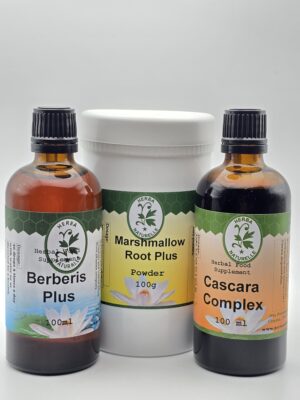
Herbs used in clinical practice for gut health, including the Berberis Plus tincture with its berberine-rich barberry, fennel, and gentian, stimulate bile production, restore bowel rhythm, and reduce gut inflammation through precisely understood phytochemical pathways. Marshmallow Root Plus, a powerful demulcent formula, soothes and repairs the gut lining through mucilaginous polysaccharides that coat, protect, and regenerate inflamed intestinal tissue.
For the respiratory system and seasonal immune health, herbs like elderflower, nettle, and stone root, combined in the Elderflower Complex, support the body’s response to seasonal environmental triggers without the drowsiness associated with many antihistamines. Nettle leaf benefits and stone root’s role in circulation and congestion represent a depth of botanical knowledge developed over centuries and increasingly validated by modern research.
For nervous system support, Gotu Kola Complex, containing ashwagandha, Siberian ginseng, scullcap, hops, and oats alongside the renowned adaptogenic herb gotu kola, provides a comprehensive formula for calming the overactive surface nervous system, reducing mental fog, and restoring the capacity for genuine rest. This is the type of support that helps people who are, as Anjela Jeganathan describes it in her post on Rhodiola for stress and fatigue, exhausted but unable to switch off, a pattern that is almost ubiquitous in modern Britain.
Gut Health: The Foundation of Everything
Perhaps no area has seen a greater convergence between conventional science and herbal medicine than gut health. The understanding that the gut microbiome affects immune function, mood, hormonal balance, skin health, and even cardiovascular risk has revolutionised medicine’s view of the digestive system. What herbalists have known for centuries, that restoring gut health is foundational to whole-body healing, is now being validated by mainstream gastroenterology and immunology.
Understanding 10 signs of an unhealthy gut is now a concern for millions of British people. Questions about gut repair supplements, digestive enzymes, vegan probiotics, probiotic water, and the best probiotics for travelling reflect a population that is actively engaged with its own digestive health. Even formerly fringe topics like understanding a gastrointestinal chart and how to test for leaky gut at home are now mainstream health conversations.
For those dealing with specific digestive complaints, from trapped wind remedy and trapped wind relief to understanding what to take for trapped wind, herbal medicine offers targeted, evidence-supported solutions. The enema UK guide and resources on how to test for IBS at home reflect a population taking active ownership of its digestive health. The Digestive Reset Bundle addresses this comprehensively, restoring bowel rhythm, soothing the gut lining, and clearing the inflammatory burden that underlies so many digestive conditions.
Cardiovascular Health: Prevention Over Intervention
Cardiovascular disease remains the leading cause of death in the UK. The NHS’s approach, largely pharmacological, centred on statins, antihypertensives, and anticoagulants, has saved many lives. But the herbal medicine perspective argues, with considerable evidence, that the inflammatory processes underlying cardiovascular disease begin years or decades before a clinical event, and that addressing these processes early, through diet, lifestyle, and appropriate herbal support, can prevent the disease from developing in the first place.
Resources like the full MOT blood test guide, full body MOT blood test guide, and cholesterol machine test at home are empowering people to monitor their cardiovascular health proactively. Understanding what a QRISK2 score is and the QRISK2 meaning helps people engage intelligently with their own risk profiles.
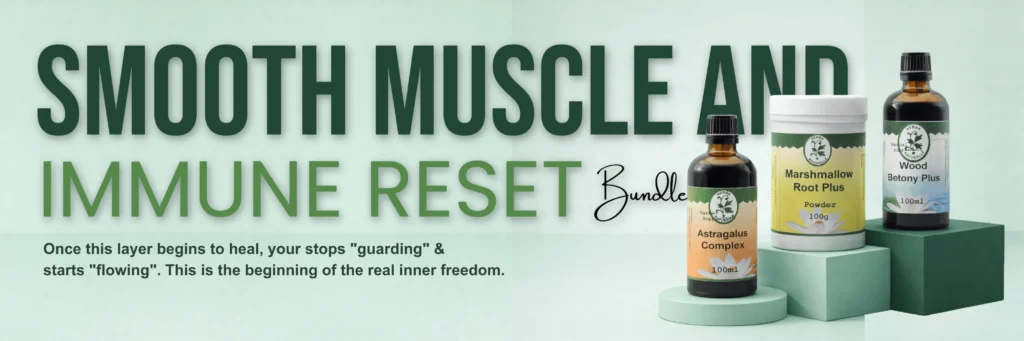
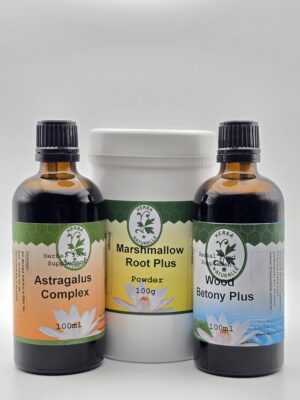
The Smooth Muscle and Immune Reset Bundle, addressing chronic inflammation in the smooth muscle lining of the blood vessels and organs, is designed for exactly this preventive territory. So too is the Schizandra Complex, which supports lymphatic flow and detoxification, and the Barley Grass Plus, a nutritionally dense green supplement supporting cellular health and detoxification pathways.
Hormonal and Reproductive Health
For women navigating hormonal health, from irregular cycles and painful periods through to PCOS, endometriosis, and the menopause transition, herbal medicine offers a depth of clinical tradition that mainstream gynaecology often cannot match. The Shatavari Complex, combining the Ayurvedic female tonic Shatavari with complementary herbs, is a prime example of botanical medicine drawing on millennia of clinical tradition. For male vitality and hormonal health, the Gokshura Ashwagandha Plus combines traditional male tonic herbs for energy, stamina, and reproductive health.
For urinary and kidney health, conditions such as urinary tract infections, bladder irritability, and kidney support, the Cornsilk Plus and Couch Grass Complex address the smooth muscle lining of the urinary tract with gentle, targeted herbal combinations.
For respiratory health, including chronic cough, bronchitis, and respiratory inflammation, the Lungwort Plus draws on the traditional doctrine of signatures and the genuine anti-inflammatory properties of lungwort for respiratory mucosal support.
Herba Naturalle: Root-Cause Healing for the Modern Age
The Vision Behind the Clinic
Herba Naturalle, founded and led by Medical Herbalist Anjela Jeganathan, represents a genuinely distinctive approach to healthcare. With over 30 years of clinical practice, Anjela has developed a framework for understanding chronic illness that sits at the intersection of traditional botanical medicine, modern physiology, and careful clinical observation.
The clinic’s founding principle is that the body operates through three interconnected physiological layers, the digestive and elimination system, the surface nervous system, and the smooth muscle lining of the organs and blood vessels and that chronic illness almost universally involves disruption in one or more of these layers. Rather than addressing symptoms in isolation, Herba Naturalle’s approach restores these layers sequentially, creating the conditions for genuine, lasting recovery rather than symptom management.
The clinic’s history is rich with real clinical stories, including the story of Omari’s visit to the herbal clinic and the accounts of opening the clinic dispensary in 2005 and 2007, that speak to the depth and continuity of this clinical commitment.
The Inflammation Pandemic Framework
Anjela’s most significant clinical and educational contribution is what she calls the inflammation pandemic, a framework for understanding the root cause of most chronic illness. Explored across a landmark series of clinical posts, this framework examines inflammation in the digestive system (Part 1) and Part 2, and the final episode of the series draws together a comprehensive clinical picture of how inflammation drives disease across every body system.
The framework examines inflammation in the muscles and joints and its link to autoimmunity, cardiovascular inflammation, and the nervous system’s relationship with the inflammatory process. This is clinical education at the highest level, accessible to patients and practitioners alike, and grounded in decades of lived clinical experience.
A Practical Guide to Herbal Support
For those new to herbal medicine, Herba Naturalle’s practical guide to when to use herbal medicine is an excellent starting point, providing a clear, evidence-informed framework for understanding how herbal medicine complements rather than replaces conventional care.
The clinic offers a full range of herbal products and a comprehensive online shop, making it possible to access clinically developed herbal formulations from anywhere in the UK. The Nervous System Reset Bundle is the clinic’s flagship product for chronic stress, nervous system dysregulation, and mental fatigue, combining Rhodiola, Gotu Kola, Siberian ginseng, ashwagandha, scullcap, hops, and oats into a comprehensive three-month programme for nervous system recovery.
The three-step bundle system, encompassing the Digestive Reset, Nervous System Reset, and Smooth Muscle and Immune Reset, provides a structured, sequenced approach to whole-body healing that addresses root causes in the correct physiological order.
For those seeking personalised support, consultations and fees are clearly set out, and the clinic’s case scenarios give a clear picture of the kinds of conditions and outcomes that Anjela’s clinical approach addresses. A comprehensive FAQ section answers the most common questions about herbal medicine practice, and delivery and returns information makes ordering products straightforward.
Herba Naturalle’s blog is one of the most comprehensive resources on holistic health and herbal medicine available in the UK, spanning holistic health and natural living, herbal supplements and ingredients, stress and anxiety management, gut health and microbiome, heart health and prevention, cardiovascular wellness tips, mental wellness and support, seasonal and sinus health, UK health and wellness resources, and digestive health solutions.
Gotu Kola and Rhodiola: Clinical Herbs for the Modern Nervous System
Two of the herbs at the heart of Herba Naturalle’s nervous system work deserve particular mention. Gotu Kola for nervous system support, a herb used for centuries in Ayurvedic and traditional South-East Asian medicine, supports mental clarity, nervous system balance, and healthy circulation. Its ability to calm the mind without sedating it makes it uniquely suited to the modern experience of being mentally exhausted yet unable to switch off.
Rhodiola for stress and fatigue, a plant of cold, mountainous environments, has accumulated one of the most impressive evidence bases of any adaptogenic herb, with clinical trials demonstrating reductions in perceived stress, improvement in cognitive performance, and meaningful reduction in fatigue in both healthy individuals and those with burnout syndrome. Together with the other adaptogens and nervine herbs in the Nervous System Reset complex, these plants represent an approach to chronic stress that addresses the physiological root, not just the psychological surface.
The Future: Integrative Healthcare and the Role of Herbal Medicine
Towards a Genuinely Integrated Approach
The future of healthcare in the UK is likely to be integrative, drawing on the strengths of conventional medicine for acute illness and emergency care, while deploying the insights of herbal medicine, nutritional medicine, and lifestyle medicine for the chronic disease burden. This is not a utopian vision; it is already happening, in the consultations of practitioners like Anjela Jeganathan and the growing number of NHS-adjacent wellness services that are being commissioned to address the demand that conventional GP practice cannot meet.
Herbal medicine organisations such as the National Institute of Medical Herbalists, the British Herbal Medicine Association, the Herbal Apothecary UK, and regional practitioners including Napiers, the historic Edinburgh herbal dispensary, are part of a professional ecosystem that provides rigorous, evidence-informed botanical medicine across the UK. Resources from Herbal Health UK, Herbal Health, Herbal Health and Home, and the College of Practitioners of Phytotherapy provide educational infrastructure that continues to raise the standard of herbal practice.
For those with cancer diagnoses seeking to understand how herbal medicine might complement conventional treatment, Cancer Research UK’s guidance on herbal medicine provides balanced, evidence-informed information, and the NHS prescribing guidance on herbal treatments and Lodge House guidance offer clinical context for practitioners working within or alongside NHS services.
Digital Health and the Growing Wellness Economy
The UK’s wellness economy, including herbal supplements, functional foods, yoga, meditation, retreat experiences, and complementary therapies, is now worth billions of pounds annually, and growing. Digital platforms and online clinics have democratised access to specialist knowledge, making it possible for someone in rural Yorkshire or coastal Cornwall to access the same quality of herbal medicine consultation as someone in central London.
The digital health and healthcare marketing sector plays an increasingly important role in connecting people with quality natural health providers. Agencies specialising in healthcare digital strategy, such as Rafenthic and Rafenthic Digital, are helping herbal medicine and holistic health practitioners build the online visibility and authority that allows them to reach the millions of UK residents who are actively searching for natural health solutions. In an era when Google search is often the first step in a health journey, ensuring that qualified practitioners, rather than low-quality product sellers, rank for health-related queries is genuinely important work.
Conclusion: A Movement Whose Time Has Come
Herbal medicine in the UK is not a trend. It is the continuation of a tradition thousands of years old, finding new relevance in a healthcare system under pressure and a population dealing with levels of chronic illness and chronic stress that our pharmaceutical infrastructure was never designed to address alone.
The shift happening in British healthcare, towards root-cause thinking, preventive medicine, personalised care, and respect for the body’s innate healing capacity, is one of the most significant health movements of the 21st century. It is being led not by alternative practitioners rejecting science, but by clinically trained, evidence-informed practitioners like Anjela Jeganathan at Herba Naturalle who combine deep botanical knowledge with rigorous clinical thinking.
Whether you are navigating men’s mental health awareness month, concerned about your cardiovascular disease risk, dealing with chronic stress, or simply looking to understand what it means to be genuinely healthy, herbal medicine, practised at its best, offers something that the NHS alone cannot: the time, the attention, the personalisation, and the root-cause focus that genuine healing requires.
To explore what a herbal medicine approach might offer for your specific health situation, contact Herba Naturalle and begin the conversation.
References
The following authoritative sources were consulted in the preparation of this article and are recommended for further reading on herbal medicine, integrative healthcare, and the UK health landscape:
- Herbal Health UK, educational resources on herbal medicine in the UK
- Herbal Health, herbalhealth-uk.co.uk, UK herbal health practitioner information
- NHS: Herbal Medicines and Complementary Therapies, NHS official guidance on herbal and complementary medicine
- National Institutes of Health, PMC Research: Herbal Medicine, peer-reviewed research on herbal medicine
- British Herbal Medicine Association (BHMA), UK regulatory and professional body for herbal medicine
- National Institute of Medical Herbalists (NIMH), the UK’s oldest and foremost professional herbal medicine organisation
- Herbal Apothecary UK, specialist herbal dispensary
- Cancer Research UK: Herbal Medicine, evidence-based guidance on herbal medicine in oncology
- NHS Prescribing Guidance: Herbal Treatments, clinical guidance for NHS prescribers
- Herbal Health and Home, UK herbal health resources
- College of Practitioners of Phytotherapy, professional standards for herbal practitioners
- Guy’s and St Thomas’ NHS: Herbal Remedies and Dietary Supplements, NHS patient information on herbal remedies
- Lodge House: Herbal Medicine, clinical herbal medicine practice
- Napiers, Edinburgh Herbalists, Scotland’s historic herbal dispensary
Our Trending Products & Bundles
-
 Digestive reset bundle
Original price was: £151.65.£144.95Current price is: £144.95.
Digestive reset bundle
Original price was: £151.65.£144.95Current price is: £144.95.
-
 Smooth muscle and immune reset Bundle
Original price was: £177.60.£159.95Current price is: £159.95.
Smooth muscle and immune reset Bundle
Original price was: £177.60.£159.95Current price is: £159.95.
-
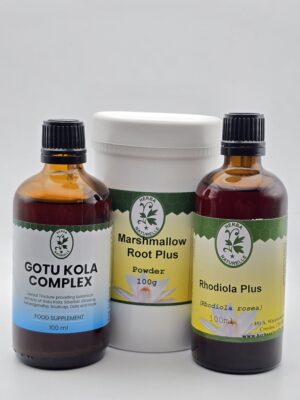 Nervous System Reset
Original price was: £163.68.£149.95Current price is: £149.95.
Nervous System Reset
Original price was: £163.68.£149.95Current price is: £149.95.
-
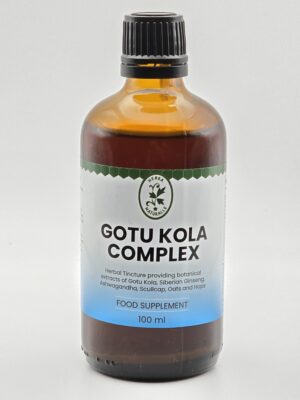 Gotu Kola Complex
£26.95
Gotu Kola Complex
£26.95