

Section 4 Mental Health Act: A Plain-Language Guide for Patients and Families
If someone you care about has been detained under Section 4 of the Mental Health Act, or if you have been detained yourself, it is natural to feel confused, frightened, or overwhelmed. This article explains what Section 4 means, when it is used, what rights exist under it, and what typically happens next.
What Is the Mental Health Act 1983?
The Mental Health Act 1983 (MHA) is the law in England and Wales that governs when and how people can be compulsorily admitted to, detained in, and treated in hospital for mental disorders. It contains several numbered sections, each covering different circumstances and periods of detention.
What Is Section 4 of the Mental Health Act?
Section 4 is known as emergency admission for assessment. It is used in urgent situations where there is no time to arrange the two medical recommendations normally required under Section 2. It allows a person to be admitted to hospital for assessment without their consent when:
- It is an emergency situation
- Detention is necessary in the interests of the person’s own health or safety, or for the protection of others
- Waiting to obtain two medical recommendations under Section 2 would involve undesirable delay

How Does Section 4 Differ From Section 2?
The key differences between Section 4 and Section 2 are:
- Section 4 requires only one doctor’s recommendation, usually the person’s GP or another doctor who knows them. Section 2 requires two independent medical recommendations.
- Section 4 lasts for a maximum of 72 hours. Section 2 lasts for up to 28 days.
- Section 4 is specifically for emergency situations. Section 2 is used for assessment where there is more time to arrange the proper process.
In practice, Section 4 is often converted to Section 2 once a second medical recommendation can be obtained within the 72-hour period.
Who Can Authorise Section 4 Detention?
Section 4 requires two things:
- One medical recommendation, from a doctor who, if possible, has previous knowledge of the person (typically their GP). In genuine emergencies it may be any doctor.
- An application, made by an Approved Mental Health Professional (AMHP) or, in some circumstances, the person’s Nearest Relative.
What Rights Does a Person Have Under Section 4?
Even under emergency detention, people retain important rights:
- The right to know why they have been detained
- The right to have the section papers explained to them
- The right to be told about their legal rights under the MHA
- The right to have their Nearest Relative informed
- The right to contact an Independent Mental Health Advocate (IMHA)
Importantly, Section 4 does not automatically authorise treatment without consent. Treatment can only be given without consent under specific provisions of the Act.

What Happens After 72 Hours?
Section 4 expires after 72 hours unless it is converted to a longer section. The options at this point include:
- Conversion to Section 2, if a second medical recommendation is obtained, the person can be detained for up to 28 days for assessment
- Conversion to Section 3, if the assessment reveals a need for treatment, detention can be extended under Section 3 for up to six months
- Discharge, if the person is assessed as not meeting the criteria for further detention, they must be released
How Does Detention Affect Mental Wellbeing?
Psychiatric detention is a significant life event, and both the experience of crisis that led to it and the detention itself can leave lasting emotional impacts, on the person detained and on their family. Recovery support is an important part of the process, both during and after admission.
If you or a loved one is experiencing the effects of mental health crisis, including anxiety, nervous system dysregulation, or emotional overwhelm, the nervous system reset bundle at Herba Naturalle offers a gentle, natural approach to calming the surface nervous system over a three-month period.
You can also explore case scenarios from clinical practice to better understand how a whole-body herbal approach supports recovery.

Where Can You Find Further Information?
If you need further guidance on the Mental Health Act:
- Mind (mind.org.uk) provides detailed guidance on all sections of the MHA
- Rethink Mental Illness offers support for families and carers
- Independent Mental Health Advocates (IMHAs) are available to all detained patients and can be arranged through the hospital
- The Care Quality Commission (CQC) oversees the use of the Mental Health Act
Support Your Body Naturally With Herba Naturalle
If any of the topics in this article resonate with you, the Herba Naturalle Bundle page offers a structured, three-step herbal protocol designed to address chronic illness at the root. The approach, developed over 30 years of clinical practice by Anjela Jeganathan, works across three healing layers:
- Step 1, Digestive Reset: Restore digestive rhythm, nutrient absorption, and healthy elimination
- Step 2, Surface Nervous System Reset: Calm inner restlessness, reduce stress reactivity, and settle the mind
- Step 3, Smooth Muscle & Immune Lining Healing: Reduce chronic inflammation in the tissue lining surrounding organs, blood vessels, and immune pathways
Explore the full protocol at the Herba Naturalle Bundle page and find the starting point that matches your body’s needs.
Have Questions? Get in Touch
If you would like personalised guidance or have questions about herbal support for your health, you are welcome to contact Anjela directly. She offers consultations tailored to your individual health needs.
Our Trending Products & Bundles
-
 Digestive reset bundle
Original price was: £151.65.£144.95Current price is: £144.95.
Digestive reset bundle
Original price was: £151.65.£144.95Current price is: £144.95.
-
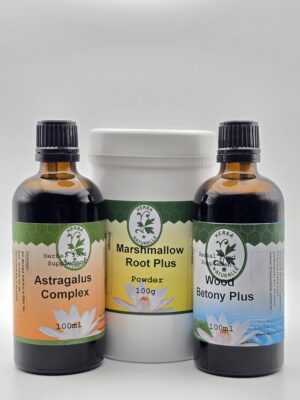 Smooth muscle and immune reset Bundle
Original price was: £177.60.£159.95Current price is: £159.95.
Smooth muscle and immune reset Bundle
Original price was: £177.60.£159.95Current price is: £159.95.
-
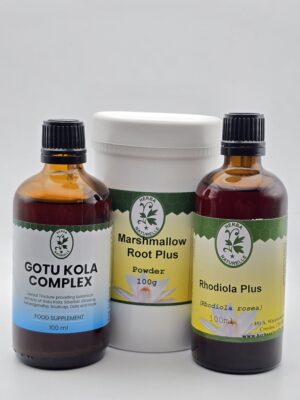 Nervous System Reset
Original price was: £163.68.£149.95Current price is: £149.95.
Nervous System Reset
Original price was: £163.68.£149.95Current price is: £149.95.
-
 Gotu Kola Complex
£26.95
Gotu Kola Complex
£26.95