
Herbal Tea for Digestion UK: What Works, When to Drink It and What Most People Get Wrong
If you are searching for the best herbal tea for digestion in the UK, the advice you will find online is almost always the same: a brief list of herbs with a one-line description each, no explanation of why each one works, and no guidance on when to actually drink them. Consequently, most people buy a herbal digestion tea, drink it at the wrong time, pick the wrong herb for their specific problem, and decide that herbal tea does not work.
This guide does things differently. As a medical herbalist with over 30 years of clinical practice, the approach here is to explain precisely which herbal tea for digestion suits which digestive problem, what the clinical evidence shows, and when to drink each one for maximum effect. Furthermore, this guide explains what most digestive teas sold in UK supermarkets and health food shops are missing and why that matters.
Table of Contents
- Why Herbal Tea for Digestion Works: The Clinical Mechanism
- The 7 Best Herbal Teas for Digestion UK
- Quick Reference Table: Match Your Symptom to the Right Herbal Tea for Digestion
- When to Drink Herbal Digestive Tea for Best Results
- What Most UK Digestive Teas Get Wrong
- How to Brew Herbal Tea for Digestion Correctly
- Herbal Tea for Digestion and IBS: What to Know
- When Tea Is Not Enough: Moving to Tinctures
- When to See a Medical Herbalist
- Frequently Asked Questions
Why Herbal Tea for Digestion Works: The Clinical Mechanism
Before exploring which herbal tea for digestion to choose, it is worth understanding why digestive herbs work at all, because this directly determines which tea will help your specific problem.
Digestive herbs act through several distinct mechanisms. First, carminative herbs such as peppermint, fennel and ginger contain volatile oils that relax smooth muscle in the digestive tract, reducing spasm, gas and cramping. Second, bitter herbs such as dandelion root and gentian stimulate bitter taste receptors on the tongue, which reflexively trigger bile production in the liver and acid secretion in the stomach, improving the breakdown of fats and proteins. Third, demulcent herbs such as marshmallow root and licorice coat and soothe irritated mucous membranes throughout the digestive tract, reducing inflammation and protecting the gut lining.
These three mechanisms address fundamentally different digestive problems. Therefore, choosing a herbal tea for digestion without knowing which mechanism you need is why so many people find that herbal teas seem not to work for them.
Understanding how bitter herbs activate digestion through the nervous system and the role of mucilaginous herbs in gut lining repair gives important clinical context for the herbs described below. Additionally, the gut-brain axis and how the nervous system controls digestion explains why stress-related digestive symptoms respond so well to specific nervine digestive herbs.
The 7 Best Herbal Teas for Digestion UK
1. Peppermint Tea: Best Herbal Tea for Digestion, Gas and Bloating
Peppermint (Mentha piperita) is the most clinically studied herbal tea for digestion available in the UK. The leaves contain high concentrations of menthol and menthone, volatile oils with well-documented antispasmodic properties. A 2014 meta-analysis published in the Journal of Clinical Gastroenterology reviewed 9 randomised controlled trials and confirmed that peppermint significantly outperformed placebo for reducing IBS symptoms including bloating, cramping and gas. According to the NHS, peppermint oil capsules are one of the recommended options for IBS symptom management.
As a herbal tea for digestion, peppermint works specifically by relaxing the smooth muscle of the lower oesophageal sphincter and intestinal walls, allowing trapped gas to pass and reducing painful spasm. Moreover, it has mild antimicrobial properties that may reduce bacterial overgrowth in the small intestine, which is one contributor to bloating in some people.
Best for: Bloating, gas, intestinal cramping, IBS with constipation or mixed pattern, post-meal discomfort.
When to drink: 20 to 30 minutes after meals, or at the onset of bloating or cramping.
Important caution: Peppermint tea relaxes the lower oesophageal sphincter. Therefore, if acid reflux or heartburn is your primary complaint, peppermint tea may worsen your symptoms. For acid reflux, choose marshmallow root or licorice tea instead.
UK dose: 1 to 2 teaspoons of dried leaf per cup, steeped for 10 minutes covered to retain volatile oils.
For the full clinical profile of peppermint, read the peppermint leaf herb profile and the peppermint tincture guide when a stronger preparation is needed.
2. Ginger Tea: Best Herbal Tea for Digestion and Nausea
Ginger (Zingiber officinale) has the strongest evidence base of any herb for upper digestive symptoms, particularly nausea, slow gastric emptying and post-meal heaviness. The active compounds gingerols and shogaols accelerate gastric emptying, the rate at which food moves from the stomach into the small intestine, by acting on 5-HT3 receptors in the gut wall. Additionally, ginger has well-documented anti-inflammatory effects through inhibition of COX-2 and 5-LOX pathways, reducing gut inflammation that contributes to bloating and discomfort.
As a herbal tea for digestion, ginger is particularly valuable after heavy or fatty meals that cause a sensation of fullness and sluggishness. Furthermore, it is one of the few digestive herbs supported by strong evidence for pregnancy-related nausea, with multiple systematic reviews confirming its safety and efficacy at standard doses.
Best for: Nausea, slow digestion after meals, post-meal heaviness, motion sickness, early morning nausea, pregnancy nausea at standard doses.
When to drink: 15 to 20 minutes before a heavy meal to prepare digestive secretions, or immediately after eating when heaviness or nausea is the main complaint.
UK dose: 1 to 2 cm of fresh ginger root per cup, simmered for 10 minutes, or 1 teaspoon of dried ginger powder steeped for 7 minutes.
Read the ginger tincture guide for situations where a more concentrated preparation is needed for persistent nausea or inflammatory digestive conditions.
3. Fennel Tea: Best Herbal Tea for Digestion and Wind
Fennel (Foeniculum vulgare) seed tea is one of the most effective herbal teas for digestion specifically targeting trapped wind, bloating from gas production, and intestinal cramping in the lower digestive tract. The volatile oil anethole is the primary active compound. It relaxes the smooth muscle of the intestinal wall, allowing gas to move through and be expelled rather than accumulating and causing painful distension.
Fennel tea is particularly effective as a herbal tea for digestion after meals that produce significant fermentation, such as legumes, cruciferous vegetables, or high-fibre foods. Moreover, it has mild prebiotic properties, nourishing beneficial gut bacteria while reducing the population of gas-producing microorganisms.
Best for: Trapped wind, lower abdominal bloating, colic-type cramping, excessive flatulence, infant colic when used in dilute form.
When to drink: Immediately after meals that commonly cause gas, or when bloating and wind are present.
UK dose: 1 teaspoon of lightly crushed fennel seeds per cup, steeped covered for 10 minutes.
The fennel seed herb profile covers its broader digestive applications in detail.
4. Chamomile Tea: Best Herbal Tea for Digestion and Stress
Chamomile (Matricaria chamomilla) occupies a unique position among herbal teas for digestion because it addresses both the physical and nervous system dimensions of digestive discomfort simultaneously. The flavonoid apigenin reduces smooth muscle spasm in the digestive tract, while the volatile compound bisabolol has significant anti-inflammatory properties at the gut lining level.
Crucially, chamomile as a herbal tea for digestion is most valuable for people whose digestive symptoms are clearly worsened by stress and anxiety. This is because the gut-brain axis means that nervous system activation directly triggers gut spasm, altered motility, and increased gut sensitivity. Chamomile acts on both systems at once, calming the nervous system through GABA receptor partial agonism while simultaneously relaxing intestinal smooth muscle.
Best for: Stress-related digestive symptoms, nervous stomach, IBS triggered by anxiety, irritable bowel with cramping and urgency, mild inflammatory digestive conditions.
When to drink: 20 to 30 minutes before meals when stress is anticipatory, or after meals when stress-driven symptoms appear.
UK dose: 1 to 2 teaspoons of dried chamomile flowers per cup, steeped covered for 10 to 15 minutes.
Caution: Chamomile belongs to the Asteraceae family. People with ragweed allergy may experience cross-reactivity in a small percentage of cases.
Read the German chamomile herb profile and how the gut-brain connection explains stress-driven digestive symptoms.
5. Dandelion Root Tea: Best Herbal Tea for Digestion and Liver Support
Dandelion root (Taraxacum officinale) tea is the primary bitter digestive herb in the Western herbal tradition. Its mechanism of action is fundamentally different from the carminative herbs above. Rather than relaxing smooth muscle, dandelion root stimulates the liver to produce more bile and the gallbladder to release it into the small intestine, where it is essential for emulsifying and digesting dietary fats.
As a herbal tea for digestion, dandelion root is specifically suited to people who experience heaviness, nausea, and sluggish digestion after fatty or rich meals, those with a history of gallbladder sluggishness, and people who eat a high-fat diet. Additionally, the inulin content in dandelion root acts as a prebiotic, nourishing beneficial bacteria in the large intestine.
Best for: Sluggish digestion after fatty meals, mild constipation from liver or bile sluggishness, bloating related to poor fat digestion, liver and gallbladder support.
When to drink: 15 to 20 minutes before meals, particularly before lunch or dinner, to stimulate digestive secretions in advance.
Important note: Dandelion root tea tastes distinctly bitter. This bitterness is not a flaw but the therapeutic mechanism. Sweetening it with honey blunts the bitter receptor stimulation and reduces its digestive effect.
UK dose: 1 to 2 teaspoons of dried dandelion root per cup, simmered gently for 10 minutes.
Read the dandelion root herb profile and the dandelion root tincture guide for more concentrated applications.
6. Marshmallow Root Tea: Best Herbal Tea for Digestion and Gut Lining Repair
Marshmallow root (Althaea officinalis) works through a completely different mechanism from every other herbal tea for digestion on this list. It is a demulcent herb, meaning its high mucilage content forms a soothing gel-like coating over irritated and inflamed mucous membranes throughout the digestive tract, from the oesophagus all the way through to the large intestine.
This makes marshmallow root tea the most appropriate herbal tea for digestion when the problem is irritation and inflammation of the gut lining rather than motility, gas, or bile insufficiency. Conditions such as acid reflux, heartburn, oesophagitis, gastritis, and leaky gut syndrome all involve mucosal irritation that marshmallow root addresses directly.
Best for: Acid reflux, heartburn, gastritis, oesophageal irritation, leaky gut, food sensitivity-related gut inflammation, mouth ulcers extending to the digestive tract.
When to drink: On an empty stomach, 20 to 30 minutes before meals, to coat the gut lining before food arrives.
Important preparation note: Unlike most herbal teas, marshmallow root should be prepared as a cold infusion for maximum mucilage content. Place 2 teaspoons of dried root in cold water and leave to steep for 4 to 8 hours. The mucilage dissolves more completely in cold water than in hot.
Read the marshmallow root herb profile for the full clinical picture.
7. Licorice Root Tea: Best Herbal Tea for Digestion and Stomach Lining
Licorice root (Glycyrrhiza glabra) contains glycyrrhizin and flavonoids that stimulate the production of protective mucus throughout the stomach lining. Additionally, the compound carbenoxolone derived from licorice has been shown to have comparable mucosal protective effects to conventional anti-ulcer medications in some studies.
As a herbal tea for digestion, licorice root is specifically suited to people with a burning, acidic, or raw sensation in the stomach or upper digestive tract. Furthermore, deglycyrrhizinated licorice (DGL), from which the blood-pressure-raising component has been removed, is widely regarded as one of the safest and most effective natural approaches to gastric mucosal protection.
Best for: Gastric ulcers, stomach burning, acid indigestion, upper digestive tract irritation, Helicobacter pylori support alongside conventional treatment.
When to drink: 20 to 30 minutes before meals on an empty stomach.
Important caution: Whole licorice root tea contains glycyrrhizin, which can raise blood pressure and cause potassium loss with prolonged daily use. Do not use whole licorice root tea daily for more than 4 to 6 weeks without professional guidance. DGL preparations avoid this concern.
Read the licorice herb profile for full safety and dosing details.
Quick Reference Table: Match Your Symptom to the Right Herbal Tea for Digestion
| Digestive Symptom | Best Herbal Tea for Digestion | When to Drink | Avoid If |
|---|---|---|---|
| Bloating and gas | Peppermint or Fennel | After meals | Acid reflux present |
| Nausea and heaviness | Ginger | Before or after meals | Gallstones (high dose) |
| Trapped wind | Fennel | After meals | Pregnancy (high dose) |
| Stress-related symptoms | Chamomile | Before or after meals | Ragweed allergy |
| Sluggish after fatty meals | Dandelion Root | Before meals | Bile duct obstruction |
| Acid reflux or heartburn | Marshmallow Root | Before meals, cold | n/a |
| Stomach burning or ulcers | Licorice Root | Before meals | High blood pressure |
| IBS with cramping | Peppermint or Chamomile | After meals | Acid reflux (peppermint) |
When to Drink Herbal Tea for Digestion for Best Results
Timing is one of the most overlooked aspects of using herbal tea for digestion effectively. The right herb taken at the wrong time produces noticeably weaker results.
Before meals (15 to 30 minutes): Bitter herbs including dandelion root, gentian, and licorice root work best before meals because they need time to stimulate digestive secretions in advance of food arriving. Moreover, marshmallow root taken before meals on an empty stomach coats the gut lining before food and acid begin to interact with it.
During or immediately after meals: Carminative teas including peppermint, fennel, and ginger work best taken at the end of or shortly after eating, when their smooth muscle relaxing effects can act on the food already in the digestive tract.
Between meals: Chamomile and marshmallow root can be drunk between meals for their broader anti-inflammatory and nervine digestive effects, particularly for people with IBS or chronic gut inflammation.
Before bed: Chamomile tea taken 30 minutes before bed addresses the stress-digestion connection by calming the nervous system overnight, which reduces the morning digestive symptoms that many people with IBS experience upon waking.
What Most UK Digestive Teas Get Wrong
Most herbal digestive tea blends sold in UK supermarkets and health food shops share the same fundamental problem: they combine multiple herbs at doses too low to have meaningful clinical effect, in a bag that is steeped for 2 to 3 minutes.
A standard commercial peppermint tea bag contains approximately 1 gram of dried leaf. Clinical trials showing meaningful digestive benefit use the equivalent of 2 to 4 grams per cup, steeped for a minimum of 7 to 10 minutes in a covered cup to retain volatile oils. Additionally, the plastic mesh or paper bags used in most commercial teas restrict the extraction of active compounds compared to loose leaf tea steeped in a pot or infuser.
This does not mean commercial herbal teas are worthless. However, it explains why people often report that herbal digestive tea does not seem to work. The solution is simply to use more herb, steep for longer, and cover the cup during infusion.
How to Brew Herbal Tea for Digestion Correctly
| Step | Why It Matters |
|---|---|
| Use loose leaf or high-quality bags | More active material per cup |
| Use 1.5 to 2 teaspoons per cup | Clinical dose rather than flavour dose |
| Cover cup during steeping | Retains volatile oils (peppermint, fennel, ginger) |
| Steep for 7 to 15 minutes | Full extraction of active compounds |
| Drink hot but not scalding | Optimal absorption and comfort |
| Cold infuse marshmallow root | Mucilage dissolves better in cold water |
| Do not sweeten bitter teas | Preserves the therapeutic bitter receptor stimulation |
Herbal Tea for Digestion and IBS: What to Know
IBS affects approximately 10 to 20 percent of the UK population, according to the NHS, making it one of the most common reasons people search for herbal tea for digestion. The important clinical point is that IBS is not a single condition but a category covering several different underlying patterns, and different patterns require different herbal teas.
IBS with bloating and gas (IBS-C or IBS-M): Peppermint tea and fennel tea are the most appropriate starting point, with strong evidence for peppermint specifically.
IBS with stress-triggered symptoms: Chamomile tea addresses both the gut spasm and the nervous system activation simultaneously, making it the best choice for this pattern. Additionally, understanding the herbal approach to anxiety and the nervous system helps put this into broader context.
IBS with gut inflammation or food sensitivity: Marshmallow root tea and chamomile tea are most appropriate, as both address mucosal irritation and inflammation.
IBS with sluggish bowel or liver involvement: Dandelion root tea before meals can help stimulate bile flow and improve fat digestion, which reduces fermentation and gas production downstream.
For more comprehensive information on the herbal approach to IBS and gut health, read herbal medicine for IBS and what a medical herbalist looks for and the guide to herbal medicine for digestive health.
When Tea Is Not Enough: Moving to Tinctures
Herbal tea for digestion is an accessible and pleasant way to support gut health for mild to moderate symptoms. However, there are situations where the tea form simply does not deliver a sufficient dose of active compounds to produce meaningful clinical effect.
A well-made herbal tincture is typically 3 to 5 times more concentrated per dose than an equivalent amount of dried herb in tea form. Additionally, alcohol-based tinctures extract a broader range of active compounds than hot water alone, particularly resins, alkaloids, and certain flavonoids that are poorly water-soluble.
For people with IBS, chronic bloating, persistent gut inflammation, or digestive symptoms that have not improved with dietary changes and herbal tea, moving to a professionally formulated tincture is usually the appropriate next step. You can read more about bioavailability differences between tinctures and teas and the digestive reset approach using herbal medicine.
When to See a Medical Herbalist
Herbal tea for digestion is an appropriate self-help tool for mild, occasional, or stress-related digestive symptoms. However, there are situations where professional assessment will produce significantly better results than self-selecting teas.
Consider booking a medical herbalist consultation if:
- Your digestive symptoms have been present for more than 3 months
- You have been diagnosed with IBS, IBD, SIBO, or another gut condition and want herbal support
- Symptoms include unexplained weight loss, blood in stool, or severe pain (see your GP first for these)
- You have tried multiple digestive teas and supplements without meaningful improvement
- Your digestive symptoms are clearly connected to stress, anxiety, or burnout
- You are on prescription medications, as some digestive herbs interact with certain drugs
A medical herbalist assesses the full digestive picture including gut motility, liver and bile function, gut microbiome, nervous system tone, and inflammatory markers, then formulates a bespoke tincture protocol specific to your situation. This approach consistently produces better results than any single herbal tea.
Information about consultations and fees is available on this site.
Frequently Asked Questions
What is the best herbal tea for digestion in the UK?
Peppermint tea has the strongest clinical evidence for general digestive support, particularly for bloating, gas, and IBS-related cramping. However, the best herbal tea for digestion depends on your specific symptom pattern. Ginger suits nausea and slow digestion, fennel suits trapped wind, chamomile suits stress-related symptoms, dandelion root suits sluggish digestion after fatty meals, marshmallow root suits acid reflux and heartburn, and licorice root suits stomach burning and gastritis.
When should I drink herbal tea for digestion?
Timing depends on the herb. Bitter herbs including dandelion root and licorice should be drunk 15 to 30 minutes before meals to stimulate digestive secretions. Carminative herbs including peppermint, fennel, and ginger work best immediately after meals. Chamomile can be drunk before or after meals, or before bed for overnight nervous system support.
Can herbal tea for digestion help IBS?
Yes, particularly peppermint and chamomile. The NHS lists peppermint as a recommended option for IBS symptom management. Multiple randomised controlled trials support its use for reducing bloating, cramping, and gas in IBS. Chamomile is most useful when stress is a clear IBS trigger. For more complex IBS, professional herbal prescribing typically produces better results than tea alone.
How long should I steep herbal tea for digestion?
A minimum of 7 to 10 minutes for most digestive herbs, with the cup covered to retain volatile oils. Marshmallow root is best prepared as a cold infusion steeped for 4 to 8 hours. Commercial tea bags steeped for 2 to 3 minutes produce a significantly weaker preparation than the clinical dose used in research.
Is peppermint tea safe for acid reflux?
No. Peppermint relaxes the lower oesophageal sphincter, which can worsen acid reflux by allowing stomach acid to move upward. For acid reflux and heartburn, marshmallow root tea and licorice root tea are significantly more appropriate choices, as both protect and soothe the oesophageal and gastric lining.
Can I drink herbal digestive tea every day?
Most digestive herbal teas including peppermint, chamomile, fennel, ginger, and marshmallow root are safe for daily use at normal doses. Licorice root tea should not be consumed daily for more than 4 to 6 weeks without professional guidance due to its glycyrrhizin content. Dandelion root is safe for daily use and also provides liver and prebiotic support.
Where can I get professional advice on herbal medicine for digestion?
A qualified medical herbalist can assess your complete digestive picture and prescribe a bespoke herbal protocol. Information about consultations and fees is available on this site. You can also read more about what to expect in a medical herbalist consultation before booking.
Final Thoughts
Herbal tea for digestion in the UK is genuinely effective when you choose the right herb for your specific symptom, brew it correctly, and drink it at the right time relative to meals. Peppermint leads the evidence for bloating and IBS. Ginger leads for nausea and slow digestion. Fennel addresses trapped wind. Chamomile suits stress-related symptoms. Dandelion root stimulates bile and liver function. Marshmallow root soothes acid and inflammation. Licorice root protects the stomach lining.
However, herbal tea is a starting point rather than a complete solution for significant digestive conditions. For IBS, chronic bloating, persistent gut inflammation, or symptoms connected to stress and nervous system dysregulation, working with a qualified medical herbalist and moving toward a properly formulated tincture protocol will produce substantially better results than tea alone.
Our Trending Products & Bundles
-
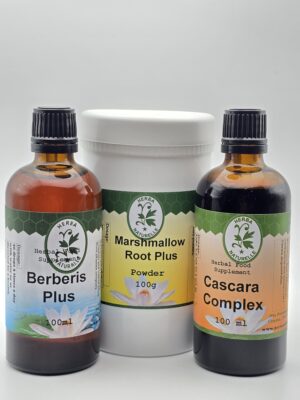 Digestive reset bundle
Original price was: £151.65.£144.95Current price is: £144.95.
-
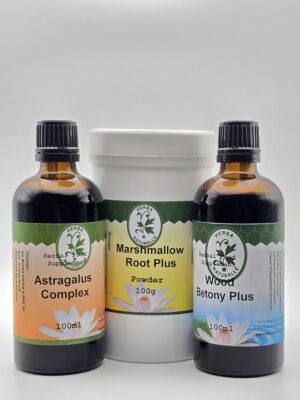 Smooth muscle and immune reset Bundle
Original price was: £177.60.£159.95Current price is: £159.95.
-
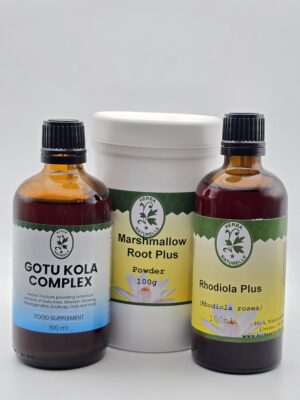 Nervous System Reset
Original price was: £163.68.£149.95Current price is: £149.95.
-
 Gotu Kola Complex
£26.95


About the Author

Holistic Herbalist in UK · 30 Years of Excellence at Croydon, GB
Angela Jegnathan brings over 30 years of experience in integrated medicine and more than 25 years of full-time clinical herbal practice. Specializing in holistic herbal medicine, she focuses on restoring digestive health, calming the nervous system, and supporting the body's natural inflammatory response through evidence-based, patient-centered care.
Expertise: Holistic Herbs, Natural Medicines, Herbal Health
30 years of experience
