How Herbs Support Liver Detoxification Pathways: Phase I and Phase II Explained
The liver is the body’s primary detoxification organ, processing everything from the food you eat and the medications you take to the hormones your glands produce and the environmental toxins you breathe in. It performs over 500 known functions, but its detoxification role is the one most directly relevant to herbal medicine, and the one most commonly misunderstood.
When people say they want to detox their liver, most have no idea what that means at a biochemical level. The liver does not accumulate toxins like a dirty filter that needs flushing. It processes them through a precise, two-phase enzymatic system that converts fat-soluble toxins into water-soluble compounds that the kidneys and bowels can then eliminate.
Understanding these two phases, how they work and how specific herbs support each one is essential for anyone serious about liver health and herbal detoxification.
Phase I: Oxidation, Reduction and Hydrolysis
Phase I detoxification is carried out primarily by a family of enzymes called cytochrome P450. These enzymes modify toxic compounds through oxidation, reduction and hydrolysis reactions, making them more reactive and more water-soluble.
There are over 50 cytochrome P450 enzymes in the human liver, each specialised for different categories of compounds. CYP3A4 is the most abundant and processes approximately half of all pharmaceutical drugs. CYP1A2 handles caffeine and certain environmental pollutants. CYP2D6 metabolises many antidepressants and opioids.
The Phase I process converts toxins into intermediate metabolites. Here is the critical clinical point: these intermediates are often more toxic than the original compound. They are highly reactive free radicals that can damage liver cells, DNA and cellular membranes if they are not rapidly processed by Phase II.
This means that stimulating Phase I without adequately supporting Phase II is potentially dangerous. It generates reactive intermediates faster than the liver can neutralise them. This is one of the most important reasons why self-prescribing liver herbs without professional guidance can produce adverse effects rather than benefits.
Phase II: Conjugation
Phase II detoxification takes the reactive intermediates produced by Phase I and attaches (conjugates) them to molecules that render them water-soluble, stable and ready for elimination. There are six main Phase II pathways, each using different cofactors and substrates.
Glutathione conjugation is the most important Phase II pathway. Glutathione is the body’s master antioxidant and is essential for neutralising the reactive intermediates from Phase I. Cruciferous vegetables, turmeric and milk thistle all support glutathione production or recycling.
Glucuronidation is the pathway primarily responsible for processing steroid hormones, bilirubin and many drugs. It requires UDP-glucuronic acid as a cofactor. Rosemary and dandelion root support this pathway.
Sulfation conjugates toxins with sulphate groups and is particularly important for processing neurotransmitters and thyroid hormones. Sulfur-containing foods and herbs like garlic support this pathway.
Methylation uses methyl groups donated by S-adenosylmethionine (SAMe) to process hormones, neurotransmitters and histamine. Nettle and rosemary support methylation pathways.
Acetylation and amino acid conjugation are additional Phase II pathways that process specific classes of compounds including aromatic amines and salicylates.
The clinical takeaway is that Phase II requires specific nutrients and cofactors. If these are depleted, due to poor diet, chronic stress, heavy medication use, chronic inflammation or genetic variations, Phase II cannot keep up with Phase I, and toxic intermediates accumulate.
The Key Liver Herbs
Milk thistle is the most important hepatoprotective herb in the Western materia medica. Its active compound, silymarin, works through several distinct mechanisms. It stabilises hepatocyte cell membranes, preventing toxins from entering liver cells. It stimulates protein synthesis within hepatocytes, accelerating liver cell repair and regeneration. It increases glutathione levels, directly supporting Phase II conjugation. And it has potent antioxidant activity that protects liver cells from the free radical damage generated by Phase I reactions.
Milk thistle does not stimulate detoxification. It protects and regenerates the organ that performs detoxification. This distinction is clinically important. Milk thistle is safe and appropriate for long-term use because it supports liver resilience rather than forcing increased detoxification activity.
Schisandra is remarkable because it supports both Phase I and Phase II enzymes simultaneously. Its lignans have been shown to increase cytochrome P450 activity while also upregulating glutathione S-transferase, which is a key Phase II enzyme. This balanced support of both phases makes schisandra one of the safest and most effective liver herbs available. The Schizandra Complex provides this dual-phase liver support in a clinically formulated blend.
Dandelion root is primarily a choleretic, it stimulates bile production and flow. Bile is the vehicle through which the liver excretes Phase II conjugates into the digestive tract for elimination. Without adequate bile flow, detoxified compounds remain in the liver or are reabsorbed from the gut. Dandelion root ensures that the end products of detoxification actually leave the body.
Globe artichoke similarly promotes bile production and also has specific hepatoprotective effects. Cynarin protects liver cells from oxidative damage and supports cholesterol metabolism.
Burdock root is an alterative herb that supports both hepatic and lymphatic elimination. By improving waste clearance through both channels, burdock reduces the total burden on the liver.
Turmeric supports Phase II detoxification through multiple mechanisms. Curcumin induces glutathione S-transferase and other Phase II enzymes while simultaneously providing anti-inflammatory protection for liver tissue.
Clinical Application: The Phase Balance
A qualified medical herbalist designs liver support protocols around the principle of phase balance. The goal is not to stimulate detoxification as aggressively as possible. It is to ensure that Phase I and Phase II are operating in proportion, that the cofactors for Phase II are adequate and that the eliminative channels (bile, kidneys, bowels) are functioning properly.
The three-layer healing approach applies directly to liver treatment. First, ensure bowel function is healthy. If the bowels are sluggish, conjugated toxins excreted in bile will be reabsorbed. Second, support Phase II and hepatoprotection. Third, gently stimulate Phase I if indicated.
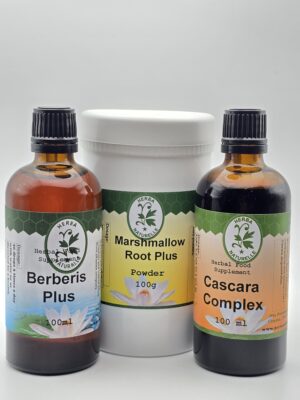
The Digestive Reset Bundle supports the first layer by ensuring proper digestive function and bowel regularity. The Schizandra Complex provides the balanced Phase I and Phase II support that forms the second and third layers. Together, they reflect the clinical logic that effective liver support requires a systems approach.
Who Needs Liver Support
Anyone taking long-term pharmaceutical medication places an increased demand on liver detoxification pathways. Patients with skin conditions often benefit from liver support because the skin acts as a secondary eliminative organ when the liver is overburdened. Hormonal imbalances, particularly oestrogen dominance and perimenopause symptoms, are often linked to impaired hepatic clearance of spent hormones through the glucuronidation pathway.
Thyroid conditions can be exacerbated by poor liver function because the liver is responsible for converting T4 to the active T3 form. Chronic fatigue frequently has a liver component, as the energy cost of processing a high toxic load diverts resources from other metabolic functions.
The connection between liver function and mental health is increasingly recognised. The liver processes neurotransmitters, hormones and inflammatory compounds that directly affect brain function. Poor liver detoxification can contribute to brain fog, irritability, depression and anxiety through the accumulation of neuroactive metabolites.
A Word About Genetic Variation
Not everyone’s liver detoxification works at the same rate. Genetic polymorphisms in cytochrome P450 enzymes and Phase II enzymes mean that some people are rapid metabolisers and others are slow metabolisers. A slow Phase II methylator, for example, may accumulate histamine and oestrogen more readily than someone with normal methylation capacity.
A thorough consultation with a medical herbalist considers these individual variations. The herbs selected, their doses and the pace of the treatment plan are all adjusted based on the patient’s individual response and metabolic capacity.
This is another illustration of why generic detox products and protocols fail where professional herbal treatment succeeds. A one-size-fits-all approach to liver support ignores the biochemical individuality that determines how each person responds to both toxins and treatment.
For a comprehensive approach to liver health and detoxification, explore the products page and consider booking a consultation to develop a protocol tailored to your individual needs.
Our Trending Products & Bundles
-
 Digestive reset bundle
Original price was: £151.65.£144.95Current price is: £144.95.
-
 Smooth muscle and immune reset Bundle
Original price was: £177.60.£159.95Current price is: £159.95.
-
 Nervous System Reset
Original price was: £163.68.£149.95Current price is: £149.95.
-
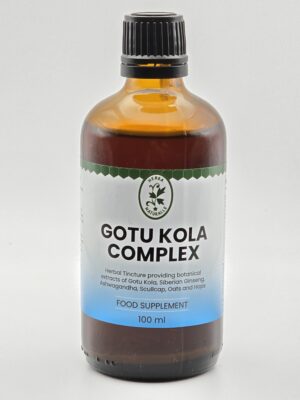 Gotu Kola Complex
£26.95

About the Author

Holistic Herbalist in UK · 30 Years of Excellence at Croydon, GB
Angela Jegnathan brings over 30 years of experience in integrated medicine and more than 25 years of full-time clinical herbal practice. Specializing in holistic herbal medicine, she focuses on restoring digestive health, calming the nervous system, and supporting the body's natural inflammatory response through evidence-based, patient-centered care.
Expertise: Holistic Herbs, Natural Medicines, Herbal Health
30 years of experience
