
Adaptogens Explained: How Stress-Modulating Herbs Restore Balance in the Body
Adaptogens have become one of the most talked-about categories in herbal medicine. They appear in everything from supplements to coffee blends to skincare. The marketing often reduces them to a simple promise: take this herb and feel less stressed.
The reality is far more interesting, far more nuanced and far more clinically significant. Adaptogens are a specific category of herbs that have been shown to modulate the body’s stress response system in ways that no other class of compounds, herbal or pharmaceutical, can replicate. Understanding how they actually work is essential for using them effectively and for understanding why they sometimes fail when taken without professional guidance.
What Makes a Herb an Adaptogen
The term adaptogen was coined in 1947 by the Russian pharmacologist Nikolai Lazarev and refined by his student Israel Brekhman, who established three criteria that a substance must meet to qualify.
First, it must be non-specific in its action. It must increase the body’s resistance to a broad range of stressors, physical, chemical, biological and psychological, rather than targeting one specific pathway.
Second, it must have a normalising effect. It must bring overactive systems down and underactive systems up, moving the body toward balance regardless of the direction of the imbalance.
Third, it must be non-toxic at normal therapeutic doses and must not create additional stress in the body.
These criteria immediately distinguish adaptogens from stimulants. Caffeine increases alertness by blocking adenosine receptors, but it does so by adding stress to the system. It increases cortisol output, raises heart rate and depletes adrenal reserves over time. An adaptogen like ashwagandha improves the body’s capacity to handle stress without creating additional physiological burden. When a patient presents with chronic stress affecting the body, the difference between these two approaches is clinically enormous.
The HPA Axis: Where Adaptogens Do Their Work
The hypothalamic-pituitary-adrenal axis is the body’s central stress response system. When you perceive a threat, the hypothalamus releases corticotropin-releasing hormone, which signals the pituitary gland to release adrenocorticotropic hormone, which in turn stimulates the adrenal glands to produce cortisol.
In acute stress, this system works perfectly. Cortisol mobilises glucose, suppresses non-essential functions and primes the body for action. Once the threat passes, negative feedback loops shut the system down and cortisol levels return to baseline.
In chronic stress, these feedback loops become dysregulated. The hypothalamus and pituitary lose their sensitivity to cortisol, and the system stays activated. Cortisol remains elevated, or in advanced stages, the adrenals become depleted and cortisol crashes to abnormally low levels. Either state produces a cascade of downstream effects: poor sleep, impaired immunity, digestive dysfunction, weight gain, brain fog, anxiety and chronic fatigue.
Adaptogens work primarily by restoring the sensitivity of the HPA feedback loops. They modulate the stress response at the level of the hypothalamus and pituitary, helping these glands respond appropriately to cortisol levels rather than remaining stuck in a hyperactive or exhausted state.
This is a fundamentally different approach from the conventional treatment of stress and anxiety, which typically involves suppressing symptoms with anxiolytics or antidepressants. Adaptogens do not suppress anything. They restore the body’s ability to self-regulate.
The Major Adaptogens in Clinical Use
Ashwagandha (Withania somnifera) is the most widely studied adaptogen. Clinical evidence shows it reduces cortisol levels, improves sleep quality, enhances physical endurance, supports thyroid function and reduces anxiety. It is a warming adaptogen, best suited to patients with cold, depleted constitutions. The ashwagandha tincture form is preferred clinically for its superior bioavailability.
Rhodiola (Rhodiola rosea) is a cooling adaptogen with particular affinity for the nervous system. Rhodiola has been shown to reduce mental fatigue, improve concentration under stress and support recovery from physical exertion. It is especially valuable for patients who are mentally exhausted but physically wired, the classic burnout pattern.
Schisandra (Schisandra chinensis) is known as the five-flavour berry because it contains all five tastes recognised in Chinese medicine. Schisandra supports liver detoxification, improves mental clarity and has specific hepatoprotective effects that make it valuable when stress has caused digestive and liver dysfunction. The Schizandra Complex available through Herba Naturalle combines this herb with complementary botanicals for enhanced liver and adrenal support.
Siberian ginseng (Eleutherococcus senticosus) is one of the most thoroughly researched adaptogens in the world. Siberian ginseng was used extensively in Russian military and athletic programmes because of its ability to increase physical and mental endurance without the crash associated with stimulants.
Shatavari (Asparagus racemosus) is Ayurveda’s premier female adaptogen. Shatavari has a particular affinity for the female reproductive system and is used clinically for hormonal balance, fertility support and perimenopause. The Shatavari Complex is formulated for comprehensive female hormonal and adaptogenic support.
Gotu kola (Centella asiatica) is a cooling nervine adaptogen. Gotu kola supports cognitive function, reduces anxiety and promotes wound healing. It is one of the few adaptogens that is both calming and mentally clarifying, making it particularly suited to patients with anxiety-driven brain fog. The Gotu Kola Complex provides this herb in a professionally formulated blend.
Why Adaptogens Sometimes Fail
The most common reason adaptogens fail to produce results is incorrect selection. As discussed in the energetics framework, a warming adaptogen like ashwagandha given to a hot, inflamed patient will not calm the stress response. It will add heat to an already overheated system. A cooling adaptogen like gotu kola given to a cold, depleted patient may produce further sluggishness rather than recovery.
The second most common reason is insufficient treatment of the underlying digestive dysfunction. Adaptogens are complex molecules that require healthy digestive function for proper absorption and activation. If gut inflammation or dysbiosis is present, the patient may not be absorbing enough of the adaptogenic compounds to produce a clinical effect.
This is why a qualified medical herbalist addresses the gut first, then introduces adaptogens once digestive function has been stabilised. The three-layer healing approach is specifically designed to follow this sequence.
The third reason is unrealistic expectations about timing. Adaptogens work by restoring regulatory mechanisms, not by forcing immediate biochemical changes. Most patients begin to notice improvements after two to four weeks of consistent use, with full effects developing over two to three months. People who try an adaptogen for a few days and conclude it does not work have not given the herb enough time to modulate the HPA axis.
Adaptogens and Other Body Systems
While adaptogens are best known for their stress-modulating effects, their benefits extend across multiple body systems. Ashwagandha supports thyroid function in patients with subclinical hypothyroidism. Rhodiola has cardioprotective effects. Schisandra supports liver detoxification. Gotu kola promotes skin healing and collagen production.
This multi-system action is characteristic of adaptogens and reflects their fundamental mechanism: they do not target one pathway. They restore the body’s capacity to maintain homeostasis across all systems. This is why a patient taking adaptogens for stress often reports improvements in sleep, digestion, skin quality and energy that they did not specifically expect.
The Practitioner’s Role
The adaptogen category includes dozens of herbs, each with its own energetic profile, organ affinities and specific clinical indications. Selecting the right adaptogen, at the right dose, in the right combination with other herbs, is a clinical skill that requires training and experience.
A medical herbalist consultation will assess your stress history, your current symptoms, your digestive health and your constitutional pattern before recommending an adaptogenic strategy. This is why professional herbal treatment, guided by decades of clinical experience, consistently outperforms self-prescribing when it comes to complex, multi-system conditions.
Explore the full range of adaptogenic and restorative formulas on the products page and consider booking a consultation to find the approach that matches your individual situation.
Our Trending Products & Bundles
-
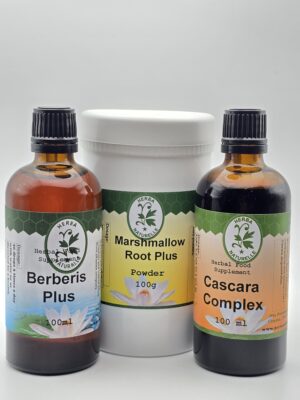 Digestive reset bundle
Original price was: £151.65.£144.95Current price is: £144.95.
-
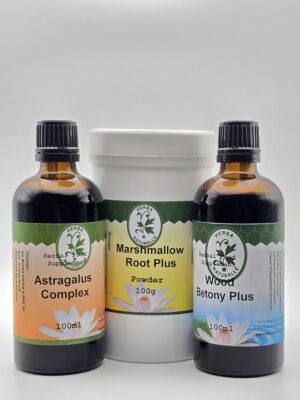 Smooth muscle and immune reset Bundle
Original price was: £177.60.£159.95Current price is: £159.95.
-
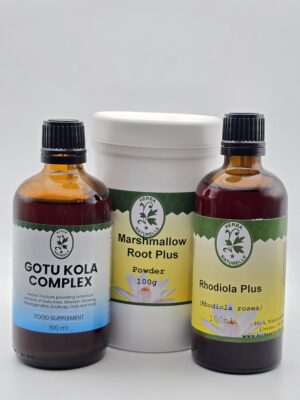 Nervous System Reset
Original price was: £163.68.£149.95Current price is: £149.95.
-
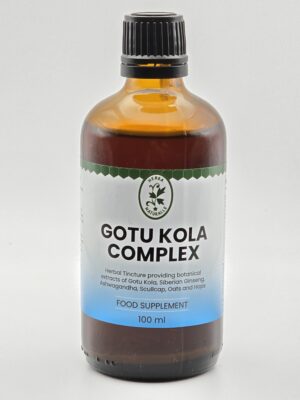 Gotu Kola Complex
£26.95


About the Author

Holistic Herbalist in UK · 30 Years of Excellence at Croydon, GB
Angela Jegnathan brings over 30 years of experience in integrated medicine and more than 25 years of full-time clinical herbal practice. Specializing in holistic herbal medicine, she focuses on restoring digestive health, calming the nervous system, and supporting the body's natural inflammatory response through evidence-based, patient-centered care.
Expertise: Holistic Herbs, Natural Medicines, Herbal Health
30 years of experience
