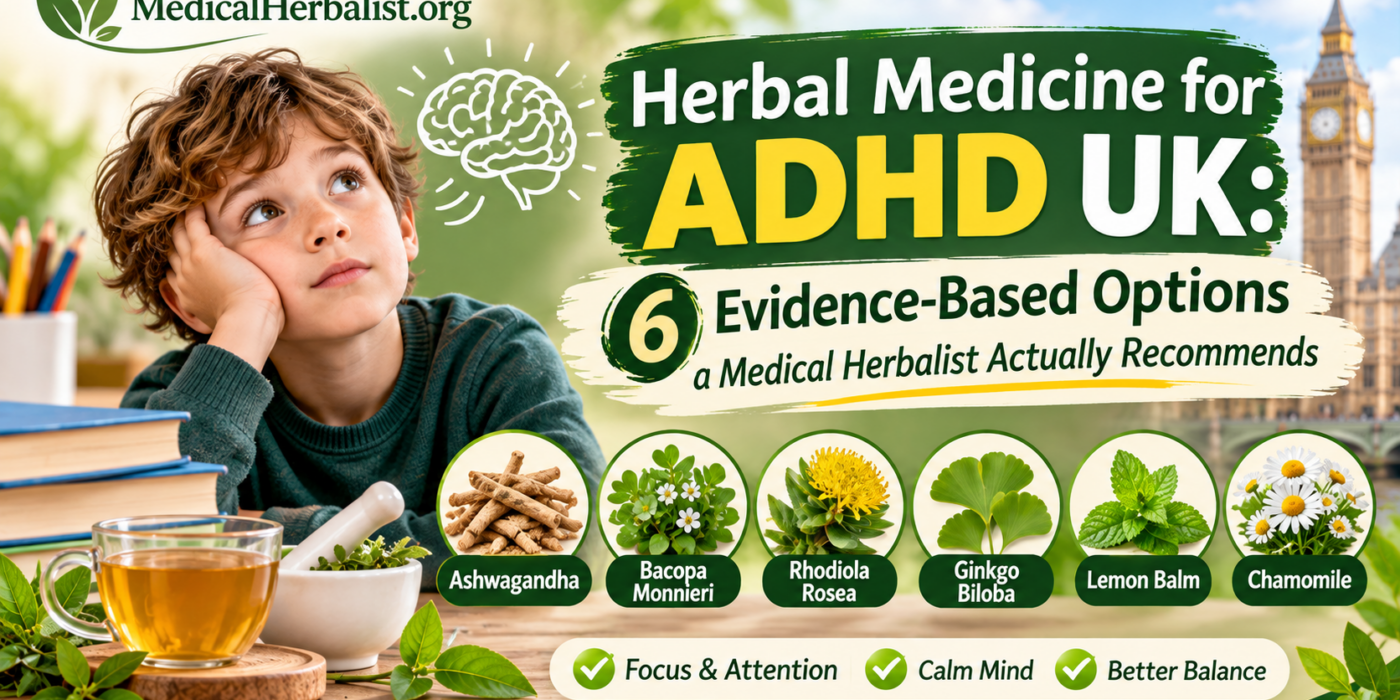
Herbal Medicine for ADHD UK: 6 Evidence-Based Options a Medical Herbalist Actually Recommends
If you are exploring herbal medicine for ADHD in the UK, you are likely doing so after experiencing frustration with long NHS waiting lists, concerns about stimulant medication side effects, or simply wanting to understand what natural options genuinely exist alongside conventional treatment. This guide gives you an honest, clinically grounded answer.
After more than 30 years of clinical herbal practice, the position on herbal medicine for ADHD UK is this: several herbs have meaningful evidence supporting their use as adjuncts to ADHD management, particularly for the anxiety, sleep disruption, and nervous system dysregulation that frequently accompany ADHD. However, herbal medicine is not a replacement for a proper ADHD assessment, and it is not a substitute for medication in people who genuinely need it. What it can do, used correctly alongside other strategies, is meaningfully improve quality of life for many people with ADHD in the UK.
Table of Contents
- Understanding ADHD from a Herbal Medicine Perspective
- How Herbal Medicine for ADHD UK Works: The Neuroscience
- 6 Best Herbs for ADHD UK: Evidence and Clinical Use
- Comparison Table: Herbal Medicine for ADHD UK by Symptom
- What the Clinical Evidence Actually Shows
- Herbal Medicine for ADHD UK: Adults vs Children
- How to Combine Herbs for ADHD Effectively
- What Does Not Work and Why
- When to See a Medical Herbalist
- Frequently Asked Questions
Understanding ADHD from a Herbal Medicine Perspective
ADHD (Attention Deficit Hyperactivity Disorder) is a neurodevelopmental condition affecting an estimated 2.5 million adults and 500,000 children in the UK, according to the NHS. It is characterised by persistent patterns of inattention, hyperactivity, and impulsivity that interfere with functioning across multiple life domains.
From a herbal medicine perspective, ADHD is not viewed as a single uniform condition but as a cluster of symptoms driven by several overlapping neurological and physiological factors. These include dysregulation of dopamine and noradrenaline neurotransmitter systems, elevated nervous system arousal, poor sleep architecture, heightened stress reactivity, and in many cases significant gut-brain axis dysregulation.
This multi-system view is why herbal medicine for ADHD in the UK does not involve simply prescribing one herb for focus. Instead, a clinical herbalist assesses which of these underlying systems is most dysregulated for a specific individual, then formulates a protocol targeting those root factors. Understanding how the gut-brain axis connects nervous system function and cognitive performance is fundamental to this approach. Additionally, understanding how chronic stress physically alters brain chemistry and nervous system function gives important context for why stress management is inseparable from ADHD symptom management.
How Herbal Medicine for ADHD UK Works: The Neuroscience
Before exploring specific herbs, it is important to understand the mechanisms through which herbal medicine for ADHD in the UK can plausibly help. This separates evidence-based clinical herbalism from supplement marketing.
Dopamine and noradrenaline support: Several herbs, including Bacopa monnieri and Ginkgo biloba, have demonstrated effects on dopaminergic and cholinergic neurotransmission in clinical research. While their effects are considerably more modest than pharmaceutical stimulants, they are measurable and clinically meaningful as adjuncts.
HPA axis modulation: Many people with ADHD have a chronically activated stress response system. Adaptogenic herbs including ashwagandha and rhodiola modulate the hypothalamic-pituitary-adrenal axis, reducing cortisol-driven nervous system hyperactivation that significantly worsens ADHD symptoms.
GABAergic calming: Nervine herbs including lemon balm, passionflower, and valerian enhance GABA activity in the brain, reducing the anxiety, restlessness, and sleep disruption that frequently co-occur with ADHD and dramatically worsen its functional impact.
Cerebrovascular circulation: Ginkgo biloba specifically improves cerebral blood flow and microcirculation, which supports the prefrontal cortex function that is characteristically impaired in ADHD.
Understanding how herbal medicine works at a biochemical level and how nervine herbs support the central nervous system gives essential context for the herbs described below.
6 Best Herbs for ADHD UK: Evidence and Clinical Use
1. Bacopa Monnieri: Strongest Evidence for Herbal Medicine for ADHD UK
Bacopa monnieri, known as Brahmi in Ayurvedic tradition, has the most robust clinical evidence of any herb for cognitive support in ADHD. A 2012 randomised controlled trial published in the Journal of Alternative and Complementary Medicine found that 225 mg of standardised Bacopa extract daily for 6 months produced significant reductions in ADHD symptoms in children aged 6 to 12, including measurable improvements in attention, restlessness, and impulse control compared to placebo.
The active compounds, bacosides A and B, enhance synaptic communication by supporting the synthesis and repair of neuronal dendrites. Additionally, Bacopa modulates the serotonergic system and reduces oxidative stress in neural tissue, which is relevant because oxidative stress is consistently elevated in ADHD neurobiology.
Critically, Bacopa takes 8 to 12 weeks of consistent daily use before meaningful cognitive effects appear. This is because its mechanism involves structural neural changes rather than acute neurotransmitter manipulation. Therefore, do not assess its effects before 3 months of consistent use.
Who benefits most: People with ADHD whose primary challenges are memory, learning, information processing speed, and mental clarity rather than hyperactivity specifically.
UK adult dose: 300 to 450 mg of standardised extract (45 percent bacosides) daily with food. Fat improves absorption significantly.
UK child dose: 225 mg daily for children aged 6 to 12, always under professional supervision.
For people who want herbal medicine for ADHD UK in tincture form, Bacopa tincture offers faster absorption than capsules. Read more about bioavailability differences between tinctures and capsules for context on preparation choices.
2. Ginkgo Biloba: Herbal Medicine for ADHD UK Focus and Attention
Ginkgo biloba is one of the most extensively researched herbs in Western clinical practice, with over 400 clinical studies in peer-reviewed literature. For herbal medicine for ADHD in the UK, its most relevant actions are improving cerebral blood flow, enhancing prefrontal cortex function, and inhibiting platelet-activating factor which contributes to neuroinflammation.
A 2014 randomised trial compared Ginkgo biloba to methylphenidate (Ritalin) in children with ADHD over 6 weeks. Methylphenidate produced faster and stronger effects, as expected for a pharmaceutical stimulant. However, Ginkgo produced statistically significant improvements in ADHD rating scales compared to baseline with considerably fewer side effects, supporting its value as an adjunct rather than a replacement.
Furthermore, Ginkgo combines well with Bacopa in clinical formulations because their mechanisms are complementary. Ginkgo improves cerebrovascular delivery of nutrients and oxygen to brain tissue while Bacopa supports the neural structures that use those resources.
Who benefits most: Adults with ADHD whose primary challenges are sustained attention, working memory, and mental fatigue. Also valuable for older adults with ADHD and age-related cognitive changes occurring simultaneously.
UK adult dose: 120 to 240 mg of standardised extract (24 percent flavone glycosides, 6 percent terpene lactones) daily, divided into two doses.
Important caution: Ginkgo has antiplatelet properties. Consequently, it should not be combined with blood-thinning medications including warfarin, aspirin, or clopidogrel without professional guidance.
3. Lemon Balm: Herbal Medicine for ADHD UK Anxiety and Restlessness
Lemon balm (Melissa officinalis) is one of the most clinically valuable herbs for herbal medicine for ADHD in the UK, specifically for the anxiety, restlessness, and emotional dysregulation that co-occur with ADHD in the majority of cases. A 2014 study in Nutrients found that lemon balm extract significantly improved mood, calmness, and cognitive performance under stress conditions in healthy adults.
The mechanism of action involves rosmarinic acid inhibiting GABA transaminase, the enzyme that breaks down the brain’s primary calming neurotransmitter. The result is a gentle, sustained elevation of GABA activity that reduces nervous system hyperarousal without the sedation produced by pharmaceutical anxiolytics.
Crucially, lemon balm does not cause sedation at standard doses, making it appropriate for daytime use in people with ADHD who need to remain alert and functional. This distinguishes it from valerian and passionflower, which are better suited to evening and sleep support.
Who benefits most: People with ADHD who experience significant anxiety, emotional dysregulation, difficulty managing stress, or who find that anxiety and overwhelm worsen their attentional symptoms considerably.
UK adult dose: 1 to 3 mL of tincture or 300 to 600 mg extract twice daily.
Read the lemon balm herb profile and lemon balm tincture guide for full dosing and preparation details.
4. Ashwagandha: Herbal Medicine for ADHD UK Stress and Hyperarousal
Ashwagandha (Withania somnifera) addresses one of the most underappreciated drivers of ADHD symptom severity: chronic HPA axis activation. When the stress response system is chronically activated, it floods the brain with cortisol, which directly impairs prefrontal cortex function, working memory, and impulse control. These are precisely the functions most compromised in ADHD.
A 2012 pilot study specifically examining ashwagandha in children with ADHD found improvements in attention, impulse control, and social behaviour after 4 months of use. Moreover, the well-documented cortisol-reducing effects of ashwagandha across multiple adult trials are clinically relevant because stress universally worsens ADHD symptoms in both children and adults.
Ashwagandha is particularly valuable as herbal medicine for ADHD in the UK for adults who find that their ADHD symptoms are substantially worse during stressful periods, those with burnout alongside ADHD, and those whose sleep disruption is driven by an overactive nervous system rather than primary insomnia.
Who benefits most: Adults with ADHD and significant stress or burnout, people whose ADHD symptoms fluctuate dramatically with stress levels, those with cortisol-driven sleep disruption alongside ADHD.
UK adult dose: 300 mg of KSM-66 or Sensoril extract twice daily, morning and evening.
Read more about adaptogens and how they modulate the stress response system and the full ashwagandha tincture guide.
5. Passionflower: Herbal Medicine for ADHD UK Sleep and Evening Restlessness
Passionflower (Passiflora incarnata) is the most appropriate herbal medicine for ADHD UK choice for evening and sleep-related symptoms. Sleep disruption affects an estimated 70 percent of people with ADHD, and poor sleep dramatically worsens every ADHD symptom the following day, creating a cycle that significantly impairs functioning.
A 2011 randomised controlled trial in Phytotherapy Research found passionflower significantly improved subjective sleep quality compared to placebo. Additionally, a comparison study found passionflower comparable to low-dose oxazepam for anxiety reduction, without the dependence risk or morning grogginess of pharmaceutical sedatives.
For people with ADHD, the specific value of passionflower is its ability to reduce the racing thoughts and mental hyperactivity at bedtime that prevent sleep onset, without producing next-morning sedation that would worsen daytime ADHD symptoms.
Who benefits most: People with ADHD whose primary evening challenge is inability to switch off mentally, racing thoughts at bedtime, sleep onset insomnia, or restlessness preventing sleep.
UK adult dose: 1 to 2 mL of tincture, taken 30 to 45 minutes before bed.
Read the passionflower herb profile and the herbal approach to sleep problems in nervous system conditions.
6. Rhodiola Rosea: Herbal Medicine for ADHD UK Mental Fatigue
Rhodiola rosea is an adaptogen with specific relevance to the mental fatigue, low motivation, and cognitive exhaustion that characterise ADHD, particularly in adults who have spent decades compensating for their neurological differences.
The active compounds salidroside and rosavins enhance the efficiency of dopamine and serotonin transmission and reduce cortisol-driven mental fatigue. A 2009 randomised controlled trial found Rhodiola significantly improved mental performance, attention, and mood under fatigue conditions compared to placebo.
Crucially, Rhodiola is stimulating rather than calming. Therefore, it should be taken in the morning only, and avoided in people with significant anxiety as a primary feature of their ADHD presentation. For anxious ADHD presentations, lemon balm and ashwagandha are more appropriate.
Who benefits most: Adults with ADHD characterised by low motivation, mental fatigue, difficulty initiating tasks, and low energy rather than hyperactivity and anxiety.
UK adult dose: 200 to 400 mg of standardised extract (3 percent rosavins, 1 percent salidroside) in the morning only.
Comparison Table: Herbal Medicine for ADHD UK by Symptom
| ADHD Symptom | Best Herbal Medicine UK | Secondary Option | Timing |
|---|---|---|---|
| Inattention and poor focus | Bacopa monnieri | Ginkgo biloba | Morning with food |
| Mental fatigue and low motivation | Rhodiola rosea | Ginkgo biloba | Morning only |
| Anxiety and emotional dysregulation | Lemon balm | Ashwagandha | Morning and afternoon |
| Stress worsening ADHD symptoms | Ashwagandha | Lemon balm | Morning and evening |
| Sleep onset insomnia, racing thoughts | Passionflower | Lemon balm | 30 to 45 min before bed |
| Hyperactivity and restlessness | Lemon balm | Passionflower | Morning and evening |
| Memory and learning difficulties | Bacopa monnieri | Ginkgo biloba | Morning with food |
| Combined anxiety and inattention | Lemon balm plus Bacopa | Add Ginkgo | Morning and afternoon |
What the Clinical Evidence Actually Shows
Honesty about evidence quality is fundamental to trustworthy clinical practice. Here is an accurate summary of where herbal medicine for ADHD UK evidence stands in 2026.
A 2023 systematic review published in Phytotherapy Research examining herbal interventions for ADHD found a fair indication of benefit for Bacopa monnieri, lemon balm, Ginkgo biloba, and passionflower across multiple small to medium-sized trials. However, the review concluded that evidence quality remains insufficient to recommend herbal medicine as a standalone ADHD treatment, primarily because most trials were small and varied considerably in design.
This is an honest assessment that most supplement websites conveniently overlook. What it means in practice is this: herbal medicine for ADHD UK has plausible mechanisms, emerging clinical support, and meaningful anecdotal evidence from clinical practice, but it is not yet supported by the same quality and quantity of evidence as pharmaceutical stimulants such as methylphenidate or lisdexamfetamine.
Furthermore, pharmaceutical stimulants remain significantly more potent for the core attentional symptoms of ADHD in people who tolerate and respond to them. Therefore, herbal medicine for ADHD UK is best positioned as a complement to other ADHD management strategies including diagnosis, behavioural strategies, lifestyle modification, and where appropriate, medication, rather than a replacement for any of them.
Herbal Medicine for ADHD UK: Adults vs Children
The evidence base and clinical approach differs meaningfully between adult and childhood ADHD when using herbal medicine in the UK.
For adults: The most relevant herbs are those addressing the stress, anxiety, burnout, and sleep disruption that have typically accumulated over years of undiagnosed or undertreated ADHD. Ashwagandha, rhodiola, lemon balm, and passionflower address this accumulated nervous system burden directly. Bacopa and Ginkgo address the cognitive symptoms specifically. Understanding how the nervous system drives chronic symptoms is particularly relevant for adults with long-standing ADHD.
For children: The evidence base is more limited, and professional supervision is essential before using any herbal medicine for ADHD in children in the UK. Bacopa has the strongest paediatric evidence. Lemon balm and passionflower are considered relatively safe at appropriate doses for older children but should always be assessed by a qualified medical herbalist before use. Herb-drug interactions with any ADHD medication the child is already taking must be professionally evaluated.
How to Combine Herbs for ADHD Effectively
Clinical herbalism rarely uses single herbs in isolation for complex neurodevelopmental conditions. Instead, a formula targets multiple overlapping mechanisms simultaneously. The most effective herbal medicine for ADHD UK combinations used in clinical practice are:
For inattentive ADHD with anxiety: Bacopa (cognitive) plus lemon balm (anxiolytic, daytime) plus passionflower (evening sleep). This combination addresses the cognitive, anxiety, and sleep dimensions without producing daytime sedation.
For hyperactive ADHD with stress: Ashwagandha (HPA axis) plus lemon balm (GABAergic calming) plus Ginkgo (cerebrovascular). This combination reduces the stress-driven hyperarousal while supporting prefrontal function.
For adult ADHD with burnout and fatigue: Rhodiola (morning, motivation) plus ashwagandha (cortisol) plus Bacopa (cognitive). This combination addresses the energy, stress, and cognitive dimensions of burned-out adult ADHD.
The art and science of combining herbs with complementary mechanisms is central to clinical herbal prescribing and produces substantially better results than using a single herb alone. Additionally, adaptogens used together with nervines create synergistic effects that neither category produces independently.
What Does Not Work and Why
Ginseng without a professional assessment: While Panax ginseng has some evidence for ADHD, it is stimulating and can significantly worsen anxiety in people with anxious ADHD presentations. Generic ginseng supplements marketed for ADHD without individual assessment are frequently counterproductive.
Single herb protocols for 2 weeks: Almost no herbal medicine for ADHD UK works meaningfully within 2 weeks. Bacopa requires 8 to 12 weeks minimum. Ashwagandha requires 4 to 8 weeks. Assessing any herbal protocol before 6 to 8 weeks of consistent use is premature.
Herbal medicine alone for severe ADHD: Where ADHD is significantly impairing daily functioning, relationships, employment, or academic performance, herbal medicine alone is not sufficient. It works best as part of a comprehensive management approach that includes proper diagnosis and assessment. The NHS provides information about ADHD diagnosis and treatment pathways that remain important regardless of whether herbal medicine is part of the picture.
Combining multiple herbs without guidance: Some herb combinations carry interaction risks. For example, combining Ginkgo with blood-thinning medications or combining multiple sedating herbs with prescribed anxiolytics requires professional assessment. A systematic review in Phytotherapy Research confirms that herb-drug interactions in ADHD management are an underappreciated clinical concern.
When to See a Medical Herbalist
Self-selecting herbal medicine for ADHD UK is a reasonable starting point for mild symptoms. However, professional assessment produces substantially better outcomes in most cases involving ADHD, because the condition varies considerably between individuals and the right herbal approach depends entirely on which aspects of the presentation are most prominent.
Consider booking a medical herbalist consultation if:
- You or your child have a confirmed or suspected ADHD diagnosis and want to explore herbal support
- You are already taking ADHD medication and want to know which herbs are safe to combine
- Anxiety, sleep disruption, or emotional dysregulation are significant features alongside ADHD
- Previous herbal or supplement attempts have not produced results
- Your ADHD symptoms vary dramatically with stress, sleep, or gut health
- You want a bespoke herbal formula rather than individual supplements
A clinical herbalist assesses the full picture including nervous system state, gut function, stress history, sleep quality, and any medications, then formulates a targeted protocol. This approach consistently produces better outcomes than self-selected supplements. Information about consultations and fees is available on this site.
Frequently Asked Questions
Does herbal medicine work for ADHD UK?
Several herbs including Bacopa monnieri, Ginkgo biloba, and lemon balm have clinical evidence supporting their use as adjuncts for ADHD symptom management. However, herbal medicine is not a replacement for ADHD diagnosis or pharmaceutical treatment where that is clinically indicated. It works best as part of a comprehensive management approach targeting the anxiety, sleep disruption, stress dysregulation, and cognitive symptoms that accompany ADHD.
What is the best herb for ADHD in the UK?
Bacopa monnieri has the strongest clinical evidence for cognitive ADHD symptoms including attention, memory, and processing speed. Lemon balm is most valuable for the anxiety and emotional dysregulation that co-occur with ADHD. Ashwagandha is most appropriate when stress significantly worsens ADHD symptoms. The best choice depends on which aspects of your ADHD presentation are most problematic.
Can children take herbal medicine for ADHD UK?
Some herbs, including Bacopa monnieri and lemon balm, have paediatric evidence and are considered relatively safe at appropriate doses. However, herbal medicine for children with ADHD in the UK should always be supervised by a qualified medical herbalist, particularly if the child is already taking ADHD medication, because herb-drug interactions must be professionally assessed.
How long does herbal medicine for ADHD take to work?
Bacopa monnieri requires 8 to 12 weeks of consistent daily use before meaningful cognitive effects appear. Ashwagandha takes 4 to 8 weeks to significantly modulate cortisol. Lemon balm and passionflower produce calming effects within 30 to 60 minutes acutely, but their sustained effects on nervous system tone build over 2 to 4 weeks of consistent use. Do not assess any herbal ADHD protocol before 6 to 8 weeks of consistent use.
Is herbal medicine for ADHD safe with Ritalin or other ADHD medication?
Some herbs are considered safe alongside ADHD medication at standard doses, while others carry interaction risks. Ginkgo biloba in particular requires careful assessment before combining with stimulant medications. Any combination of herbal medicine with prescription ADHD medication should be assessed by a qualified medical herbalist or pharmacist before starting.
Can herbal medicine replace ADHD medication UK?
For most people with clinically significant ADHD, herbal medicine is not an adequate replacement for pharmaceutical treatment where that is indicated and tolerated. Herbal medicine works most effectively as a complement to other ADHD management strategies, addressing the anxiety, sleep, stress, and gut-brain dimensions that medication alone does not fully address.
Final Thoughts
Herbal medicine for ADHD UK offers genuine, evidence-based support when approached honestly and used correctly. Bacopa monnieri leads the evidence for cognitive and attentional symptoms. Lemon balm is most valuable for anxiety and emotional dysregulation. Ashwagandha addresses stress-driven symptom worsening. Passionflower supports the sleep disruption that affects the majority of people with ADHD. Ginkgo improves cerebrovascular function and working memory. Rhodiola supports motivation and mental fatigue in adults with burnout alongside ADHD.
However, herbal medicine for ADHD in the UK works best as part of a comprehensive approach that includes proper diagnosis, appropriate lifestyle modifications, and where needed, pharmaceutical treatment. It is not a replacement for any of these but a meaningful adjunct that addresses the nervous system, stress, sleep, and gut dimensions that pharmaceutical treatment alone rarely covers.
If you would like professional guidance on herbal medicine for ADHD tailored to your specific presentation, consultation and booking information is available here. You can also read more about how the nervous system connects to chronic symptoms and how adaptogens support stress resilience for broader context.
Our Trending Products & Bundles
-
 Digestive reset bundle
Original price was: £151.65.£144.95Current price is: £144.95.
-
 Smooth muscle and immune reset Bundle
Original price was: £177.60.£159.95Current price is: £159.95.
-
 Nervous System Reset
Original price was: £163.68.£149.95Current price is: £149.95.
-
 Gotu Kola Complex
£26.95

About the Author

Holistic Herbalist in UK · 30 Years of Excellence at Croydon, GB
Angela Jegnathan brings over 30 years of experience in integrated medicine and more than 25 years of full-time clinical herbal practice. Specializing in holistic herbal medicine, she focuses on restoring digestive health, calming the nervous system, and supporting the body's natural inflammatory response through evidence-based, patient-centered care.
Expertise: Holistic Herbs, Natural Medicines, Herbal Health
30 years of experience
