
The Role of Mucilaginous Herbs in Gut Healing: Demulcents and Barrier Repair
The gut lining is one of the most remarkable structures in the human body. A single layer of cells, just one cell thick, separates the contents of the digestive tract, food particles, bacteria, digestive acids and enzymes, from the sterile interior of the body. This barrier must be selectively permeable, allowing nutrients to pass through while blocking pathogens, toxins and undigested food proteins.
When this barrier is compromised, through chronic inflammation, stress, medication use, poor diet or infection, the consequences ripple through every system in the body. Intestinal permeability, often called leaky gut, allows materials to cross into the bloodstream that should never be there. The immune system responds with inflammation. That inflammation becomes systemic. And conditions from autoimmune disease to anxiety to chronic fatigue can result.
Mucilaginous herbs, the demulcents of the herbal materia medica, are among the most important tools for repairing this barrier. Understanding how they work explains why they are present in nearly every serious herbal treatment plan for digestive conditions and many conditions that seem unrelated to the gut.
What Mucilage Is and How It Works
Mucilage is a class of complex polysaccharides produced by certain plants. When mixed with water, these polysaccharides form a thick, gel-like substance that coats and adheres to mucous membranes. This is not a passive coating. The mucilage interacts directly with the damaged tissue in several clinically significant ways.
First, it creates a physical barrier between the irritated tissue and the caustic contents of the gut lumen. This is immediate and mechanical, the mucilage sits on the surface of the damaged lining and prevents further damage from stomach acid, digestive enzymes and irritant food compounds. For patients with acid reflux, this coating action provides rapid symptomatic relief.
Second, mucilage holds moisture against the tissue surface. Inflamed, damaged tissue is often dehydrated. The gel provides a moist environment that promotes cell migration and proliferation, the biological processes of tissue repair.
Third, and most recently discovered, mucilaginous polysaccharides interact with immune cells in the gut wall. They modulate the inflammatory response locally, reducing the excessive immune activation that perpetuates gut-lining damage. This is not a simple physical coating. It is a pharmacologically active interaction.
Fourth, mucilage serves as a prebiotic substrate. Gut bacteria ferment these polysaccharides into short-chain fatty acids, particularly butyrate, which is the primary fuel source for colonocytes, the cells that line the colon. By feeding these cells, mucilaginous herbs support the health of the gut lining from the inside.
The Key Demulcent Herbs
Marshmallow root is the premier demulcent in Western herbal medicine. Its mucilage content is exceptionally high, and its polysaccharides have demonstrated anti-inflammatory, wound-healing and immune-modulating properties in both laboratory and clinical studies. The Marshmallow Root Plus product is specifically formulated around this herb’s gut-healing properties and represents one of the most important tools for sensitive gut support.
A crucial clinical detail: marshmallow root mucilage is best extracted in cold water. Hot water can denature the polysaccharides and reduce their therapeutic activity. The traditional preparation is a cold infusion, marshmallow root steeped in room-temperature water for four to eight hours. This produces a thick, viscous liquid that coats the entire digestive tract from throat to colon.
Slippery elm is another powerfully mucilaginous herb. Its inner bark produces a thick mucilage that has been used for centuries by indigenous North American peoples for digestive healing. Slippery elm is particularly effective for upper digestive tract conditions, oesophageal irritation, gastric inflammation and duodenal ulceration.
Plantain (Plantago major, not the banana relative) is a demulcent with additional wound-healing and antimicrobial properties. Its combination of mucilage, tannins and the compound aucubin makes it particularly useful for gut conditions where infection or microbial imbalance accompanies the lining damage.
Irish moss is a seaweed demulcent rich in carrageenan polysaccharides. It has a particular affinity for the respiratory and digestive mucous membranes and provides both soothing and nutritive support to damaged tissue.
Liquorice root is not strictly a demulcent but has potent mucosal healing properties through a different mechanism. Glycyrrhizin and its derivatives increase the production of the body’s own protective mucus in the stomach and stimulate cell repair in the gastric lining. It is frequently combined with true demulcents for comprehensive gut-healing formulations.
The Clinical Context: When Demulcents Are Essential
Demulcent herbs are indicated whenever the gut lining is damaged, inflamed or excessively permeable. The signs of an unhealthy gut include bloating, food sensitivities, irregular bowel movements, abdominal pain after eating and systemic symptoms like joint pain, brain fog and skin problems.
IBS frequently involves gut-lining damage. The inflammation and altered motility that characterise IBS both damage the mucosal barrier and are worsened by its damage. Demulcent herbs break this cycle by providing the protective coating that allows the lining to begin healing.
Gut inflammation from any cause, whether drug-induced, stress-related, infection-mediated or autoimmune, benefits from demulcent support. The physical protection and immune modulation that mucilaginous herbs provide creates the conditions in which the body’s own repair mechanisms can function.
The Digestive Reset Bundle incorporates demulcent principles alongside bitter, carminative and anti-inflammatory herbs. This reflects the clinical reality that gut healing requires multiple simultaneous actions: protection, stimulation of repair, normalisation of secretions and modulation of inflammation.
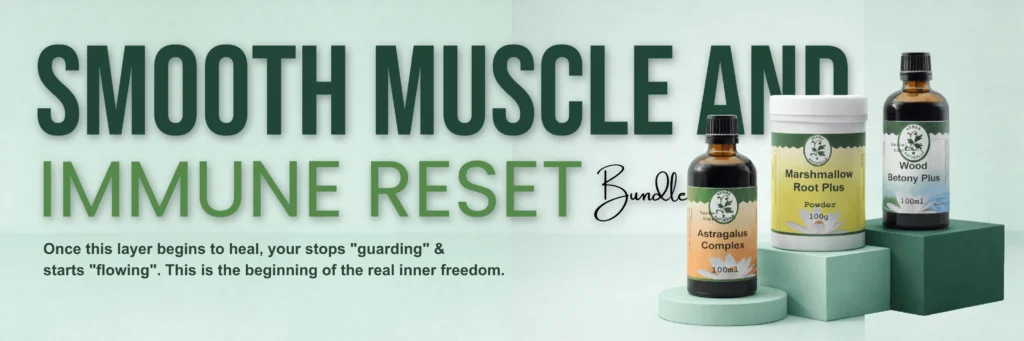
For patients whose gut dysfunction includes significant smooth muscle involvement, cramping, spasm, alternating constipation and diarrhoea, the Smooth Muscle and Immune Reset Bundle addresses both the muscular and immune components of the condition.
The Relationship to Other Body Systems
Gut-lining integrity is not only a digestive issue. The gut-brain axis means that gut-lining damage directly affects nervous system function. The immune burden of managing materials that cross a permeable gut drains resources from other immune functions, increasing susceptibility to infections.
The liver receives everything that crosses the gut barrier via the portal vein. When that barrier is compromised, the liver faces an increased toxic load that can impair its own detoxification capacity. Supporting the gut lining reduces the burden on the liver, which is why gut-healing herbs often produce improvements in symptoms that seem entirely unrelated to digestion.
Skin conditions frequently improve when gut-lining integrity is restored, because the skin often acts as a secondary eliminative organ when the gut and liver are overburdened. A medical herbalist treating eczema or psoriasis will almost always include gut-healing herbs in the formula.
The Treatment Timeline
Gut-lining repair is not instantaneous. The cells of the small intestinal lining turn over every three to five days, but restoring full barrier function, including the tight junction proteins that seal the gaps between cells, the mucus layer that sits above the cells and the immune regulatory mechanisms that maintain tolerance, takes weeks to months.
A typical clinical timeline begins with symptomatic improvement within the first week as the demulcent coating provides immediate protection. Measurable reduction in food sensitivities and systemic inflammation follows over four to eight weeks as the barrier begins to restore. Full recovery of immune tolerance and robust barrier function may take three to six months of consistent treatment.
This is why the three-layer healing approach places gut healing at its foundation. The benefits of treatment at every subsequent layer depend on the integrity of the gut lining, and this integrity must be patiently rebuilt.
Booking a consultation allows a qualified practitioner to assess the extent of gut-lining damage and design a treatment protocol that addresses your specific situation. The full range of gut-supportive products is available on the products page.
Our Trending Products & Bundles
-
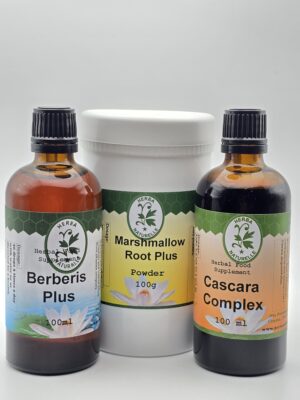 Digestive reset bundle
Original price was: £151.65.£144.95Current price is: £144.95.
-
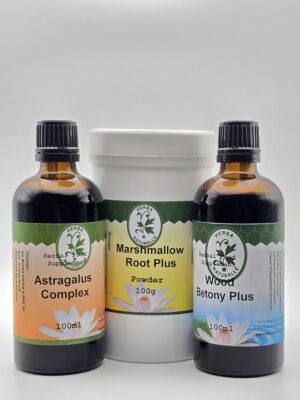 Smooth muscle and immune reset Bundle
Original price was: £177.60.£159.95Current price is: £159.95.
-
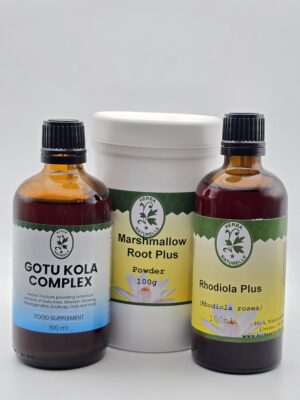 Nervous System Reset
Original price was: £163.68.£149.95Current price is: £149.95.
-
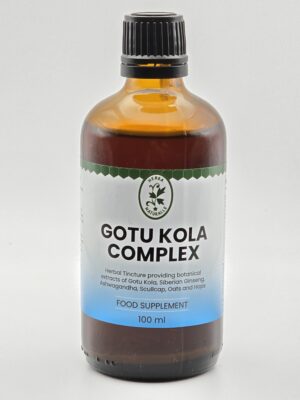 Gotu Kola Complex
£26.95

About the Author

Holistic Herbalist in UK · 30 Years of Excellence at Croydon, GB
Angela Jegnathan brings over 30 years of experience in integrated medicine and more than 25 years of full-time clinical herbal practice. Specializing in holistic herbal medicine, she focuses on restoring digestive health, calming the nervous system, and supporting the body's natural inflammatory response through evidence-based, patient-centered care.
Expertise: Holistic Herbs, Natural Medicines, Herbal Health
30 years of experience
