Herbal Medicine for Fertility and Preconception Health
Couples trying to conceive often describe a strange kind of loneliness to it, a private, monthly cycle of hope and disappointment that rarely gets discussed openly, even with close friends. By the time many women reach a herbalist’s clinic, they have already spent months, sometimes years, tracking cycles, researching supplements and feeling like their body has become a project rather than simply their own. Herbal medicine for fertility and preconception health cannot promise a pregnancy, no honest practitioner would claim that, but it can genuinely support the hormonal and physical foundations that make conception more likely, and that support matters regardless of how the story eventually unfolds. What we see most often in clinic is not a single dramatic problem but a collection of smaller things, mild thyroid sluggishness, a stressful job, disrupted sleep, an irregular cycle nobody investigated properly, that together create more resistance than any one factor would alone.
Preconception Is About the Whole Body, Not Just the Reproductive System
One of the more useful shifts in thinking during preconception care is recognising that fertility is not an isolated function sitting apart from the rest of health. Thyroid function, blood sugar regulation, stress levels, sleep quality and general nutritional status all directly influence hormonal signalling and ovulation, often in ways that do not show up on standard fertility testing at all. This is why a proper preconception consultation tends to look at the whole person rather than narrowly focusing on the reproductive system alone, since a body under significant strain elsewhere will often deprioritise reproduction, a pattern that makes biological sense from an evolutionary perspective even when it is frustrating and confusing to experience firsthand.
Herbs Traditionally Used to Support Female Reproductive Health
Shatavari, an Ayurvedic root whose name translates roughly to “she who possesses a hundred husbands,” has one of the longest traditional reputations as a female reproductive tonic across the entire Ayurvedic tradition, valued for centuries as a nourishing support during preparation for conception. Agnus castus is one of the most researched herbs relevant to fertility, traditionally used to support the pituitary gland’s role in regulating ovulation timing, which makes it particularly relevant for women whose cycles are irregular or whose ovulation timing is unclear. Dong quai, sometimes called female ginseng in Chinese medicine, carries a similarly long traditional reputation as a reproductive tonic used to prepare the body for conception, often used alongside other herbs as part of a considered, staged approach rather than in isolation.
A Traditional Herb Worth Understanding
False unicorn root has a specific, longstanding traditional reputation in North American herbal medicine as a female reproductive tonic, historically used to support healthy reproductive function. Like every herb mentioned here, it works best as part of a carefully considered plan rather than something added casually to a supplement routine, which is exactly why professional guidance matters so much during preconception, a phase where the margin for getting things right genuinely matters.
Phytoestrogens and Hormonal Balance
Red clover, containing plant compounds that weakly interact with oestrogen receptors, is sometimes discussed in the context of hormonal balance, though its role in fertility specifically is less established than its role in menopause, and this is a good example of why working with a qualified herbalist matters, since not every herb traditionally used for “women’s hormones” is automatically appropriate for someone actively trying to conceive.
Thyroid Health: An Easily Missed Piece of the Puzzle
Thyroid function has a disproportionately large influence on fertility, and even mild, subclinical thyroid imbalance can affect ovulation and implantation without producing obvious symptoms elsewhere, which is why thyroid testing is often overlooked until fertility difficulty prompts a closer look. Our article on herbal medicine for thyroid health is genuinely worth reading during preconception planning, and for women with irregular cycles more broadly, our dedicated article on herbal medicine for PCOS addresses one of the most common hormonal contributors to fertility difficulty.
Stress, Sleep and the Fertility Connection
Few things frustrate couples trying to conceive more than being told to “just relax,” yet the underlying physiology is real: chronic stress genuinely disrupts the hormonal signalling involved in ovulation, and the well meaning but unhelpful advice usually fails simply because knowing this does not make it easier to act on, especially when the stress itself is partly caused by the trying to conceive process in the first place. Our article on how chronic stress affects the body explains this mechanism properly rather than dismissively, and our evidence based guide to herbal medicine for sleep covers the herbal approaches that support the deep, restorative sleep hormonal health depends on.
Inflammation and the Preconception Window
Our article on understanding inflammation is a useful piece of background reading here, since chronic low grade inflammation has been increasingly linked to fertility difficulty, and addressing it during the preconception window, rather than only after conception, tends to be the more effective timing given how many of these processes unfold gradually over months rather than overnight. Our broader article on women’s health and herbal medicine brings these hormonal, cyclical and inflammatory threads together in more depth, and our general guide on preventive health and herbal medicine covers the broader philosophy of supporting the body before a health goal rather than reacting after difficulty arises.
Nutritional Foundations Worth Building Early
Preconception nutrition deserves more attention than it typically gets, and the timing matters more than most people realise, since egg quality is influenced by processes that unfold over roughly three months before ovulation, meaning changes made today may not show their full effect until several cycles later. Building a diet rich in whole foods, adequate protein and healthy fats, while reducing processed food and excess sugar, supports the same hormonal signalling pathways that herbs work on, and the two approaches genuinely complement each other rather than one substituting for the other. Folic acid supplementation before conception is standard NHS advice and worth discussing with a GP or midwife directly, since this sits outside what herbal medicine addresses and is one of the clearest, most evidence based preconception steps available.
Both partners’ health matters here, not only the person carrying the pregnancy. Male fertility factors contribute to roughly half of all fertility difficulty, and lifestyle factors like alcohol, smoking, heat exposure and stress affect sperm quality in ways that are often overlooked in a process that tends to focus heavily on the woman’s body alone.
A Realistic, Honest View
We want to be upfront: herbal medicine supports the body’s underlying hormonal and physical health, but it cannot guarantee conception, and it is not a substitute for proper fertility investigation if you have been trying for twelve months without success, or six months if you are over 35, since earlier investigation genuinely improves outcomes the longer difficulty continues. Some herbs traditionally used for hormonal support are not appropriate once pregnancy is confirmed or suspected, which is exactly why self prescribing from general online information carries real risk during this particular window, and why working with a qualified practitioner who understands both fertility and herb safety matters more here than in almost any other area of herbal medicine. Our article on when to use herbal medicine is a good starting point for understanding where herbal support fits alongside medical fertility care rather than in place of it.
Discuss Your Case With a Herbalist
Because preconception health touches so many interconnected systems, hormones, thyroid, stress, sleep and nutrition among them, a full consultation gives a far more complete and personalised picture than any general article can, and allows a herbalist to build a plan that is specific to your cycle, history and current health rather than a generic checklist. Learn more about our clinical approach, take a look at how our herbal consultation works, or read through our patient success stories to see how other couples have approached this deeply personal, often difficult stage of their lives with proper support in place.
Our Trending Products & Bundles
-
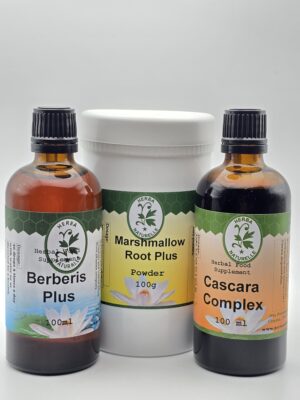 Digestive reset bundle
Original price was: £151.65.£144.95Current price is: £144.95.
Digestive reset bundle
Original price was: £151.65.£144.95Current price is: £144.95.
-
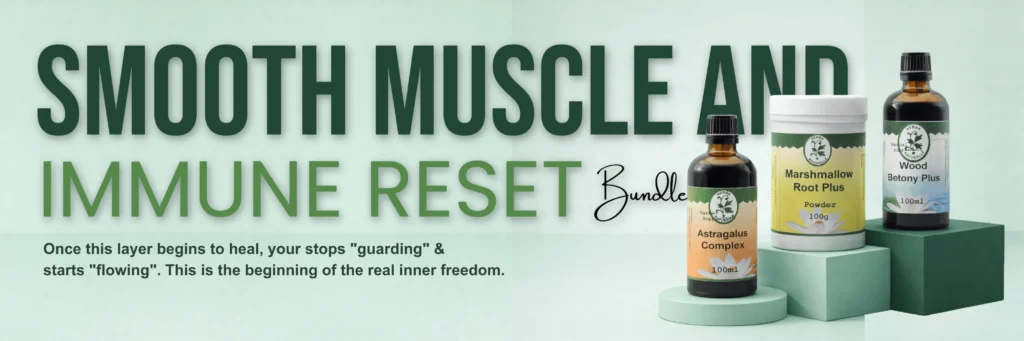
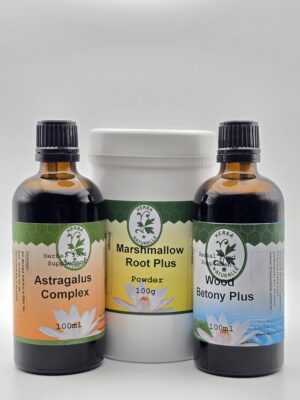 Smooth muscle and immune reset Bundle
Original price was: £177.60.£159.95Current price is: £159.95.
Smooth muscle and immune reset Bundle
Original price was: £177.60.£159.95Current price is: £159.95.
-
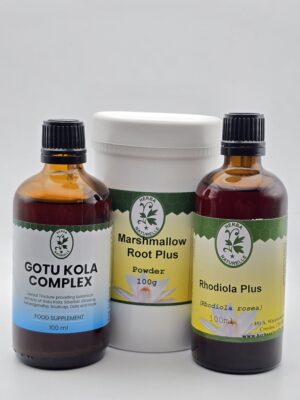 Nervous System Reset
Original price was: £163.68.£149.95Current price is: £149.95.
Nervous System Reset
Original price was: £163.68.£149.95Current price is: £149.95.
-
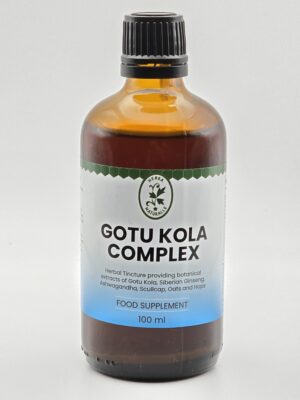 Gotu Kola Complex
£26.95
Gotu Kola Complex
£26.95

About the Author

Holistic Herbalist in UK · 30 Years of Excellence at Croydon, GB
Angela Jegnathan brings over 30 years of experience in integrated medicine and more than 25 years of full-time clinical herbal practice. Specializing in holistic herbal medicine, she focuses on restoring digestive health, calming the nervous system, and supporting the body's natural inflammatory response through evidence-based, patient-centered care.
Expertise: Holistic Herbs, Natural Medicines, Herbal Health
30 years of experience
