Agnus-Castus (Vitex agnus-castus): The Herbal Hormone Balancer
Agnus-castus, known botanically as Vitex agnus-castus and commonly called chaste tree berry or chasteberry, is one of the most extensively used herbs in Western herbal medicine for female hormonal health. Its long history of clinical use, spanning from ancient Greece through medieval Europe and into modern herbal practice, is matched by a growing body of scientific research confirming its significant influence on the female hormonal system.
At Herba Naturalle, Agnus-castus forms part of the broader repertoire of herbal tools used to support women through the cyclical changes, imbalances, and reproductive health challenges that affect so many at different stages of life. Understanding this herb, its actions, its indications, its appropriate use, is essential for anyone exploring natural approaches to hormonal wellbeing.
Botanical Identity
Agnus-castus is a deciduous shrub native to the Mediterranean and Central Asia. It produces distinctive finger-shaped leaves, long violet flower spikes, and small, dark, peppery berries, it is these berries that are used medicinally. The Latin name agnus-castus translates as “chaste lamb,” reflecting the herb’s historical association with chastity, medieval monks reportedly used it to suppress sexual desire, a use that, while historically interesting, does not reflect its primary clinical applications today.
The herb belongs to the family Lamiaceae and is closely related to other medicinally important plants. In Western herbal medicine, the dried ripe berries are the primary medicinal part, used in tincture, standardised extract, or dried berry preparations.
Active Compounds and Mechanisms
The primary active compounds in Agnus-castus berries include iridoid glycosides (particularly aucubin and agnuside), flavonoids, diterpenes, and essential oil constituents. Its hormonal activity is primarily mediated through dopaminergic pathways, Agnus-castus compounds bind to dopamine D2 receptors in the pituitary gland, inhibiting the release of prolactin.
This is clinically significant because elevated prolactin, a state called hyperprolactinaemia, is associated with premenstrual syndrome, irregular cycles, breast tenderness, luteal phase defects, and in some cases, reduced fertility. By normalising prolactin levels, Agnus-castus creates downstream improvements in progesterone production, cycle regularity, and the ratio of oestrogen to progesterone, the balance that is disrupted in so many hormonally-driven conditions.
Agnus-castus also appears to interact with opioid receptors and has modest oestrogenic activity at specific receptor subtypes, contributing to its broader hormonal regulatory effects.
Traditional Uses in Western Herbal Medicine
In the tradition of Western herbal medicine, as documented by herbalists and explored across the complete herb index at Herba Naturalle, Agnus-castus has been used for:
- Premenstrual syndrome (PMS): particularly the tension, irritability, bloating, and breast tenderness associated with the luteal phase
- Irregular menstrual cycles: supporting cycle normalisation in women with infrequent or unpredictable periods
- Luteal phase defect: where the second half of the cycle is shortened, impairing fertility
- Premenstrual dysphoric disorder (PMDD): a severe form of PMS with significant mood symptoms
- Perimenopause: supporting the hormonal transition through menopause, particularly where there is oestrogen dominance relative to declining progesterone
- Benign breast disease: cyclical mastalgia (breast pain) responding to hormonal fluctuation
- Secondary amenorrhoea: absent periods in women who have previously had normal cycles, particularly where stress or nutritional factors have disrupted the hypothalamic-pituitary-ovarian axis
Clinical Evidence
The clinical evidence for Agnus-castus is among the strongest of any herb in the Western materia medica. Multiple randomised controlled trials have demonstrated statistically significant improvements in PMS symptoms compared to placebo, with effect sizes comparable to pharmaceutical interventions. A landmark trial published in the British Medical Journal found that Agnus-castus extract was significantly superior to placebo across multiple PMS symptom domains after three menstrual cycles.
Studies on prolactin normalisation, cycle regularity, and luteal phase support provide mechanistic underpinning for these clinical outcomes. The herb is listed in the German Commission E monographs, the gold standard of European herbal pharmacological assessment, for the treatment of premenstrual complaints, cyclical breast tenderness, and irregular cycles.
How Agnus-castus Is Used in Practice
One of the most important aspects of using Agnus-castus correctly is understanding that it is a slow-acting hormonal regulator. Unlike pharmaceutical hormone interventions, it does not produce rapid changes, its benefits typically emerge over two to four menstrual cycles of consistent use. Patients using it should be advised to maintain regular dosing and assess outcomes after at least three months.
Agnus-castus is usually taken in the morning, as its dopaminergic activity aligns with the body’s natural morning rhythm of prolactin secretion. It is typically used as a tincture (1:2 or 1:3 preparation) or as a standardised dry extract. In clinical herbal practice, it is often combined with other herbs depending on the individual presentation, for example, with Dong Quai (Angelica sinensis) where cycle regularity is also required, or with nervine herbs where stress is driving hormonal disruption.
Relationship to the Smooth Muscle Lining
At Herba Naturalle, the clinical framework developed by Medical Herbalist Anjela Jeganathan recognises that many female reproductive conditions, from PMS to PCOS and endometriosis, have a significant smooth muscle inflammation component. The uterine wall, the fallopian tube linings, and the reproductive organ tissues are all smooth muscle-lined structures, and when this lining is chronically inflamed, hormonal dysregulation is both cause and consequence.
Agnus-castus is therefore most effective when used as part of a broader programme that addresses the underlying smooth muscle inflammatory process. The Shatavari Complex, available from Herba Naturalle, is a comprehensive female reproductive tonic that supports hormonal balance from a complementary perspective, and is used alongside Agnus-castus in many clinical presentations. The Smooth Muscle and Immune Reset Bundle addresses the deeper inflammatory layer that perpetuates hormonal disruption.
Safety and Contraindications
Agnus-castus is generally well tolerated. Reported side effects are mild and infrequent, including headache, nausea, and rash in a small minority of users. Important contraindications and cautions include:
- Pregnancy: Agnus-castus should not be used during pregnancy due to its hormonal activity
- Hormone-sensitive conditions: use with caution in oestrogen-receptor-positive breast cancer; discuss with an oncologist
- Dopamine agonist medications: theoretical interaction due to dopaminergic activity; use with caution alongside dopamine agonists or antipsychotics
- Oral contraceptive pill: may theoretically reduce the effectiveness of hormonal contraception, though clinical evidence is limited
- IVF and fertility treatment: always discuss with a fertility specialist before using Agnus-castus alongside assisted reproduction
Understanding Agnus-castus in the Context of Herbal Medicine
Agnus-castus is one of 224 herbs catalogued in the Herba Naturalle herb index, each one representing a clinically significant plant with specific actions, applications, and a place in the tradition of Western herbal medicine. Understanding individual herbs in depth is important, but in clinical practice, herbs are rarely used in isolation, they are selected and combined according to the individual’s complete constitutional picture, health history, and symptom pattern.
If you are experiencing hormonal health challenges and are interested in exploring whether Agnus-castus or a personalised herbal programme might be appropriate for your situation, you are warmly invited to get in touch with Herba Naturalle. Anjela Jeganathan’s 30-year clinical experience in herbal medicine provides a depth of expertise that allows for genuinely personalised, root-cause approaches to hormonal health.
You can also explore the full range of herbal products available from Herba Naturalle, including formulations designed to support female reproductive health, nervous system balance, and the digestive foundations of overall wellbeing.
This article is for informational purposes only and does not constitute medical advice. Please consult your GP or a qualified medical herbalist before using herbal medicines, particularly if you are pregnant, taking prescription medication, or have a diagnosed health condition.
Our Trending Products & Bundles
-
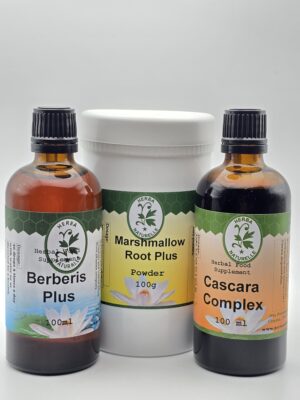 Digestive reset bundle
Original price was: £151.65.£144.95Current price is: £144.95.
Digestive reset bundle
Original price was: £151.65.£144.95Current price is: £144.95.
-
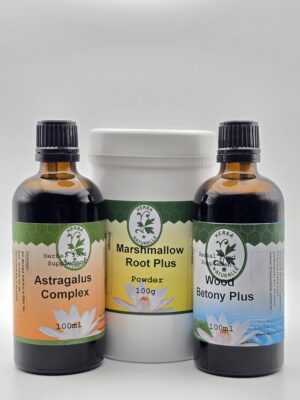 Smooth muscle and immune reset Bundle
Original price was: £177.60.£159.95Current price is: £159.95.
Smooth muscle and immune reset Bundle
Original price was: £177.60.£159.95Current price is: £159.95.
-
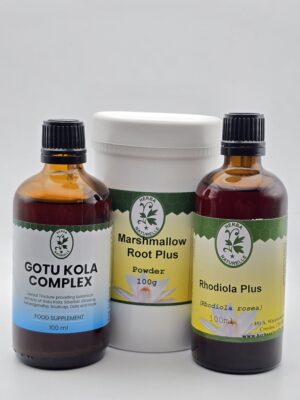 Nervous System Reset
Original price was: £163.68.£149.95Current price is: £149.95.
Nervous System Reset
Original price was: £163.68.£149.95Current price is: £149.95.
-
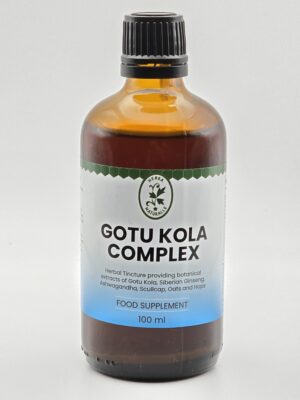 Gotu Kola Complex
£26.95
Gotu Kola Complex
£26.95