Ashwagandha Root (Withania somnifera): Ayurveda’s Master Adaptogen
Ashwagandha — Withania somnifera — is the most studied adaptogenic herb in the world, and for good reason. With over 400 published studies and a clinical evidence base that continues to grow rapidly, it has moved from a niche Ayurvedic tonic to one of the most mainstream herbal supplements in the UK and globally. Its name — literally “smell of horse” in Sanskrit — evokes its traditional association with the strength, stamina, and vitality of a horse.
At Herba Naturalle, Ashwagandha Root is a central herb in clinical practice for nervous system support, stress resilience, adrenal recovery, hormonal balance, and fatigue. It sits at the heart of the Gotu Kola Complex — one of the formulations in the Nervous System Reset Bundle — reflecting its critical role in the surface nervous system support that Anjela Jeganathan has placed at the centre of her clinical approach.
Botanical Identity
Withania somnifera is a small woody shrub of the Solanaceae (nightshade) family, native to India, the Middle East, and parts of North Africa. It grows to 30–150cm, with soft, greyish-green leaves, small yellowish-green flowers, and distinctive red berry fruits enclosed in papery husks. The medicinal part is the root — a fleshy taproot with a distinctive earthy smell that intensifies on drying.
The plant appears in the Herba Naturalle herb index listed as “Ashwaganda Root” — alongside other great adaptogens including Rhodiola, Siberian Ginseng, and American Ginseng.
Active Compounds
The primary active compounds are withanolides — steroidal lactones unique to the Withania genus. Key withanolides include withaferin A and withanolide D. Supporting compounds include alkaloids (isopelletierine, anaferine), sitoindosides, and glycowithanolides. Together these modulate the HPA axis, inhibit NF-κB inflammatory signalling, and interact with GABA receptor pathways.
Evidence-Based Benefits
Cortisol and stress reduction: Multiple double-blind RCTs — including studies using KSM-66 and Sensoril standardised extracts — demonstrate statistically significant reductions in serum cortisol (up to 28% reduction), perceived stress scores, and anxiety ratings compared to placebo. This is the most robust evidence base.
Sleep quality: Two recent RCTs specifically studying sleep outcomes found significant improvements in sleep onset latency, total sleep time, sleep efficiency, and morning alertness in people given Ashwagandha extract versus placebo. The compound triethylene glycol appears primarily responsible.
Thyroid support: Preliminary clinical evidence suggests Ashwagandha may increase T3 and T4 levels in people with subclinical hypothyroidism — making it useful as thyroid support but requiring monitoring in those with hyperthyroidism.
Male hormonal health: Multiple trials report improvements in testosterone levels, sperm count, sperm motility, and overall male reproductive health. This is reflected in the Gokshura Ashwagandha Plus formulation — combining Ashwagandha with Gokshura for targeted male vitality support.
Muscle and physical performance: Ashwagandha supplementation is consistently associated with greater improvements in muscle mass, strength, and aerobic capacity compared to placebo in athletic populations.
Cognitive function: Early-stage trials suggest improvements in memory, attention, and processing speed under conditions of stress.
How Ashwagandha Is Used at Herba Naturalle
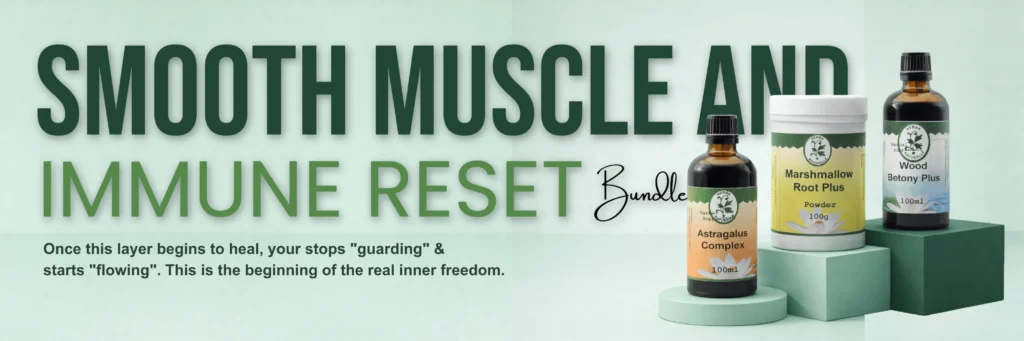
Ashwagandha is used within the broader three-step clinical approach at Herba Naturalle — understanding that the nervous system cannot truly reset unless the digestive and smooth muscle lining layers are also addressed. The Nervous System Reset Bundle brings Ashwagandha together with Gotu Kola, Rhodiola, Siberian Ginseng, Scullcap, Hops, and Oats for a comprehensive three-month nervous system recovery programme. The Smooth Muscle and Immune Reset Bundle addresses the deeper inflammatory layer.
Typical doses: 300–600mg standardised extract (KSM-66 or Sensoril) daily; 3–6g root powder; or 2–4ml tincture (1:3) twice daily.
Safety
- Thyroid conditions: Monitor thyroid function — Ashwagandha increases T3/T4
- Pregnancy: Contraindicated — traditional abortifacient use at high doses
- Autoimmune conditions and immunosuppressants: Immune-stimulating; use with professional guidance
- Rare liver toxicity: A small number of case reports exist; avoid in pre-existing liver disease
To explore Ashwagandha as part of a personalised herbal programme, contact Herba Naturalle or explore the complete herb index and product range.
This article is for informational purposes only. Please consult a qualified medical herbalist or your GP before use.
Our Trending Products & Bundles
-
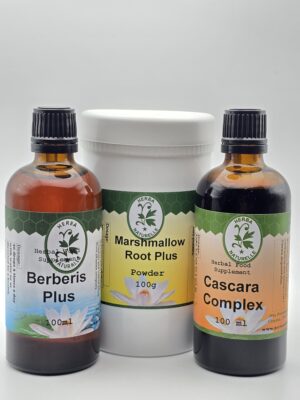 Digestive reset bundle
Original price was: £151.65.£144.95Current price is: £144.95.
Digestive reset bundle
Original price was: £151.65.£144.95Current price is: £144.95.
-
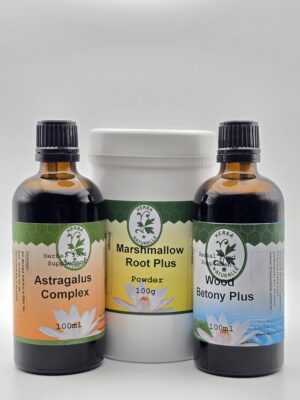 Smooth muscle and immune reset Bundle
Original price was: £177.60.£159.95Current price is: £159.95.
Smooth muscle and immune reset Bundle
Original price was: £177.60.£159.95Current price is: £159.95.
-
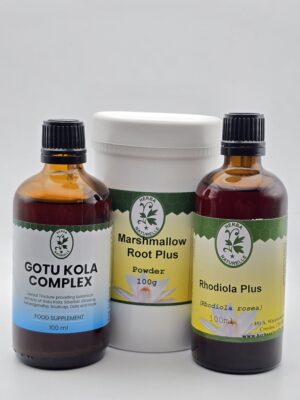 Nervous System Reset
Original price was: £163.68.£149.95Current price is: £149.95.
Nervous System Reset
Original price was: £163.68.£149.95Current price is: £149.95.
-
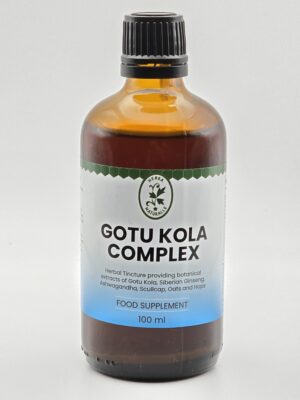 Gotu Kola Complex
£26.95
Gotu Kola Complex
£26.95