
Ulcerative Colitis Symptoms, IBD Inflammation and Bowel Cancer Signs Explained
By Anjela Jeganathan – Medical Herbalist | Herba Naturalle
The intestinal conditions that produce diarrhoea, abdominal cramping, bleeding, and bowel changes are grouped under a cluster of related but distinct diagnoses — IBS, IBD (including ulcerative colitis and Crohn’s disease), and bowel cancer. Each has different causes, symptoms, investigations, and treatments. Distinguishing between them is clinically important and often the first step in getting the right support.
For the comprehensive overview of all four conditions — IBS, IBD, UC, and bowel cancer — see our detailed post on IBS, IBD, UC and bowel cancer — understanding your intestinal symptoms.
Ulcerative Colitis (UC): Symptoms and Manifestations
Ulcerative colitis is a chronic inflammatory bowel disease characterised by inflammation and ulceration of the inner lining of the colon and rectum. Unlike Crohn’s disease, it affects only the colon, and the inflammation is continuous rather than patchy.
Core symptoms of ulcerative colitis include:
- Bloody diarrhoea — blood mixed through the stool (not just on the surface) is a hallmark of UC
- Urgency — a sudden, urgent need to defecate that may not be controllable
- Mucus in stool — passed with or without diarrhoea
- Abdominal cramping — typically lower left-sided, often relieved temporarily by bowel movement
- Tenesmus — the sensation of incomplete evacuation, often with the urge to return immediately
- Fatigue — driven by blood loss, nutritional depletion, and systemic inflammation
- Weight loss during active flares
UC is a relapsing-remitting condition — periods of active disease (flares) alternate with periods of remission in which symptoms subside significantly.
IBD and Intestinal Inflammation
Inflammatory bowel disease (IBD) is the umbrella term covering both ulcerative colitis and Crohn’s disease. The hallmark of IBD is full-thickness inflammation of the bowel wall driven by a dysregulated immune response.
IBD is not the same as IBS. The key distinctions:
| IBS | IBD (UC / Crohn’s) | |
|---|---|---|
| Inflammation | No structural inflammation | Confirmed bowel inflammation |
| Blood in stool | No | Yes (typically in UC) |
| Diagnosed by | Symptom criteria | Colonoscopy + biopsy |
| Remission | Ongoing management | Remitting-relapsing pattern |
| Treatment | Lifestyle, diet, antispasmodics | Immunosuppressants, biologics |
Diarrhoea after eating — a common complaint — is discussed in the context of the gut anatomy in our post on understanding your digestive system.
Symptoms of Bowel Cancer in a Woman (and Men)
Colorectal cancer is the fourth most common cancer in the UK. Recognising it early significantly improves outcomes. Symptoms of bowel cancer include:
- Persistent change in bowel habit — particularly to looser stools or increased frequency — lasting more than 4–6 weeks
- Blood in stool — either dark and mixed through stool (suggesting right-sided tumour) or bright red (left-sided tumour or rectal cancer)
- Abdominal pain, discomfort, or cramping that is new and persistent
- Unexplained weight loss
- Extreme fatigue disproportionate to activity — often driven by occult (hidden) blood loss causing iron-deficiency anaemia
- A palpable mass in the abdomen
- Feeling of incomplete evacuation that is new
In women, the overlap between gynaecological symptoms and bowel symptoms can complicate recognition. Any new, persistent change in bowel habit in women over 40 warrants prompt GP assessment.
IBS Medication and Management
IBS does not carry the inflammatory markers of IBD, but its symptoms — cramping, diarrhoea, bloating, and constipation — significantly affect quality of life. IBS management includes antispasmodics (mebeverine, hyoscine), laxatives for IBS-C, antidiarrhoeals for IBS-D, low-FODMAP dietary modification, and psychological approaches.
The bloating and abdominal discomfort common to both IBS and IBD is explored in our practical guide to bloating, trapped wind and constipation relief.
This article is for educational purposes only. Blood in your stool or a persistent change in bowel habit requires urgent GP assessment.
Our Trending Products & Bundles
-
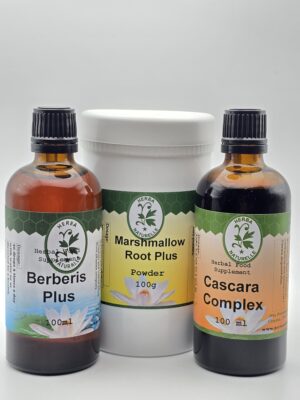 Digestive reset bundle
Original price was: £151.65.£144.95Current price is: £144.95.
Digestive reset bundle
Original price was: £151.65.£144.95Current price is: £144.95.
-
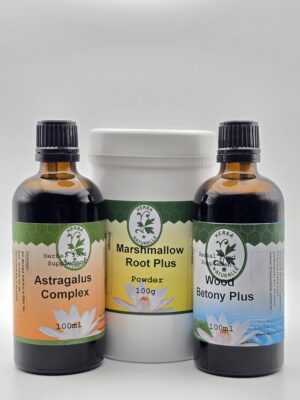 Smooth muscle and immune reset Bundle
Original price was: £177.60.£159.95Current price is: £159.95.
Smooth muscle and immune reset Bundle
Original price was: £177.60.£159.95Current price is: £159.95.
-
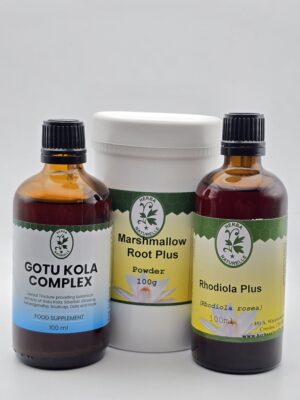 Nervous System Reset
Original price was: £163.68.£149.95Current price is: £149.95.
Nervous System Reset
Original price was: £163.68.£149.95Current price is: £149.95.
-
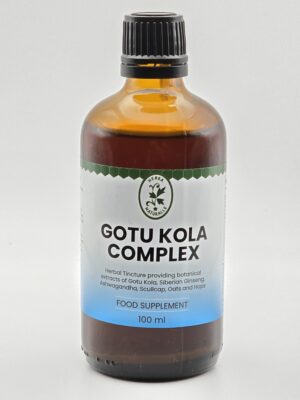 Gotu Kola Complex
£26.95
Gotu Kola Complex
£26.95


About the Author

Holistic Herbalist in UK · 30 Years of Excellence at Croydon, GB
Angela Jegnathan brings over 30 years of experience in integrated medicine and more than 25 years of full-time clinical herbal practice. Specializing in holistic herbal medicine, she focuses on restoring digestive health, calming the nervous system, and supporting the body's natural inflammatory response through evidence-based, patient-centered care.
Expertise: Holistic Herbs, Natural Medicines, Herbal Health
30 years of experience
