Elecampane Root (Inula helenium): The Deep Respiratory Cleanser
Elecampane — Inula helenium — is a magnificent plant: a tall, imposing perennial with large soft leaves and bright golden-yellow daisy-like flowers, native to Central Asia but naturalised across Britain and Europe since antiquity. Its thick, aromatic roots — with a sweet, violet-like scent when fresh, becoming more camphoraceous when dried — carry one of the most concentrated expectorant and antimicrobial profiles of any Western herb, making Elecampane the herb of choice for deep-seated, chronic respiratory conditions where the airways need both clearing and genuine healing.
At Herba Naturalle, Elecampane Root is listed in the comprehensive herb index as a primary respiratory herb — one whose depth of action in chronic bronchitis and respiratory catarrh makes it a key clinical tool alongside the Lungwort Plus from Herba Naturalle.
Active Compounds
- Sesquiterpene lactones — alantolactone and isoalantolactone; the primary active compounds; potent antimicrobial (including against Mycobacterium tuberculosis in laboratory studies), antifungal, anti-inflammatory, and expectorant
- Inulin (up to 44% of dry root) — a prebiotic fructan; contributes to the soothing demulcent action and the gut microbiome-supporting properties
- Volatile oil — azulene and related compounds; anti-inflammatory and aromatic expectorant
- Phytosterols — with anti-inflammatory activity
- Resin — with direct antimicrobial activity in the respiratory tract
Clinical Applications
Chronic Bronchitis and Respiratory Catarrh
The primary application. Elecampane’s sesquiterpene lactones provide both direct antimicrobial activity against respiratory pathogens and powerful expectorant action — loosening and promoting the clearance of deep, tenacious mucus from the bronchi. This combination makes it specifically appropriate for:
- Chronic bronchitis with persistent, difficult-to-clear mucus
- The productive cough following acute respiratory infection that lingers for weeks
- Respiratory catarrh with yellow or green mucus suggesting secondary infection
- Bronchiectasis (with professional oversight)
Asthma with Excess Mucus
The antispasmodic volatile oil components reduce bronchial spasm; the expectorant action clears the mucus plugs that worsen asthmatic airway obstruction.
Digestive Bitter Tonic
The high inulin content and the sesquiterpene bitterness give Elecampane meaningful digestive applications — stimulating bile production, feeding the gut microbiome, and providing prebiotic support. Complementary to the Digestive Reset Bundle and Berberis Plus.
Antimicrobial
The alantolactone content has significant broad-spectrum antimicrobial activity — relevant in chronic and recurrent respiratory infections, gut dysbiosis, and antiparasitic protocols.
How to Use
- Decoction: 2–4g dried root simmered 20 minutes; 2–3 cups daily
- Tincture (1:3): 3–5ml three times daily
- Elecampane is best used in combination with soothing mucilaginous herbs (like Marshmallow Root or Coltsfoot) to balance the strongly aromatic, slightly harsh character of the root
Safety
- Well tolerated at therapeutic doses
- Sesquiterpene lactone allergy: Cross-reactivity with Asteraceae family plants; discontinue if reactions occur
- Pregnancy: Avoid — the volatile oil may stimulate uterine contractions at high doses
- Sensitive individuals: The aromatic sesquiterpenes may cause irritation in sensitive respiratory tracts — use diluted preparations initially
Contact Herba Naturalle for respiratory herbal support. Browse all products and the full herb index.
This article is for informational purposes only. Please consult a qualified medical herbalist before use.
Our Trending Products & Bundles
-
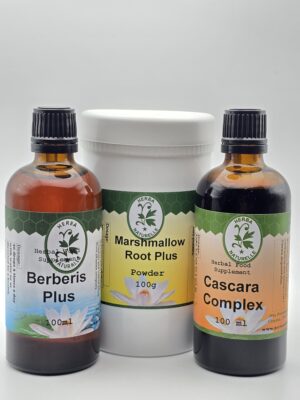 Digestive reset bundle
Original price was: £151.65.£144.95Current price is: £144.95.
Digestive reset bundle
Original price was: £151.65.£144.95Current price is: £144.95.
-
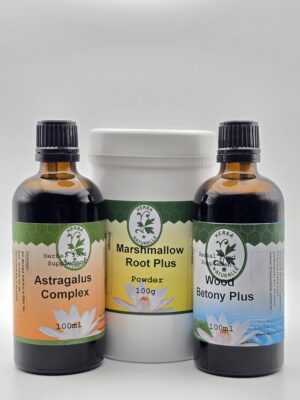 Smooth muscle and immune reset Bundle
Original price was: £177.60.£159.95Current price is: £159.95.
Smooth muscle and immune reset Bundle
Original price was: £177.60.£159.95Current price is: £159.95.
-
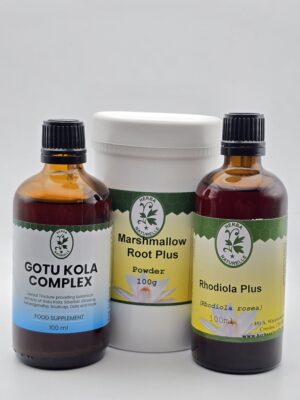 Nervous System Reset
Original price was: £163.68.£149.95Current price is: £149.95.
Nervous System Reset
Original price was: £163.68.£149.95Current price is: £149.95.
-
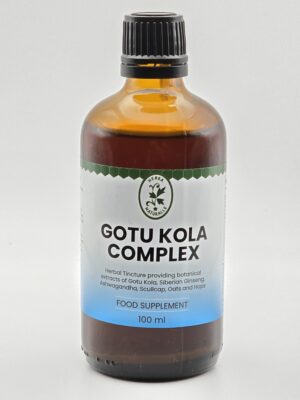 Gotu Kola Complex
£26.95
Gotu Kola Complex
£26.95