
Dandelion Leaf (Taraxacum officinale fol): The Potassium-Sparing Diuretic
Dandelion — Taraxacum officinale — is quite possibly the most underappreciated medicinal plant in Britain. Growing on virtually every patch of unmown grass in the country, scorned as a weed, and routinely killed with herbicide, the dandelion is one of the most nutritionally complete and medicinally useful plants accessible to the British public — absolutely free, available year-round, and requiring no cultivation. The leaf and root are listed separately in the Herba Naturalle herb index because they have distinct clinical profiles, with the leaf being primarily a diuretic and nutritive tonic.
At Herba Naturalle, Dandelion Leaf is valued as a herb that embodies the clinical herbal philosophy of treating the whole body through its root systems — in this case, the diuretic action that supports kidney elimination, the nutritive action that replenishes mineral stores, and the combined effect on blood pressure and fluid balance.
Active Compounds
- Potassium — exceptionally high — one of the richest plant sources; compensates for the potassium loss of the diuretic action (unlike pharmaceutical diuretics)
- Taraxacosides — bitter sesquiterpene glycosides; contributing to the mild digestive tonic action
- Flavonoids — luteolin and its glucosides; anti-inflammatory and diuretic
- Hydroxycinnamic acids — caffeic acid and chlorogenic acid; anti-inflammatory and liver-protective
- Vitamins — vitamin A (beta-carotene), C, and K; B vitamins
- Inulin — prebiotic fibre
Clinical Applications
Fluid Retention and Diuresis
The primary application of Dandelion Leaf. It is one of the most effective herbal diuretics — producing a meaningful increase in urine output that reduces peripheral oedema, premenstrual fluid retention, and the fluid accumulation of mild cardiac or hepatic insufficiency. Its unique advantage over pharmaceutical diuretics is the high potassium content — which prevents the hypokalaemia (low potassium) that makes pharmaceutical diuretics like furosemide potentially hazardous.
Blood Pressure Support
The diuretic reduction in fluid volume, combined with the potassium content (which promotes sodium excretion and vasodilation), produces a meaningful antihypertensive effect — making Dandelion Leaf relevant in mild hypertension with fluid component.
Urinary Health
The increased urinary flow supports the flushing of the urinary tract — reducing urinary tract infection susceptibility and contributing to kidney stone prevention. Complementary to the Cornsilk Plus for urinary support.
Nutritive Tonic
Dandelion Leaf is genuinely nutritious — eaten as a food (salad, cooked green, tea) it provides vitamins A, C, K, and significant potassium, calcium, and iron. This makes it a valuable nutritive tonic in states of depletion.
How to Use
- Fresh leaves: Eat raw in salads (young spring leaves are least bitter) or blanched as a vegetable
- Tea: 4–8g fresh or 2–4g dried leaf steeped 10 minutes; 3 cups daily
- Tincture (1:3): 4–6ml three times daily
Safety
Extremely safe — eaten as a food worldwide:
- Potassium-sparing diuretics or ACE inhibitors: The high potassium content may cause hyperkalaemia when combined with these drugs — professional guidance required
- Gallstones: The mild choleretic action of the leaf may trigger colic in gallstone disease
- Asteraceae allergy: Rare cross-reactivity
Contact Herba Naturalle for diuretic and kidney herbal support. Browse the full herb index and all products.
This article is for informational purposes only. Please consult a qualified medical herbalist before use.
Our Trending Products & Bundles
-
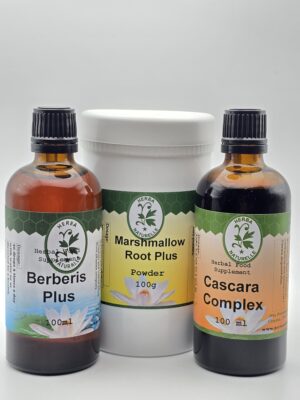 Digestive reset bundle
Original price was: £151.65.£144.95Current price is: £144.95.
Digestive reset bundle
Original price was: £151.65.£144.95Current price is: £144.95.
-
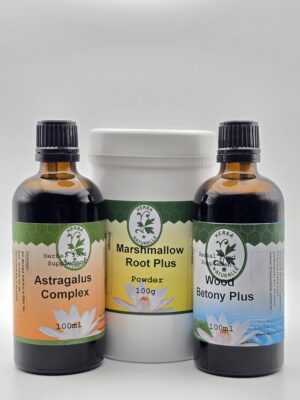 Smooth muscle and immune reset Bundle
Original price was: £177.60.£159.95Current price is: £159.95.
Smooth muscle and immune reset Bundle
Original price was: £177.60.£159.95Current price is: £159.95.
-
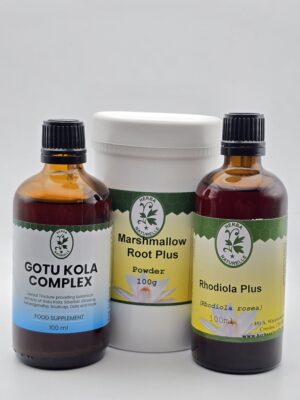 Nervous System Reset
Original price was: £163.68.£149.95Current price is: £149.95.
Nervous System Reset
Original price was: £163.68.£149.95Current price is: £149.95.
-
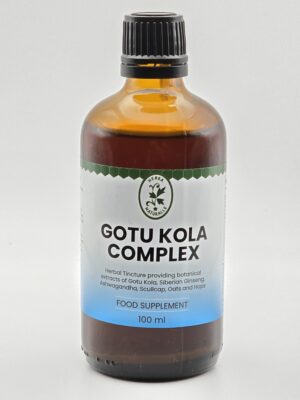 Gotu Kola Complex
£26.95
Gotu Kola Complex
£26.95