Alfalfa Tops (Medicago sativa): The Complete Aerial Tonic
Alfalfa Tops, the aerial flowering and leaf tops of Medicago sativa, represent the complete above-ground harvest of one of the world’s most nutritionally rich plants. While Alfalfa Leaf (fol) refers specifically to the leaf portion, Alfalfa Tops encompasses the full aerial plant at its nutritional peak: leaves, young stems, flowers, and seed pods harvested at the point of flowering — the moment of highest phytochemical and nutritional concentration.
This distinction matters clinically. The tops contain a fuller spectrum of the plant’s active constituents — including higher concentrations of chlorophyll from the stems, additional flavonoids from the flowers, and the complete array of phytoestrogens, vitamins, minerals, and enzymes that make Alfalfa one of the most comprehensively nutritive plants in the Western and Ayurvedic materia medica.
At Herba Naturalle, both Alfalfa Leaf and Alfalfa Tops are included in the comprehensive herb index, reflecting the clinical significance of working with the whole plant and understanding the differences between plant parts.
Botanical Context and Distinction from Alfalfa Leaf
Medicago sativa is a perennial legume growing to 30–90cm, with characteristic trifoliate leaves, purple-blue flower spikes, and spiral seed pods. At flowering — which occurs in summer — the plant reaches its peak of phytochemical development.
The “tops” harvest — aerial parts including stems and flowers — produces:
- More chlorophyll per gram than leaf-only preparations — the green stems are packed with this photosynthetic pigment
- Additional flavonoids from flower structures — quercetin concentrations increase at flowering
- Higher saponin content in the stems — contributing to the mild oestrogenic and cholesterol-modulating activity
- Greater mineral density — stems accumulate minerals drawn up from deep root systems
- Digestive enzymes — concentrated in the actively growing tops
This makes Alfalfa Tops a slightly more potent and broad-spectrum preparation than the leaf alone, appropriate where a comprehensive tonic effect is needed.
Chlorophyll: The Green Medicine Within Alfalfa Tops
One of the most distinctive therapeutic contributions of Alfalfa Tops — compared to Alfalfa Leaf alone — is the elevated chlorophyll content from the stem tissue. Chlorophyll, the green pigment responsible for photosynthesis, is a remarkably close structural analogue to haemoglobin — the oxygen-carrying molecule in human red blood cells. The only significant difference is that chlorophyll has magnesium at its centre, while haemoglobin has iron.
This structural similarity underlies chlorophyll’s documented biological activities in humans:
- Blood-building: Traditionally used to support haemoglobin production in anaemia — the magnesium-iron relationship facilitates iron assimilation
- Deodorising: Chlorophyll is a natural deodoriser, reducing internal odour, bad breath, and body odour from the inside out
- Wound healing: Topical chlorophyll preparations accelerate wound healing through anti-inflammatory and tissue-regenerative mechanisms
- Detoxification: Chlorophyll binds to and facilitates the elimination of certain environmental toxins and heavy metals in the gut
- Antioxidant: Pheophytin and other chlorophyll derivatives have significant free-radical scavenging activity
The elevated chlorophyll in Alfalfa Tops makes it particularly valuable in states of toxic burden, skin conditions, and systemic deodorising needs alongside its broader nutritive function.
Phyto-oestrogenic Activity and Hormonal Support
The saponin and isoflavone content of Alfalfa Tops gives it a mild phyto-oestrogenic activity — the same mechanisms as Alfalfa Leaf, but at a slightly higher concentration due to the additional saponins from the stem and flower structures.
This makes Alfalfa Tops particularly relevant for:
- Perimenopause and menopause — supporting oestrogen levels as ovarian production declines
- Post-menopausal bone health — through both calcium nutrition and oestrogenic support of bone mineralisation
- Hormonal support alongside other herbs — Alfalfa Tops works synergistically with the Shatavari Complex for female reproductive and hormonal support, providing the nutritional foundation on which hormonal tonic herbs can act most effectively
Alkalising and Anti-inflammatory Effects
Both Alfalfa Leaf and Alfalfa Tops have a strong alkalising effect on blood and tissues. This is clinically relevant in conditions of systemic acidity — a state that promotes inflammation, impairs cellular enzyme function, and contributes to joint conditions including gout and some forms of arthritis.
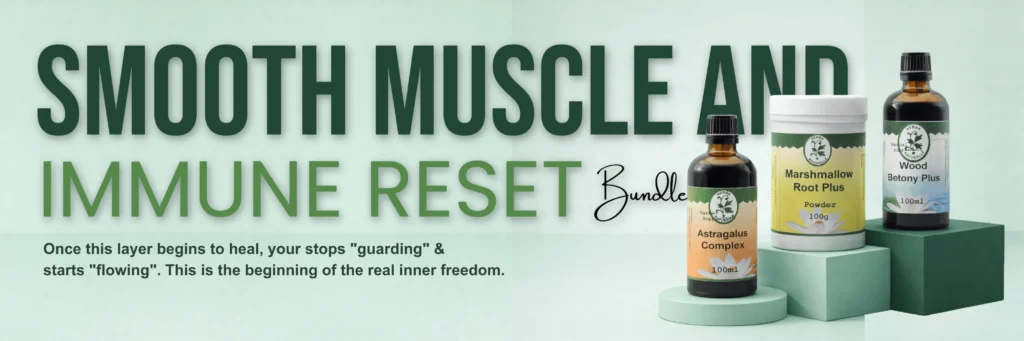
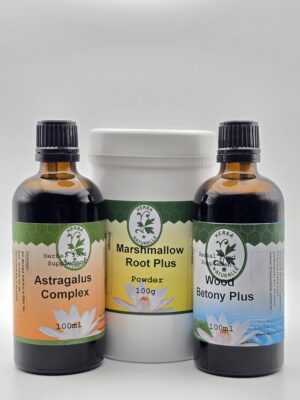
For those dealing with inflammatory conditions, the alkalising effect of Alfalfa Tops complements the targeted anti-inflammatory action of formulations like the Smooth Muscle and Immune Reset Bundle, creating a more favourable internal biochemical environment for healing.
Digestive Support
The enzyme content of Alfalfa Tops — amylase, lipase, protease, and cellulase — directly supports digestive function when the herb is used as a fresh juice, smoothie ingredient, or minimally processed powder. These enzymes help break down carbohydrates, fats, proteins, and plant fibre respectively, reducing the fermentation and gas that result from incomplete digestion.
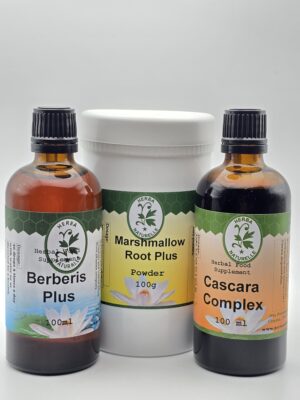
This digestive enzyme contribution makes Alfalfa Tops a natural complement to the Digestive Reset Bundle — providing nutritional and enzymatic support alongside the deeper digestive restoration that Herba Naturalle’s clinical formulations provide.
Using Alfalfa Tops
- Powder (food-grade): 1–2 teaspoons stirred into water, juice, or smoothies daily. The standard form for general tonic use.
- Fresh juice: Alfalfa tops juiced fresh provide the most intact enzyme and chlorophyll content
- Tincture: 3–5ml of 1:3 tincture twice daily in water
- Sprouts: Alfalfa sprouts — widely available in UK supermarkets — are sprouted seeds rather than tops, but share much of the nutritional profile
- Tea: 1–2 teaspoons of dried tops steeped for 10 minutes; mild, slightly grassy taste
Allow 2–3 months of consistent use to assess the full tonic effect.
Differences Between Alfalfa Leaf (fol) and Alfalfa Tops in Practice
| Alfalfa Leaf (fol) | Alfalfa Tops | |
|---|---|---|
| Chlorophyll | Moderate | Higher (stems) |
| Saponins | Moderate | Higher (stems + flowers) |
| Isoflavones | Present | Present + slightly higher |
| Flavonoids | Present | Additional from flowers |
| Typical use | General nutritive | Broader tonic + detox |
| Best for | Nutritional supplementation | Menopausal support, detox, full-spectrum tonic |
Safety Profile
Alfalfa Tops shares the safety profile of Alfalfa Leaf:
- SLE/Lupus: Avoid — the L-canavanine in seeds (and possible trace amounts in tops) may aggravate autoimmune activity
- Warfarin: High vitamin K content interacts with anticoagulant therapy
- Hormone-sensitive cancers: Isoflavone content warrants caution
- Pregnancy: Best avoided in therapeutic doses
Alfalfa Tops Within the Herba Naturalle Philosophy
Alfalfa Tops, like Alfalfa Leaf, exemplifies the nutritive dimension of the herbal medicine philosophy at Herba Naturalle — the understanding that the body must be adequately nourished before it can heal. Anjela Jeganathan’s clinical approach always considers the nutritional foundations of health alongside targeted herbal interventions, and Alfalfa Tops represents one of the richest available nutritional resources within the herbal materia medica.
Explore all 224 herbs in the Herba Naturalle herb index, browse the full product range for clinically developed herbal formulations, and contact Herba Naturalle to discuss a personalised herbal approach to your health.
This article is for informational purposes only. Please consult your GP or a qualified medical herbalist before starting any herbal supplement programme.
Our Trending Products & Bundles
-
 Digestive reset bundle
Original price was: £151.65.£144.95Current price is: £144.95.
Digestive reset bundle
Original price was: £151.65.£144.95Current price is: £144.95.
-
 Smooth muscle and immune reset Bundle
Original price was: £177.60.£159.95Current price is: £159.95.
Smooth muscle and immune reset Bundle
Original price was: £177.60.£159.95Current price is: £159.95.
-
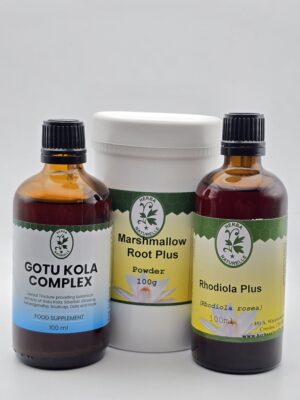 Nervous System Reset
Original price was: £163.68.£149.95Current price is: £149.95.
Nervous System Reset
Original price was: £163.68.£149.95Current price is: £149.95.
-
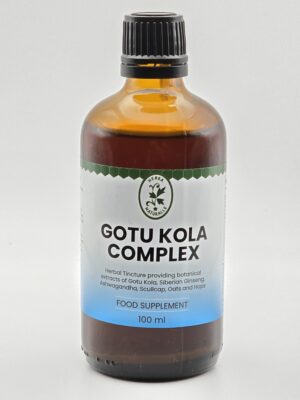 Gotu Kola Complex
£26.95
Gotu Kola Complex
£26.95