Ground Ivy Herb (Glechoma hederacea): The Catarrhal Clearing Herb
Ground Ivy — Glechoma hederacea — is a low-creeping aromatic perennial, common in shaded gardens, hedgerows, and woodland margins across Britain. Its small kidney-shaped leaves and blue-violet flowers appear in spring, and the whole plant releases a distinctively pungent, slightly minty-bitter aroma when crushed. Used since Anglo-Saxon times as a clearing herb for the head and chest — the common names “Gil-go-by-the-ground” and “Ale Hoof” reflect its role in clearing and flavouring ale before hops became the dominant herb — Ground Ivy remains a useful if underappreciated herb for catarrhal conditions of the sinuses, ears, and upper respiratory tract.
At Herba Naturalle, Ground Ivy is listed in the comprehensive herb index as a supportive upper respiratory and sinus herb, used alongside the Elderflower Complex for comprehensive seasonal and sinus health.
Active Compounds
- Volatile oil — including limonene, menthol, pulegone, and related terpenes; carminative, antimicrobial, and expectorant
- Tannins — astringent action on mucous membranes; reduces excess secretion
- Flavonoids — luteolin and apigenin; anti-inflammatory
- Bitter principles — glechomafuran and related sesquiterpenes; digestive tonic action
- Rosmarinic acid — anti-inflammatory and antioxidant
Clinical Applications
Sinusitis and Nasal Catarrh
The primary application. Ground Ivy’s astringent tannins reduce excessive nasal and sinus mucus production; the aromatic volatile oil provides mild decongestant and antimicrobial activity; and the anti-inflammatory flavonoids reduce mucosal swelling. Used for both acute sinusitis and chronic catarrhal sinusitis with persistent post-nasal drip.
Middle Ear Catarrh
A traditional and clinically used application for glue ear (otitis media with effusion) and Eustachian tube catarrh — where the same catarrhal inflammation that affects the sinuses extends to the middle ear. Ground Ivy’s clearing action on mucous membranes is applied to this connected anatomical territory.
Tinnitus with Catarrhal Component
Where tinnitus is associated with Eustachian tube congestion and middle ear fluid — the decongestant and catarrh-clearing action may provide relief.
Digestive Tonic
The bitter principles provide mild digestive stimulation — useful as a gentle digestive tonic alongside its primary respiratory application. The Digestive Reset Bundle provides deeper digestive support.
How to Use
- Tea (fresh herb preferred): 2–4g fresh or 1–2g dried herb steeped 10 minutes; 3 cups daily
- Tincture (1:3): 2–4ml three times daily
Safety
- Generally well tolerated
- Pregnancy: Avoid — the pulegone-containing volatile oil has uterine-stimulating activity
- Liver disease: Avoid extended use
- Epilepsy: Pulegone may have proconvulsant effects at high doses — avoid
Contact Herba Naturalle for sinus and catarrh herbal support. Browse all products and the full herb index.
This article is for informational purposes only. Please consult a qualified medical herbalist before use.
Our Trending Products & Bundles
-
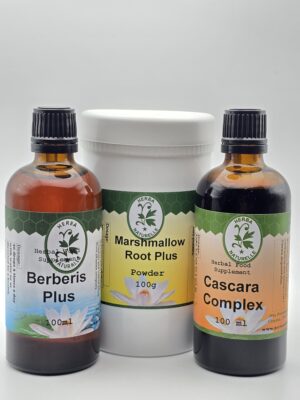 Digestive reset bundle
Original price was: £151.65.£144.95Current price is: £144.95.
Digestive reset bundle
Original price was: £151.65.£144.95Current price is: £144.95.
-
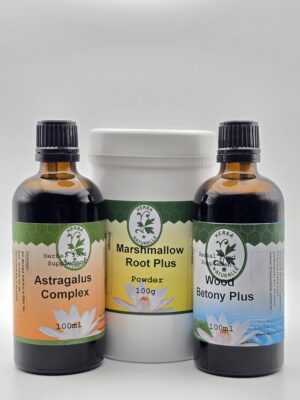 Smooth muscle and immune reset Bundle
Original price was: £177.60.£159.95Current price is: £159.95.
Smooth muscle and immune reset Bundle
Original price was: £177.60.£159.95Current price is: £159.95.
-
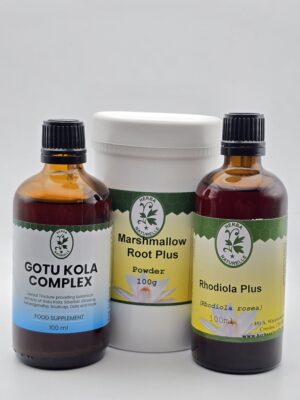 Nervous System Reset
Original price was: £163.68.£149.95Current price is: £149.95.
Nervous System Reset
Original price was: £163.68.£149.95Current price is: £149.95.
-
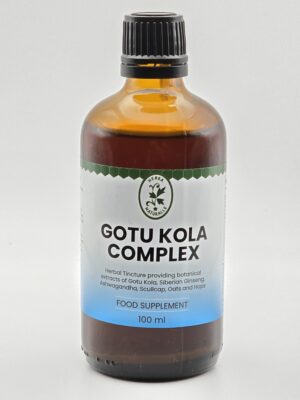 Gotu Kola Complex
£26.95
Gotu Kola Complex
£26.95