Echinacea angustifolia Root: The Deep Immune Herb
Echinacea angustifolia — the narrow-leaved coneflower — is one of three medicinal Echinacea species, and in the clinical Western herbal tradition is considered the most deeply immunomodulatory of the three. Where E. purpurea is widely recognised for its acute immune-stimulating properties (particularly the aerial part preparations), E. angustifolia root brings a deeper, slower, more tonic quality — particularly suited to states of chronic immune depletion and lymphatic congestion.
At Herba Naturalle, both Echinacea angustifolia root and Echinacea purpurea root are listed separately in the comprehensive 224-herb index — reflecting the clinically meaningful differences between these two species that a practitioner-level understanding of herbal medicine requires.
Active Compounds
- Alkylamides — the most potent immunomodulatory compounds in E. angustifolia; bind to CB2 cannabinoid receptors and modulate cytokine production; absorbed directly through the oral mucosa (responsible for the characteristic tingling sensation)
- Caffeic acid derivatives — echinacoside (particularly abundant in E. angustifolia) and chlorogenic acid; antioxidant, antimicrobial, and antiviral
- Polysaccharides — immune-stimulating; activate macrophages and dendritic cells
- Glycoproteins — contribute to macrophage activation
Echinacea angustifolia vs E. purpurea: Clinical Distinction
| E. angustifolia (root) | E. purpurea (root/aerial) | |
|---|---|---|
| Primary use | Deep chronic immune support | Acute immune stimulation |
| Best suited to | Chronic susceptibility to infection | Acute infections (cold, flu) |
| Alkylamide content | Very high | Moderate |
| Echinacoside | High | Lower |
| Tingling on tongue | Pronounced | Mild to moderate |
Clinical Applications
Chronic Immune Depletion
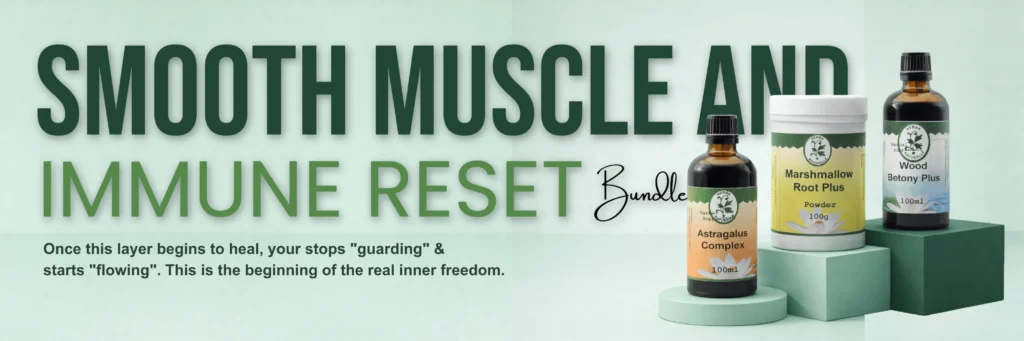
The primary distinction of E. angustifolia root from its relatives. For people who get every cold and flu that circulates, who take months to recover from infections, who have chronic swollen lymph nodes, or who experience the recurrent tonsillitis pattern — E. angustifolia‘s deeper tonic action on the immune system’s fundamental regulatory capacity is more appropriate than the acute-phase stimulation of E. purpurea. The Smooth Muscle and Immune Reset Bundle provides complementary immune support.
Lymphatic Congestion and Swollen Lymph Nodes
E. angustifolia has strong lymphatic activity — reducing lymphatic congestion and supporting the clearance of toxic and infectious burden from the lymphatic system.
Chronic Infections
For stubborn, recurrent, or slow-to-resolve infections — bacterial, viral, or fungal — E. angustifolia‘s sustained immunomodulatory action provides a different quality of support than acute immune stimulants.
How to Use
- Tincture (1:3): 2–4ml three times daily — the tingling sensation confirms active alkylamide content; buy from suppliers whose tinctures produce this sensation
- Use for defined periods: 8–12 weeks on, 4 weeks off for long-term immune tonic use
Safety
- Autoimmune conditions: Use with professional guidance — immune stimulation may worsen autoimmune conditions
- Immunosuppressants: May counteract — discuss with specialist
- Allergy to Asteraceae: Rare but documented
- Pregnancy: Avoid therapeutic doses
Contact Herba Naturalle for immune herbal support. Browse the full herb index and all products.
This article is for informational purposes only. Please consult a qualified medical herbalist before use.
Our Trending Products & Bundles
-
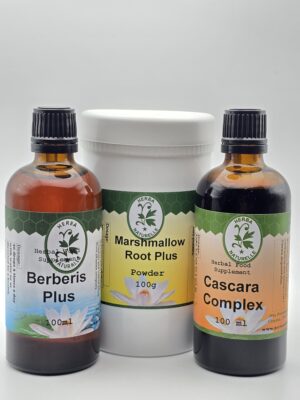 Digestive reset bundle
Original price was: £151.65.£144.95Current price is: £144.95.
Digestive reset bundle
Original price was: £151.65.£144.95Current price is: £144.95.
-
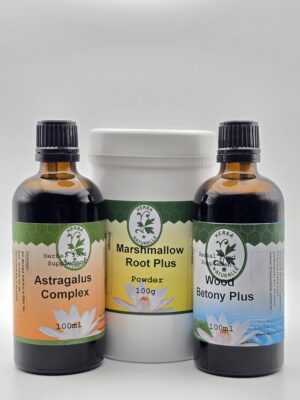 Smooth muscle and immune reset Bundle
Original price was: £177.60.£159.95Current price is: £159.95.
Smooth muscle and immune reset Bundle
Original price was: £177.60.£159.95Current price is: £159.95.
-
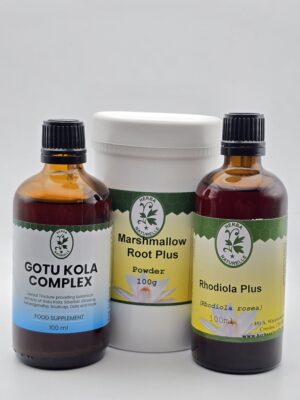 Nervous System Reset
Original price was: £163.68.£149.95Current price is: £149.95.
Nervous System Reset
Original price was: £163.68.£149.95Current price is: £149.95.
-
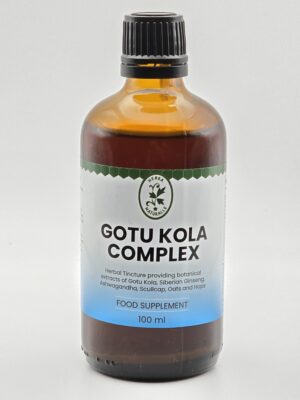 Gotu Kola Complex
£26.95
Gotu Kola Complex
£26.95