Chickweed Herb (Stellaria media): The Garden Herb That Heals Skin
By Anjela Jeganathan – Holistic Medical Herbalist | Herba Naturalle
Chickweed — Stellaria media — is one of the most unassuming plants in the British flora: a low-growing, sprawling annual found in virtually every garden, allotment, and disturbed soil across the country, appearing as a persistent and apparently humble weed. Yet this overlooked plant is one of the most effective topical herbs for itching, inflamed skin, and the management of eczema, psoriasis, and other pruritic skin conditions. It is also a nutritious edible plant — one of the few truly palatable raw garden “weeds” — providing vitamins, minerals, and phytochemicals that support skin health from the inside.
At Herba Naturalle, Chickweed Herb is listed in the comprehensive 224-herb index as a primary topical skin herb — accessible, affordable, and remarkably effective for a plant that most people pull up and discard without a second thought.
Botanical Identity
Stellaria media is a member of the Caryophyllaceae family, growing as a mat-forming annual with tiny, oval leaves, and minute five-petalled white flowers so deeply divided that they appear to have ten petals. The characteristic single line of fine hairs running up the stem is the botanist’s confirmation of the species. It is available fresh in UK gardens from early spring through late autumn — and can even be found in mild winters. The fresh aerial herb is the medicinal part.
Active Compounds
- Saponins — the most pharmacologically active class; responsible for the anti-inflammatory and anti-pruritic (anti-itch) activity through their action on inflammatory mediators at the skin surface
- Coumarins — with mild anti-inflammatory and antispasmodic activity
- Flavonoids — rutin and quercetin derivatives; antioxidant and anti-inflammatory
- Plant mucilage — soothing and cooling to inflamed tissue
- Vitamins — vitamin C, B vitamins, and beta-carotene in the fresh plant
- Minerals — calcium, magnesium, iron, potassium, and silica
Clinical Applications
Eczema and Pruritic Skin Conditions (Topical)
The most significant and well-established application. Chickweed’s saponin content provides direct anti-itch (anti-pruritic) action when applied to the skin — reducing the histamine-mediated itch of eczema, contact dermatitis, urticaria, and insect bites. The mucilage cools and soothes inflamed, hot skin. Many people with eczema who find pharmaceutical hydrocortisone creams irritating find Chickweed cream or poultice provides immediate, lasting relief without the side effects of topical steroids.
Psoriasis
Topical Chickweed reduces the inflammation, scaling, and itch of psoriatic plaques — used both as a cream and as a fresh plant poultice applied directly to the skin.
Wounds and Minor Burns
The cooling, anti-inflammatory, and mildly antimicrobial properties of fresh Chickweed make it a useful first-aid herb for minor burns, sunburn, and abrasions — applied as a poultice or infused oil.
Respiratory Catarrh (Internal)
Taken internally as a tea, Chickweed has expectorant and soothing properties for bronchial catarrh — used in traditional medicine for coughs with excess mucus. The saponin content contributes to the expectorant action. The Lungwort Plus provides deeper respiratory mucosal support.
Nutritive Tonic
Fresh Chickweed is genuinely nutritious — eaten in salads or as a vegetable, it provides a range of vitamins, minerals, and phytochemicals that support skin health and general vitality. Its silica content supports connective tissue and skin structure. Complementary to the Digestive Reset Bundle for whole-body nutritional support.
How to Use
- Fresh poultice: Crush fresh Chickweed leaves and apply directly to itchy or inflamed skin; cover with a clean cloth; leave for 30–60 minutes
- Infused oil: Pack fresh or lightly dried Chickweed into a jar, cover with sweet almond or sunflower oil, infuse for 2–4 weeks; apply to skin conditions
- Cream: Commercially available Chickweed creams widely sold in UK health food shops; apply 2–4 times daily to affected areas
- Tea (internal): 2–4g fresh herb steeped 10 minutes; 2–3 cups daily for respiratory and systemic use
“Chickweed is one of the herbs I always recommend for immediate itch relief in eczema — it is accessible, completely safe, and works quickly. For the deeper healing, we also need to address the gut-skin axis and the smooth muscle lining inflammation that drives the skin’s inflammatory state.”
⚠ Safety Considerations
- One of the safest herbs available — eaten as food with complete safety
- No significant contraindications at therapeutic doses
- Identification: Ensure correct botanical identification before harvesting from the wild — though Chickweed is distinctive and confusion with toxic plants is rare
- Pregnancy: Safe as a food; therapeutic internal doses best discussed with a practitioner
For skin conditions with a deeper herbal and gut-skin axis approach, contact Herba Naturalle. Browse the full herb index, the herbal medicine philosophy, and the complete product range. For skin conditions with digestive roots, the Schizandra Complex and Smooth Muscle and Immune Reset Bundle address the deeper physiological layers.
This article is for informational purposes only. Please consult a qualified medical herbalist before use.
Our Trending Products & Bundles
-
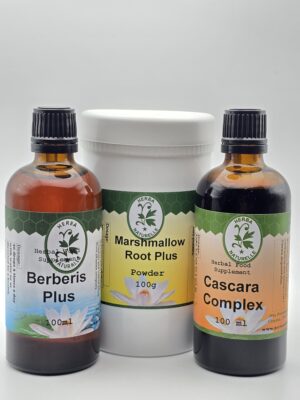 Digestive reset bundle
Original price was: £151.65.£144.95Current price is: £144.95.
Digestive reset bundle
Original price was: £151.65.£144.95Current price is: £144.95.
-
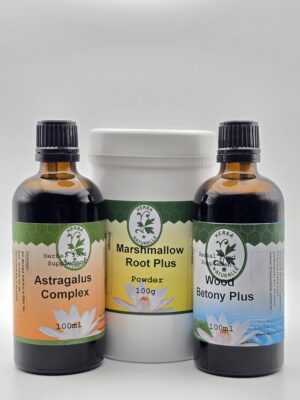 Smooth muscle and immune reset Bundle
Original price was: £177.60.£159.95Current price is: £159.95.
Smooth muscle and immune reset Bundle
Original price was: £177.60.£159.95Current price is: £159.95.
-
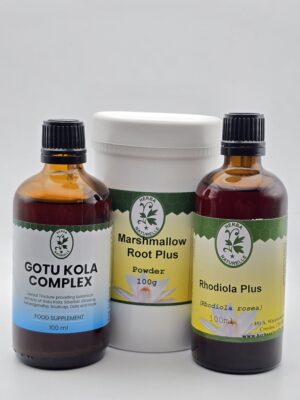 Nervous System Reset
Original price was: £163.68.£149.95Current price is: £149.95.
Nervous System Reset
Original price was: £163.68.£149.95Current price is: £149.95.
-
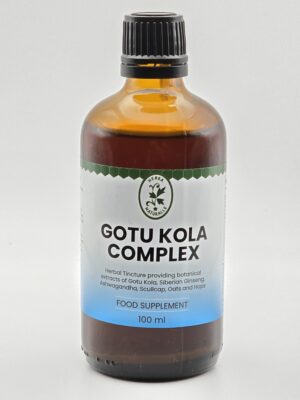 Gotu Kola Complex
£26.95
Gotu Kola Complex
£26.95