
Agrimony (Agrimonia eupatoria): Britain’s Hedgerow Healer
Agrimony, Agrimonia eupatoria, is one of Britain’s most familiar and beloved hedgerow plants, its slender spikes of small yellow flowers appearing in summer along lane sides, field margins, and woodland edges across the country. It is also one of the most versatile herbs in the Western herbal tradition: a gentle but effective astringent, digestive tonic, liver herb, and urinary supportive that has been used medicinally for over a thousand years.
While Agrimony lacks the glamour of more exotic herbs, its clinical utility is considerable and its particular affinity for the digestive system, liver, and urinary tract makes it relevant to an enormous range of health presentations. At Herba Naturalle, where the emphasis is always on understanding the body’s root physiological patterns rather than isolated symptoms, Agrimony’s multi-system activity reflects the kind of holistic action that characterises the best of Western herbal medicine.
Botanical Identity
Agrimony is a perennial herb belonging to the Rosaceae family, the same family as roses, hawthorn, and raspberry. It grows to approximately 60–120cm, with pinnate leaves (in the style of a feather, alternating leaflets) that are soft and slightly fragrant, and with a characteristic arrangement of larger leaflets interspersed with smaller ones. The yellow flowers appear on a long spike from June to August, followed by small hooked burrs that attach readily to clothing and animal fur, nature’s dispersal mechanism.
The aerial parts (leaves and flowering tops) are the primary medicinal portion. The herb is harvested in summer during flowering. Agrimony has a mildly aromatic, slightly bitter, and pleasantly astringent taste, all of which are signals of its clinical character.
Key Actions and Active Compounds
Agrimony’s medicinal activity derives from a profile of phytochemicals that includes tannins (primarily condensed tannins responsible for the astringent action), flavonoids (quercetin, luteolin, and apigenin derivatives), bitter glycosides, vitamins (including vitamin K and vitamin C), and volatile oils.
The primary clinical actions of Agrimony in Western herbal medicine are:
Astringent: the tannin content gives Agrimony a toning, firming action on mucous membranes and tissue. This makes it particularly valuable in conditions characterised by laxity, excess secretion, or irritated, inflamed mucous membranes.
Digestive tonic: the bitter glycoside content stimulates digestive secretions including bile and gastric juices, improving the thoroughness and efficiency of digestion.
Cholagogue and hepatic: Agrimony stimulates bile flow from the gallbladder and supports liver function, making it useful in hepatobiliary conditions and as a support to fat digestion and liver cleansing.
Diuretic: a mild diuretic action supports increased urinary output, relevant to urinary tract support and the clearance of metabolic waste.
Anti-inflammatory: flavonoid constituents provide a general anti-inflammatory action applicable across the systems where Agrimony acts.
Vulnerary: externally, Agrimony promotes wound healing through its astringent, anti-inflammatory, and mildly antimicrobial properties.
Traditional and Clinical Uses
Agrimony is one of the most widely applicable herbs in the Western materia medica, something recognised across the 224-herb index at Herba Naturalle, where it sits alongside other foundational British hedgerow medicines. Its principal applications include:
Digestive system: Agrimony is a classic herb for digestive complaints characterised by irritation, inflammation, and excess secretion. Diarrhoea, particularly of the IBS-D type, responds well to Agrimony’s astringent action on the intestinal mucosa. It is also used for intestinal inflammation, mucous colitis, and the “weeping” quality of an irritated gut lining. Gastritis, indigestion with bile dysregulation, and hepatic congestion are all classical Agrimony indications.
Liver and gallbladder: As a cholagogue (bile-stimulating herb), Agrimony is a useful liver tonic and is included in formulations for sluggish liver function, fatty liver support, and post-cholecystectomy digestive difficulties. Its mild bitterness and tannin content work synergistically in this application.
Urinary system: Agrimony is a traditional British herb for urinary tract conditions. Its astringent action tones the mucous membranes of the bladder and urethra; its mild diuretic action supports urine flow; and its anti-inflammatory flavonoids help calm irritation. It is used for cystitis, urinary frequency, and as a supportive herb in kidney stone prevention by improving urinary tone.
Throat and upper respiratory: As a gargle, Agrimony tea is a traditional remedy for sore throats, tonsillitis, and laryngitis, the astringent action on the pharyngeal mucosa reducing inflammation and secretion.
Externally: Agrimony preparations (strong tea or tincture diluted in water) are applied as a compress or wash for slow-healing wounds, skin ulcers, eczema with weeping, and varicose ulcers.
Agrimony and the Digestive System
The About Herbal Medicine page at Herba Naturalle explains the central importance of the digestive system in Anjela Jeganathan’s clinical framework. Agrimony is a herb that works at precisely the level that framework targets, the smooth muscle lining and mucosal surface of the digestive tract. When the gut lining is irritated, inflamed, or lacks tone, symptoms including loose stools, urgency, bloating, and abdominal discomfort result. Agrimony’s astringent and tonic action on this lining directly addresses this pattern.
It is most effective as part of a broader digestive support programme. The Berberis Plus, containing digestive bitters and liver-supportive herbs, works synergistically with Agrimony’s hepatic and digestive tonic actions. The Digestive Reset Bundle provides a comprehensive approach to digestive restoration that complements the specific actions of Agrimony.
Preparation and Dosage
Agrimony is used in several forms in clinical herbal practice:
- Tea (infusion): 2–4g of dried herb steeped in boiling water for 10–15 minutes, 2–3 times daily. Best taken before meals for digestive use.
- Tincture (1:3 or 1:5): 2–4ml three times daily
- Gargle: A strong infusion cooled to body temperature, gargled for throat conditions
- External: Strong infusion or diluted tincture (1:10) as a compress
Duration: Allow at least 4–6 weeks of regular use to assess its effect on chronic digestive or urinary conditions.
Safety Profile
Agrimony has an excellent safety profile and is considered one of the safest herbs in the Western materia medica. No significant adverse effects are documented at therapeutic doses. Its tannin content means that in large doses or with prolonged use, it may cause constipation in those predisposed to it. It should be used with some caution in:
- Pregnancy, insufficient safety data; best avoided
- Those taking iron supplements, tannins can reduce iron absorption; take separately
Finding Agrimony in the Context of Herbal Medicine
Agrimony is a beautiful example of the power of common, locally grown British plants in clinical medicine. The Herba Naturalle herb index lists Agrimony alongside over 220 other herbs used in the clinical practice of Western herbal medicine, each with its own specific character, actions, and applications. Exploring the philosophy of herbal medicine that underlies this work reveals how individual herbs are understood not as isolated chemical agents but as whole plant medicines with complex, synergistic actions.
To discuss whether Agrimony or another herbal approach might be relevant to your digestive, urinary, or liver health, contact Herba Naturalle to arrange a consultation. The full range of clinically developed herbal formulations is available at Herba Naturalle’s product shop.
This article is for informational purposes only. Please consult a qualified medical herbalist or your GP before using herbal medicines.
Our Trending Products & Bundles
-
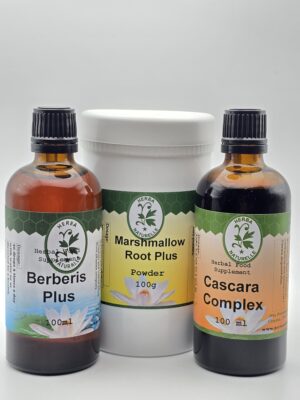 Digestive reset bundle
Original price was: £151.65.£144.95Current price is: £144.95.
Digestive reset bundle
Original price was: £151.65.£144.95Current price is: £144.95.
-
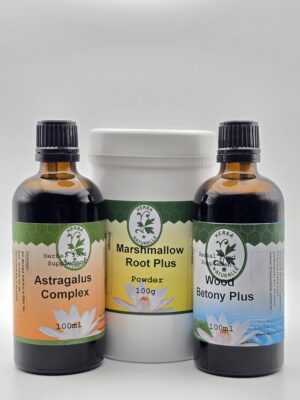 Smooth muscle and immune reset Bundle
Original price was: £177.60.£159.95Current price is: £159.95.
Smooth muscle and immune reset Bundle
Original price was: £177.60.£159.95Current price is: £159.95.
-
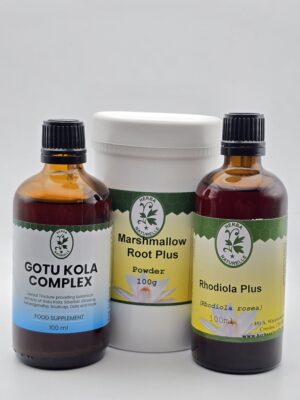 Nervous System Reset
Original price was: £163.68.£149.95Current price is: £149.95.
Nervous System Reset
Original price was: £163.68.£149.95Current price is: £149.95.
-
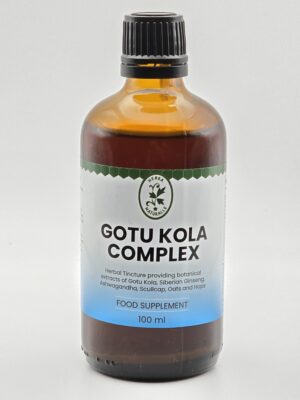 Gotu Kola Complex
£26.95
Gotu Kola Complex
£26.95