
How to Test for Leaky Gut at Home: Signs, Self-Assessment and Next Steps
“Leaky gut”, or more precisely, increased intestinal permeability, has become one of the most discussed concepts in gut health. While the term is used loosely in wellness circles, the underlying physiological phenomenon is real and clinically significant. This guide explains what leaky gut actually means, how to assess whether it might be affecting you, what at-home tests exist, and what formal testing looks like.
What Is Leaky Gut (Intestinal Permeability)?
The gut lining is a highly selective barrier, a single layer of epithelial cells held together by specialised proteins called tight junctions. Under healthy conditions, this barrier allows small nutrient molecules to cross into the bloodstream while blocking larger molecules, bacteria, and undigested food particles.
When the tight junctions loosen, due to inflammation, infection, stress, dietary factors, or other causes, larger molecules that should remain in the gut can pass through into the bloodstream. This is intestinal hyperpermeability, or “leaky gut.”
The immune system recognises these intruding molecules as foreign and mounts responses against them, contributing to systemic inflammation, food sensitivities, and in some individuals, autoimmune activation.
Can You Test for Leaky Gut at Home?
No validated, reliable at-home test for intestinal permeability exists that is equivalent to clinical assessment. However, there are several ways to assess whether your symptoms are consistent with increased intestinal permeability, and there is one research-based test that can be self-administered with a laboratory kit.
Self-Assessment: Symptoms Associated with Intestinal Permeability
The following pattern of symptoms, when occurring together and persistently, is consistent with increased gut permeability:
- Multiple food sensitivities, particularly sensitivities to foods that were previously well tolerated
- Bloating and gas, particularly after most meals
- Chronic fatigue, persistent and not fully explained by poor sleep
- Skin problems, eczema, psoriasis, acne, or hives
- Joint pain, particularly if migratory or without a clear structural cause
- Brain fog, difficulty concentrating, poor memory, mental sluggishness
- Mood changes, anxiety, or depression, alongside digestive symptoms
- Frequent illness, suggesting impaired gut immunity
- Autoimmune diagnosis, many autoimmune conditions have a gut permeability component
The more of these symptoms that are present simultaneously, the more likely that gut permeability is a relevant factor, but symptoms alone are not diagnostic.
The Lactulose-Mannitol Test (Research-Standard Test)
The lactulose-mannitol ratio test is the research gold standard for assessing intestinal permeability. It involves:
- Consuming a solution containing lactulose (a large sugar molecule that should not be absorbed) and mannitol (a small sugar that is normally absorbed)
- Collecting urine over 6 hours
- Sending the urine sample to a laboratory for measurement of both sugars
If lactulose appears in the urine in significant quantities relative to mannitol, this indicates that the gut wall is more permeable than normal, large molecules are crossing that should not.
This test is available through some private and functional medicine practitioners in the UK. It is not routinely available on the NHS.
At-Home Food Sensitivity Tests
Several UK companies offer IgG food sensitivity blood tests by finger-prick, which can be done at home. Elevated IgG responses to multiple foods can be consistent with increased intestinal permeability (because permeability allows food antigens to enter the bloodstream and trigger antibody responses).
However, IgG food sensitivity testing is not universally endorsed by gastroenterological bodies, and results should be interpreted in clinical context rather than in isolation.
What Causes Increased Intestinal Permeability?
Known contributors include:
- Gluten, in susceptible individuals, gliadin (a component of gluten) directly stimulates the release of zonulin, a protein that loosens tight junctions
- NSAIDs, ibuprofen and aspirin are well-established causes of increased gut permeability
- Alcohol, directly disrupts tight junction proteins
- Chronic stress, activates the HPA axis in ways that increase gut permeability
- Dysbiosis, microbiome imbalance, particularly overgrowth of certain pathogenic species
- Low dietary fibre, reduces the short-chain fatty acid production that nourishes the gut lining
- Infections, acute gut infections can trigger lasting increases in permeability
How to Support Gut Barrier Function
The most evidence-based approaches include:
- Removing identified triggers, gluten, alcohol, NSAIDs, where relevant
- L-Glutamine supplementation, primary fuel for intestinal epithelial cells
- Zinc carnosine, supports tight junction integrity
- Probiotic supplementation, particularly Lactobacillus rhamnosus GG and Bifidobacterium longum
- Dietary fibre, feeds bacteria that produce butyrate, the primary fuel for colon cells
- Stress management, the gut-brain connection is directly relevant to gut wall integrity
- Herbal demulcents, particularly marshmallow root and slippery elm
A Herbalist’s Approach to Leaky Gut
At Herba Naturalle, intestinal permeability is understood as a consequence of the smooth muscle lining of the gut becoming chronically inflamed and losing its structural integrity. Soothing, strengthening, and restoring this lining requires a targeted herbal approach that works at a deeper level than diet alone.
The Marshmallow Root Plus, containing Althaea officinalis, Sesbania grandiflora, and Equisetum arvense, is specifically indicated as a demulcent and strengthening formula for all smooth muscle linings. It is a core component of the Digestive Reset Bundle.
The Berberis Plus provides antimicrobial support (berberine is a well-researched gut antimicrobial) and stimulates the digestive secretions that keep the gut environment healthy.
Read more at About Herbal Medicine or view frequently asked questions.
Contact the clinic for a personal gut health consultation.
The Herba Naturalle 3-Step Bundle
The Herba Naturalle Bundle directly addresses intestinal permeability through three sequential steps:
Step 1, Restore Digestion: The Digestive Reset Bundle restores the digestive environment and begins the process of gut lining repair.
Step 2, Calm the Surface Nervous System: Chronic stress is one of the most significant drivers of intestinal permeability. The Nervous System Reset addresses this gut-brain link.
Step 3, Heal the Smooth Muscle Lining: The Smooth Muscle and Immune Reset Bundle is the core of leaky gut healing, targeting the structural wall inflammation that allows permeability to persist.
This article is for informational purposes only. If you suspect intestinal permeability is affecting your health, please consult a GP or qualified healthcare practitioner for a comprehensive assessment.
Our Trending Products & Bundles
-
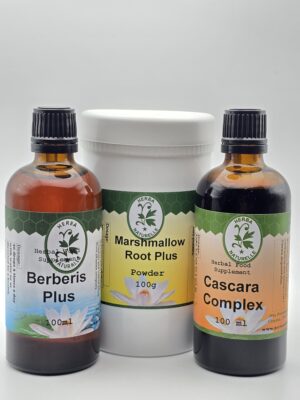 Digestive reset bundle
Original price was: £151.65.£144.95Current price is: £144.95.
Digestive reset bundle
Original price was: £151.65.£144.95Current price is: £144.95.
-
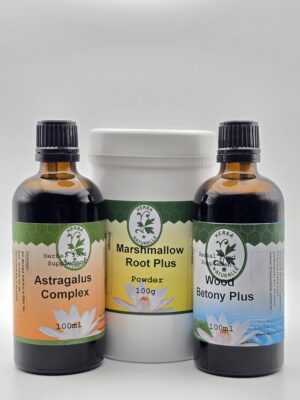 Smooth muscle and immune reset Bundle
Original price was: £177.60.£159.95Current price is: £159.95.
Smooth muscle and immune reset Bundle
Original price was: £177.60.£159.95Current price is: £159.95.
-
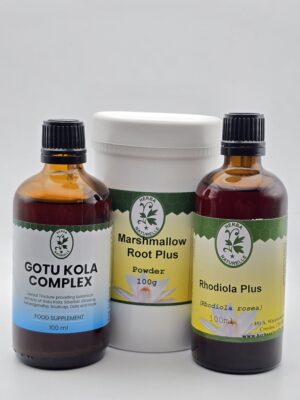 Nervous System Reset
Original price was: £163.68.£149.95Current price is: £149.95.
Nervous System Reset
Original price was: £163.68.£149.95Current price is: £149.95.
-
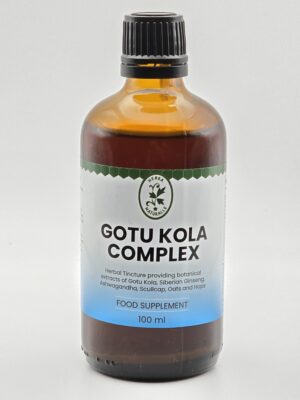 Gotu Kola Complex
£26.95
Gotu Kola Complex
£26.95


About the Author

Holistic Herbalist in UK · 30 Years of Excellence at Croydon, GB
Angela Jegnathan brings over 30 years of experience in integrated medicine and more than 25 years of full-time clinical herbal practice. Specializing in holistic herbal medicine, she focuses on restoring digestive health, calming the nervous system, and supporting the body's natural inflammatory response through evidence-based, patient-centered care.
Expertise: Holistic Herbs, Natural Medicines, Herbal Health
30 years of experience
