
Mugwort Herb (Artemisia vulgaris): Britain’s Aromatic Bitter
Mugwort — Artemisia vulgaris — is one of the most ancient and widely used medicinal plants in Britain and across the Northern Hemisphere. Its grey-green, aromatic leaves have been used in medicine, ritual, and cuisine since before recorded history — worn around the waist by Roman soldiers to relieve tired feet, hung in doorways in European folk tradition to repel evil, used in Traditional Chinese Medicine for moxibustion (burning over acupuncture points), and prescribed by medieval European herbalists as a primary herb for women’s reproductive complaints. Its combination of bitter digestive stimulant, uterine tonic, nervine, and antispasmodic properties reflects a herb of considerable clinical breadth.
At Herba Naturalle, Mugwort is listed in the comprehensive herb index as a warming bitter and female reproductive herb — complementing the Shatavari Complex and the Digestive Reset Bundle.
Active Compounds
- Volatile oil — 1,8-cineole, linalool, camphor, borneol, thujone, alpha and beta-thujone; the primary aromatic compounds with bitter, warming, antispasmodic, and mild neurotonic activity
- Sesquiterpene lactones — artabsin, absinthin; contributing the primary bitter digestive activity
- Flavonoids — quercetin, luteolin, rutin; anti-inflammatory
- Coumarins — umbelliferone; mild antispasmodic
Clinical Applications
Menstrual Regulation and Uterine Tonic
Mugwort’s primary gynaecological application. The volatile oil and sesquiterpene compounds have mild uterotonic activity — stimulating regular uterine contractions and promoting menstrual flow in cases of delayed, scanty, or absent periods. Used for:
- Amenorrhoea (absent periods)
- Scanty, late periods
- Delayed menstrual onset Relevant to Stop the Inflammation Pandemic: Inflammation in the Female Reproductive System.
Digestive Bitter Tonic
The sesquiterpene lactones provide intense bitter digestive stimulation — increasing gastric acid, bile, and digestive enzyme production. Used for sluggish digestion, flatulence, and poor appetite. Complementary to the Berberis Plus.
Nervine and Sleep
Traditional use for nervous exhaustion, vivid dreams (the herb has long been associated with dream-enhancement in folk traditions), and mild anxiety. Relevant to Inflammation of the Surface Nervous System: Where Healing Begins.
Antiparasitic
The thujone content provides mild antiparasitic activity — relevant in intestinal parasite protocols.
Relevant Blog Posts
- Stop the Inflammation Pandemic: Inflammation in the Female Reproductive System
- Stop the Inflammation Pandemic: The Digestive System (Part 1)
- Inflammation of the Surface Nervous System: Where Healing Begins
- Stop the Inflammation Pandemic – The Lymphatic System
- Welcome to the Final Episode of the Inflammation Pandemic Series
Safety
- Pregnancy: Absolutely contraindicated — the uterotonic activity is the most significant contraindication; a primary herbal abortifacient historically
- Epilepsy: Thujone has proconvulsant potential at high doses — avoid
- Artemisia allergy: Cross-reactivity with ragweed and birch pollen
- Prolonged high-dose use: Thujone accumulation at excessive doses — use at therapeutic doses for defined courses
Contact Herba Naturalle for female reproductive and digestive herbal support. Browse all products and the full herb index.
This article is for informational purposes only. Please consult a qualified medical herbalist before use.
Our Trending Products & Bundles
-
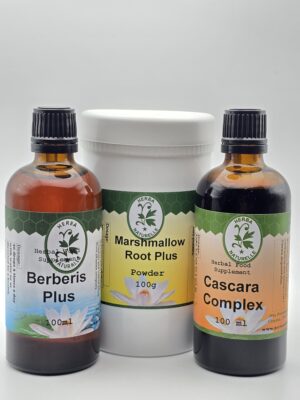 Digestive reset bundle
Original price was: £151.65.£144.95Current price is: £144.95.
Digestive reset bundle
Original price was: £151.65.£144.95Current price is: £144.95.
-
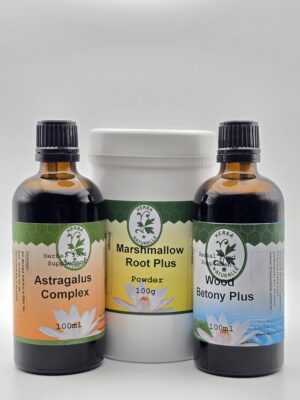 Smooth muscle and immune reset Bundle
Original price was: £177.60.£159.95Current price is: £159.95.
Smooth muscle and immune reset Bundle
Original price was: £177.60.£159.95Current price is: £159.95.
-
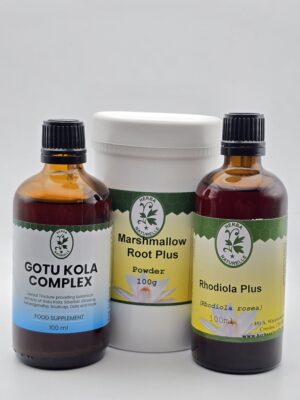 Nervous System Reset
Original price was: £163.68.£149.95Current price is: £149.95.
Nervous System Reset
Original price was: £163.68.£149.95Current price is: £149.95.
-
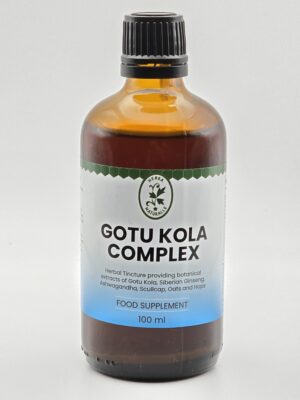 Gotu Kola Complex
£26.95
Gotu Kola Complex
£26.95