
Ashwagandha Benefits, SideEffects and Uses for Men and Women
By Anjela Jeganathan – Medical Herbalist | Herba Naturalle
Ashwagandha — Withania somnifera — is one of the most studied and most widely used herbs in the world today. Known in Ayurvedic medicine as the “strength of the stallion” for its traditional role in supporting vitality and endurance, ashwagandha has moved decisively from the niche of alternative health into mainstream clinical practice, backed by a growing body of randomised controlled trial evidence.
What Does Ashwagandha Do?
Ashwagandha is classified as an adaptogen — a herb that helps the body adapt to physical and psychological stress more effectively. Its primary mechanism involves modulation of the hypothalamic-pituitary-adrenal (HPA) axis, the system that regulates the body’s stress hormone response. By reducing excessive cortisol production and normalising the stress response cycle, ashwagandha produces a wide range of downstream clinical benefits across multiple body systems.
The active compounds responsible for these effects are a group of steroidal lactones called withanolides, found primarily in the root of the plant. The powdered root — Withania somnifera powder — is the form most commonly used clinically and in research.
Ashwagandha Benefits: What the Evidence Shows
Stress and Anxiety Reduction
The most consistently documented benefit. Multiple double-blind RCTs confirm that standardised ashwagandha extract significantly reduces perceived stress scores, anxiety levels, and morning cortisol concentrations compared to placebo. A widely cited trial published in the Indian Journal of Psychological Medicine found a 44% reduction in stress scores and a 27.9% reduction in serum cortisol after 60 days of treatment.
For those managing anxiety, this is particularly relevant — the evidence and broader context of natural anxiety management is explored in our detailed post on mental health, anxiety and natural approaches in the UK.
Sleep Quality
Ashwagandha contains triethylene glycol — a compound with documented sleep-inducing properties. Clinical trials confirm significant improvements in sleep latency (time to fall asleep), total sleep time, and sleep efficiency with consistent ashwagandha use. The calming, cortisol-reducing action also normalises the elevated evening cortisol that disrupts sleep onset in chronically stressed individuals.
Ashwagandha Benefits for Men
Testosterone and reproductive health: Multiple clinical trials demonstrate that ashwagandha significantly raises testosterone levels, improves sperm count and motility, and improves semen quality in men with subfertility. A 90-day trial found testosterone levels increased by 17% and sperm count by 167%.
Athletic performance and muscle strength: Ashwagandha supplementation consistently improves muscle mass, strength gains, exercise recovery time, and VO₂ max in resistance-trained individuals. These effects are mediated through testosterone support and the anti-inflammatory reduction of exercise-induced muscle damage.
Energy and vitality: For men experiencing fatigue, reduced drive, and the functional effects of chronically elevated cortisol — including reduced libido and poor workout recovery — ashwagandha is one of the most evidence-backed single interventions available.
Ashwagandha Benefits for Women and Females
Hormonal balance: Ashwagandha’s cortisol-lowering action indirectly supports oestrogen, progesterone, and thyroid hormone balance — all of which are sensitive to chronic stress elevation.
Thyroid support: Ashwagandha has documented thyroid-stimulating properties, making it clinically relevant in subclinical hypothyroidism. A trial published in the Journal of Alternative and Complementary Medicine found significant improvements in T3 and T4 levels.
Menopausal symptoms: A double-blind RCT in menopausal women found significant reductions in hot flushes, sleep disturbance, and mood changes with ashwagandha root extract. This is relevant to the broader discussion of visceral fat and hormonal metabolic changes in women.
Cognitive function: Multiple trials confirm improvements in memory, processing speed, and executive function — benefits that appear relevant for both men and women.
Withania Somnifera Side Effects: What to Know
Ashwagandha is exceptionally well-tolerated in most people at therapeutic doses. However, Withania somnifera side effects to be aware of include:
- Digestive upset — mild nausea, loose stools, or stomach discomfort, most commonly when taken on an empty stomach. Taking with food resolves this in most cases.
- Thyroid stimulation — in those with hyperthyroidism or taking thyroid medication, ashwagandha may increase thyroid activity. Professional guidance is required.
- Sedation — the sleep-promoting action means it may increase sedation in those already taking sedative medication.
- Pregnancy — ashwagandha is contraindicated in pregnancy. The withanolide compounds have uterotonic activity.
- Autoimmune conditions — as an immune modulator, caution is warranted in autoimmune diseases such as lupus, rheumatoid arthritis, and multiple sclerosis.
How to Use Withania Somnifera Powder
- Dose: 300–600mg of standardised root extract (typically 5% withanolides) twice daily is the range used in most clinical trials.
- Withania somnifera powder can be taken in warm milk (the traditional Ayurvedic preparation — ksheerapaka), in smoothies, or in capsule form.
- Timing: For sleep support, a higher proportion of the dose before bed. For energy and performance, divide doses between morning and early afternoon.
- Duration: Most clinical trials show meaningful results within 4–8 weeks. Allow at least 8–12 weeks for full adaptogenic effect.
Gut health — often overlooked in adaptogenic supplementation — is foundational. Our post on understanding your digestive system explains why optimising gut function supports the absorption and efficacy of all herbal preparations.
This article is for educational purposes only. Please consult a qualified medical herbalist or your GP before beginning ashwagandha supplementation, particularly if you have thyroid conditions, autoimmune disease, or take prescription medication.
Our Trending Products & Bundles
-
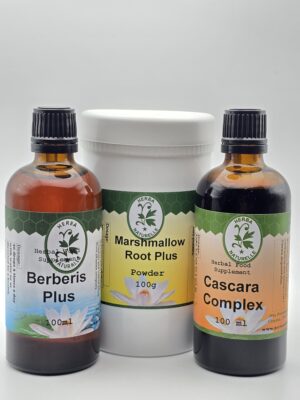 Digestive reset bundle
Original price was: £151.65.£144.95Current price is: £144.95.
Digestive reset bundle
Original price was: £151.65.£144.95Current price is: £144.95.
-
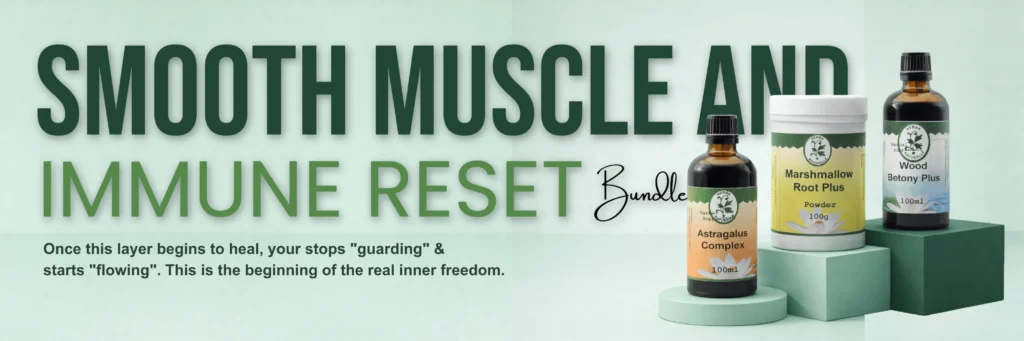
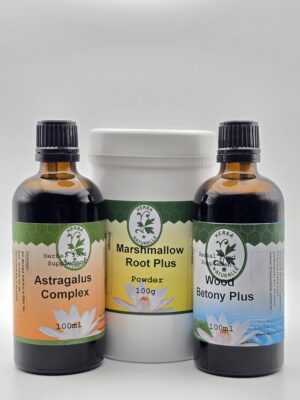 Smooth muscle and immune reset Bundle
Original price was: £177.60.£159.95Current price is: £159.95.
Smooth muscle and immune reset Bundle
Original price was: £177.60.£159.95Current price is: £159.95.
-
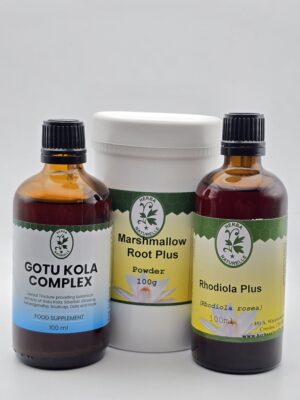 Nervous System Reset
Original price was: £163.68.£149.95Current price is: £149.95.
Nervous System Reset
Original price was: £163.68.£149.95Current price is: £149.95.
-
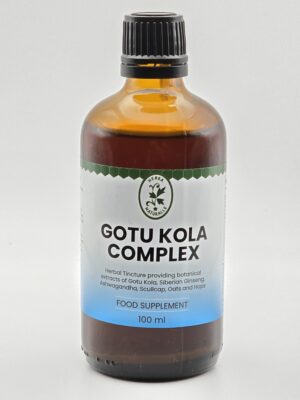 Gotu Kola Complex
£26.95
Gotu Kola Complex
£26.95

About the Author

Holistic Herbalist in UK · 30 Years of Excellence at Croydon, GB
Angela Jegnathan brings over 30 years of experience in integrated medicine and more than 25 years of full-time clinical herbal practice. Specializing in holistic herbal medicine, she focuses on restoring digestive health, calming the nervous system, and supporting the body's natural inflammatory response through evidence-based, patient-centered care.
Expertise: Holistic Herbs, Natural Medicines, Herbal Health
30 years of experience
