
Understanding Inflammation: The Root Cause of Most Chronic Disease
By Anjela Jeganathan – Medical Herbalist | Herba Naturalle
Modern medicine has identified a single underlying process that connects conditions as apparently diverse as heart disease, type 2 diabetes, Alzheimer’s disease, depression, IBS, rheumatoid arthritis, and fatty liver. That process is chronic low-grade inflammation a sustained, low-intensity activation of the immune system that, when present continuously over years and decades, damages tissue, disrupts metabolic function, and progressively impairs the function of virtually every organ system in the body.
What Inflammation Is and Why It Becomes Problematic
Acute inflammation is a normal and necessary biological response the redness, heat, swelling, and pain of an acute infection or injury are the immune system working as designed. This acute inflammatory response resolves when the trigger is removed, and healing follows.
Chronic low-grade inflammation is different. It is not a response to a single, resolvable trigger but a sustained, smouldering activation driven by ongoing inputs excess visceral fat, processed food diet, gut dysbiosis and leaky gut, poor sleep, chronic stress, sedentary behaviour, and environmental toxins.
The adipokines and cytokines released by excess visceral fat explored in detail in our article on visceral fat and its hidden health implications are among the most significant drivers of this chronic inflammatory state.
Inflammation, the Gut, and Systemic Disease
The gut is a primary site of inflammatory activation. A compromised gut barrier “leaky gut” allows bacterial endotoxins and undigested food particles to enter the circulation, triggering systemic inflammatory responses that extend far beyond the digestive tract. This connection between gut health and systemic inflammation is explored in our posts on gut and digestive health and IBS, IBD and bowel conditions.
Chronic gut inflammation, poor digestion, and the associated dysbiosis fuel the systemic inflammatory burden which is why herbal medicine so often begins with gut support, regardless of the presenting complaint.
The Liver, Inflammation, and Metabolic Disease
The liver is the primary organ through which the gut’s inflammatory signals are processed. Fatty liver disease explored in our post on fatty liver and its early warning signs is a direct consequence of chronic metabolic inflammation in the liver, and it amplifies the same inflammatory burden it receives, creating a cycle of worsening metabolic dysfunction.
Cardiovascular inflammation elevated CRP, oxidised LDL, endothelial dysfunction is the inflammatory mechanism behind atherosclerosis. Our posts on cholesterol and heart-healthy eating and resting heart rate, blood pressure and NHS guidance explore the cardiovascular dimension of this inflammatory picture.
How Herbal Medicine Addresses Inflammation
Herbal medicine’s approach to chronic inflammation operates on multiple levels simultaneously addressing the gut, reducing visceral fat drivers, supporting liver detoxification, modulating the immune response, and protecting tissue from inflammatory damage. The anti-inflammatory potency of Turmeric’s curcumin (acting across multiple inflammatory pathways simultaneously), the gut-healing action of Slippery Elm and Marshmallow Root, the hepatoprotective action of Milk Thistle, and the adaptogenic cortisol regulation of Ashwagandha and Rhodiola all contribute to reducing the total inflammatory burden.
This is the multi-system, root-cause approach that characterises clinical herbal medicine at its best.
This article is for educational purposes only. Please consult your GP for any new or worsening health symptoms.
Our Trending Products & Bundles
-
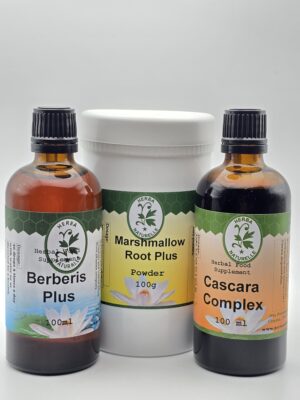 Digestive reset bundle
Original price was: £151.65.£144.95Current price is: £144.95.
Digestive reset bundle
Original price was: £151.65.£144.95Current price is: £144.95.
-
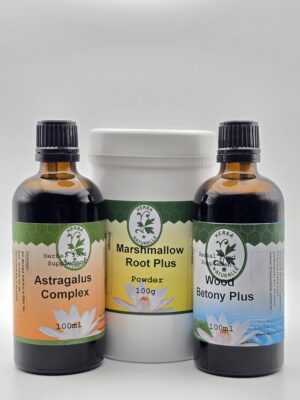 Smooth muscle and immune reset Bundle
Original price was: £177.60.£159.95Current price is: £159.95.
Smooth muscle and immune reset Bundle
Original price was: £177.60.£159.95Current price is: £159.95.
-
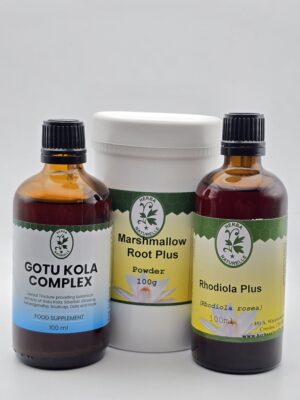 Nervous System Reset
Original price was: £163.68.£149.95Current price is: £149.95.
Nervous System Reset
Original price was: £163.68.£149.95Current price is: £149.95.
-
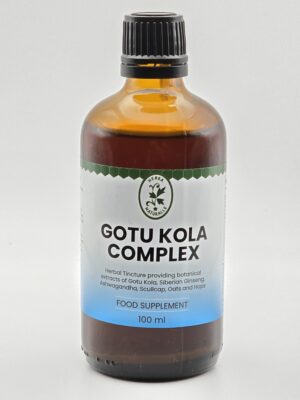 Gotu Kola Complex
£26.95
Gotu Kola Complex
£26.95


About the Author

Holistic Herbalist in UK · 30 Years of Excellence at Croydon, GB
Angela Jegnathan brings over 30 years of experience in integrated medicine and more than 25 years of full-time clinical herbal practice. Specializing in holistic herbal medicine, she focuses on restoring digestive health, calming the nervous system, and supporting the body's natural inflammatory response through evidence-based, patient-centered care.
Expertise: Holistic Herbs, Natural Medicines, Herbal Health
30 years of experience
