
Feverfew Herb (Tanacetum parthenium): The Migraine Herb
Feverfew — Tanacetum parthenium — is a small, strongly aromatic perennial herb of the daisy family, found growing in gardens, walls, and roadsides across Britain. Its common name is misleading — it is rarely used for fever today — but its clinical reputation rests on one of the most specific and well-documented applications in herbal medicine: the prevention of migraine headaches. This is the herb that brought herbal medicine into the mainstream British medical press in the 1980s, when a series of clinical trials confirmed what migraine sufferers and herbalists had known for centuries — that Feverfew, taken regularly, reduces the frequency, duration, and severity of migraine attacks.
At Herba Naturalle, Feverfew is listed in the comprehensive 224-herb index as a primary anti-inflammatory and anti-migraine herb — used within the broader clinical framework of addressing the smooth muscle, nervous system, and inflammatory layers that underlie chronic headache conditions.
Active Compounds
- Parthenolide — the primary sesquiterpene lactone; inhibits platelet aggregation, inhibits the release of inflammatory prostaglandins and serotonin from platelets, and blocks NF-κB inflammatory signalling
- Chrysanthenyl acetate and camphene — volatile oil components contributing to the anti-inflammatory activity
- Flavonoids — apigenin and luteolin; anti-inflammatory and antioxidant
- Melatonin — present in meaningful concentrations in Feverfew leaf; relevant to the circadian and hormonal aspects of migraine
Clinical Evidence
Multiple randomised, double-blind, placebo-controlled trials — including landmark studies published in the Lancet and British Medical Journal — confirm that Feverfew reduces migraine frequency by 24–32% compared to placebo, reduces nausea and vomiting associated with attacks, and reduces the severity of breakthrough attacks. The effect is preventive, not acute — Feverfew must be taken daily to be effective.
Clinical Applications
Migraine Prevention
The primary and best-evidenced application. Feverfew works by inhibiting the platelet and inflammatory mechanisms that trigger the vascular events of migraine. It is most effective when taken consistently before attacks, not during them. Results typically emerge after 1–3 months of daily use.
Rheumatoid Arthritis
The NF-κB inhibiting and anti-inflammatory properties of parthenolide are relevant to systemic inflammatory conditions — multiple small trials suggest reductions in joint pain and morning stiffness. The Smooth Muscle and Immune Reset Bundle provides complementary anti-inflammatory support.
Menstrual Migraine
Particularly relevant for women whose migraines are hormonally triggered — Feverfew’s parthenolide modulates the prostaglandin and serotonin changes associated with the premenstrual hormonal shift. The Shatavari Complex provides complementary female hormonal support.
Fever (Historical)
The traditional use for fever that gave the herb its name — less relevant in modern practice but reflects the anti-inflammatory and prostaglandin-inhibiting mechanism.
How to Use
- Fresh leaves: The most traditional form — 2–3 fresh leaves daily in a sandwich (the bitter taste is significant); this is the preparation used in original clinical trials
- Standardised extract (0.2–0.4% parthenolide): 100–150mg daily — the most convenient evidence-backed form
- Tincture (1:3): 2–4ml daily
- Minimum 3 months of consistent daily use before assessing efficacy
Safety
- Mouth ulcers: Fresh leaf use causes oral ulceration in some users — take in a sandwich or switch to capsule form
- Rebound headache: Abrupt discontinuation after prolonged use can trigger a cluster of headaches — taper gradually
- Pregnancy: Contraindicated — parthenolide has uterine-stimulating activity
- Anticoagulants: Antiplatelet effect — professional guidance alongside warfarin or aspirin
- Asteraceae allergy: Cross-reactivity possible
Explore the full herb index, herbal medicine philosophy, and all products. Contact Herba Naturalle for personalised migraine and pain herbal support.
This article is for informational purposes only. Please consult a qualified medical herbalist before use.
Our Trending Products & Bundles
-
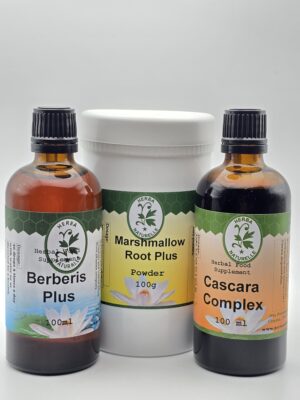 Digestive reset bundle
Original price was: £151.65.£144.95Current price is: £144.95.
Digestive reset bundle
Original price was: £151.65.£144.95Current price is: £144.95.
-
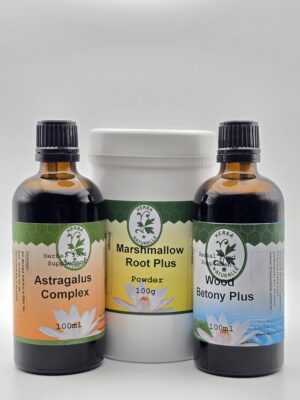 Smooth muscle and immune reset Bundle
Original price was: £177.60.£159.95Current price is: £159.95.
Smooth muscle and immune reset Bundle
Original price was: £177.60.£159.95Current price is: £159.95.
-
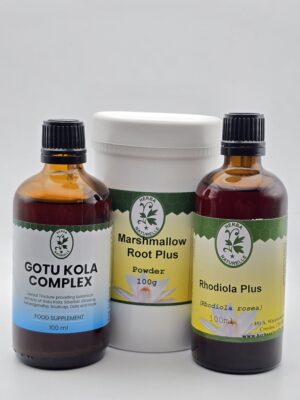 Nervous System Reset
Original price was: £163.68.£149.95Current price is: £149.95.
Nervous System Reset
Original price was: £163.68.£149.95Current price is: £149.95.
-
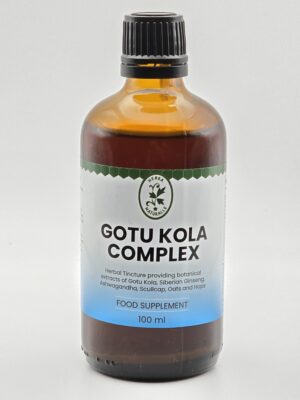 Gotu Kola Complex
£26.95
Gotu Kola Complex
£26.95