Black Cohosh Root (Cimicifuga racemosa): Menopause and Hormonal Health
Black Cohosh — Cimicifuga racemosa (also classified as Actaea racemosa) — is one of the most researched herbs in the world for female hormonal health, and arguably the most evidence-backed herbal option for menopausal symptoms. Used for centuries by Native American peoples — primarily the Algonquian, Iroquois, and Mackinac nations — for female reproductive health and rheumatic conditions, it was adopted into Western herbal practice in the 19th century and has remained a clinical mainstay for female hormonal support ever since.
At Herba Naturalle, Black Cohosh is understood within the broader context of female hormonal and reproductive health — including the smooth muscle inflammation of the reproductive organs that often underlies the most distressing perimenopausal symptoms. It is listed in the comprehensive herb index and used clinically alongside the Shatavari Complex and Smooth Muscle and Immune Reset Bundle.
Botanical Identity
Cimicifuga racemosa is a tall (up to 2.5m) perennial woodland plant of the Ranunculaceae family, native to the deciduous forests of eastern North America. Its long white flower spikes appear in summer; the plant’s vernacular name “bugbane” (another common name) refers to the historically reported insect-repelling properties. The black, knotted rhizome is the medicinal part — harvested in autumn.
Active Compounds and Mechanism
This is one of the most debated areas in herbal pharmacology. Earlier assumptions that Black Cohosh had oestrogenic activity have been revised. Current understanding suggests:
- Triterpenoid glycosides (actein, cimigenol, and related compounds) — the primary active compounds; these interact with serotonin receptors (5-HT1A and 5-HT7) in the hypothalamus, modulating the thermoregulatory centre where hot flushes originate
- Cimicifugin and fukinolide — contribute to the antispasmodic and analgesic effects
- Salicylic acid derivatives — anti-inflammatory activity relevant to associated joint and muscle pain
- Dopaminergic activity — contributes to mood-stabilising effects
The serotonin receptor mechanism explains why Black Cohosh reduces hot flushes through a pathway unrelated to oestrogen — which is why it appears safe in oestrogen-sensitive conditions (though professional guidance is still recommended).
Clinical Evidence
The evidence base for Black Cohosh in menopausal symptoms is among the most extensive of any herbal medicine. Key findings:
- Hot flushes and night sweats: Multiple RCTs and meta-analyses demonstrate significant reductions in frequency and severity of hot flushes compared to placebo; some head-to-head studies show comparable efficacy to low-dose HRT
- Sleep disturbance: Improvements in sleep quality in perimenopausal women
- Mood and psychological symptoms: Reductions in irritability, anxiety, and low mood associated with perimenopause
- Vaginal dryness: Some evidence of improvement in vaginal atrophy symptoms
German Commission E has approved Black Cohosh for premenopausal and menopausal symptoms. It is widely recommended by integrative medicine practitioners across Europe.
Clinical Applications Beyond Menopause
- Dysmenorrhoea (painful periods): Antispasmodic and anti-inflammatory action on uterine smooth muscle
- PMS: Mood-stabilising and hormonal-regulatory effects
- PCOS: Used in some clinical protocols for hormonal regulation
Typical Use
- Standardised extract: 20–40mg of extract standardised to 0.2% triterpene glycosides, twice daily — this is the most evidence-backed form
- Tincture (1:3): 2–4ml twice daily
- Allow 8–12 weeks for full benefit
Safety — Important Considerations
- Liver toxicity concern: Rare cases of liver injury associated with Black Cohosh have been reported — while causality is not established, MHRA guidance recommends discontinuing if jaundice, dark urine, or upper abdominal pain develop
- Hormone-sensitive cancers: The safety in oestrogen-receptor-positive breast cancer remains debated — discuss with oncologist
- Pregnancy: Contraindicated (uterine-stimulating in high doses)
- Duration: Clinical guidelines typically recommend limiting use to 6 months at a time
Contact Herba Naturalle to discuss hormonal health herbal support. Browse the complete herb index and all products.
This article is for informational purposes only. Please consult a qualified medical herbalist or your GP before use, particularly if you have a history of hormone-sensitive conditions.
Our Trending Products & Bundles
-
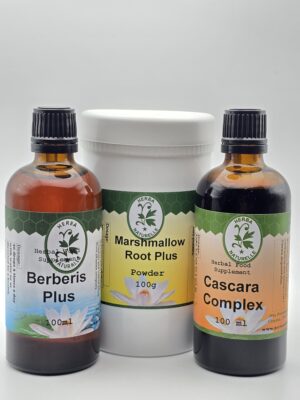 Digestive reset bundle
Original price was: £151.65.£144.95Current price is: £144.95.
Digestive reset bundle
Original price was: £151.65.£144.95Current price is: £144.95.
-
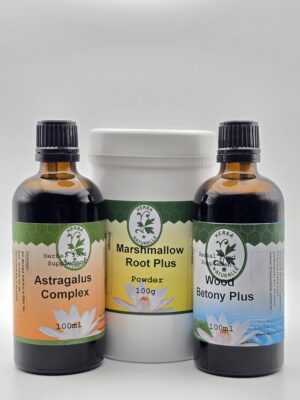 Smooth muscle and immune reset Bundle
Original price was: £177.60.£159.95Current price is: £159.95.
Smooth muscle and immune reset Bundle
Original price was: £177.60.£159.95Current price is: £159.95.
-
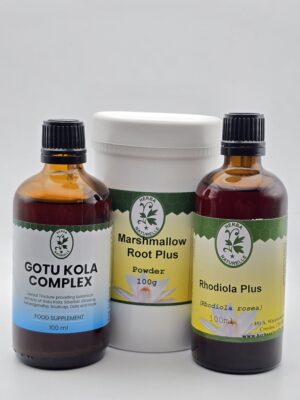 Nervous System Reset
Original price was: £163.68.£149.95Current price is: £149.95.
Nervous System Reset
Original price was: £163.68.£149.95Current price is: £149.95.
-
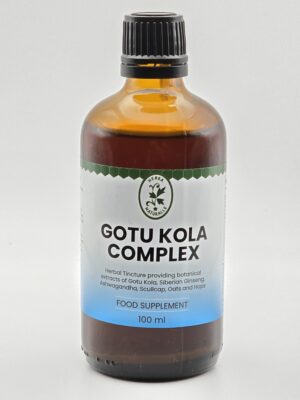 Gotu Kola Complex
£26.95
Gotu Kola Complex
£26.95